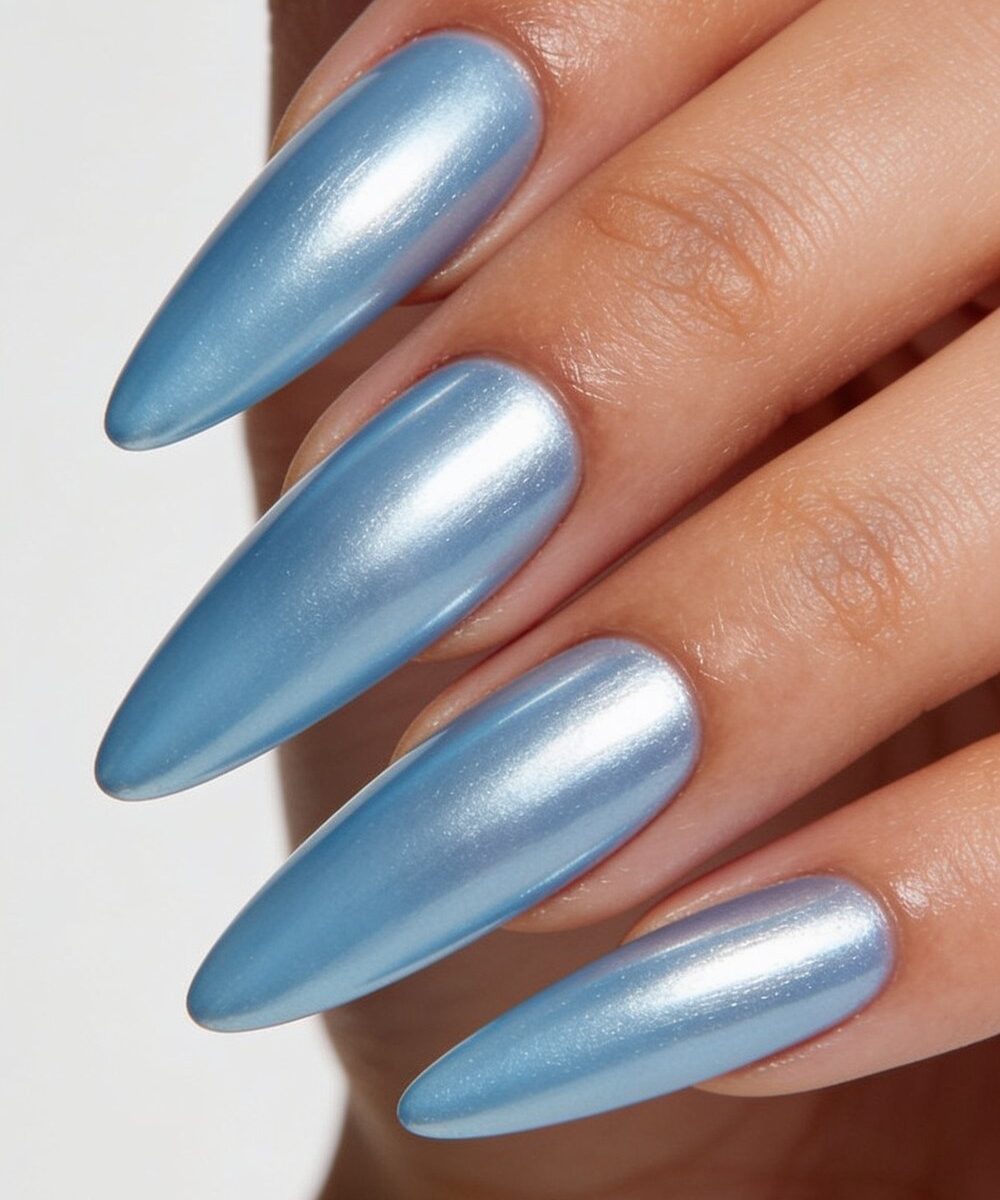
Acrylic is a powder and a liquid mixed on a brush into a bead, shaped onto the nail, and left to harden in air. No lamp, no curing. That one difference explains almost everything people find confusing about it: why it smells, why it is strong, why it costs less than gel extensions and why a bad application is so much harder to hide.
It remains the most durable enhancement available, which is why it dominates long shapes. If you want length that survives a normal week, this is still the product that does it.
Acrylic should never touch your skin. Product that sits on the cuticle or the sidewall lifts within days, and the gap underneath is where water and bacteria get in. That gap is what causes almost every acrylic horror story you have read.
If your tech is flooding the cuticle, that is worth changing salon over. A tiny visible margin of natural nail at the base is correct, not a mistake.
What it costs and how long it lasts
A full set runs roughly forty-five to ninety dollars depending on city, length and shape, with extra for designs charged per nail. A fill is usually half to two thirds of a full set. Most people go back every two to three weeks, driven by the growth line rather than by damage.
The set itself will outlast your patience. Acrylic does not soften or wear off, so what ends a set is the gap at the cuticle becoming visible, or a nail catching and breaking. Expect two to three weeks per fill and roughly two to three fills before a full rebalance is worth it.
Acrylic against gel and Gel-X
- Acrylic is the hardest and the most rigid. It resists bending, which means it protects the nail underneath but transfers the shock to the natural nail when it does catch.
- Hard gel is slightly more flexible and has no smell, but it usually has to be filed off rather than soaked, which makes removal more damaging in the wrong hands.
- Gel-X is a soft gel tip glued over the whole nail and cured, so it is faster to apply and soaks off cleanly, but it is the least strong of the three at long lengths.
- For length past about a quarter inch beyond the fingertip, acrylic is still the sensible answer.
Getting it off without wrecking your nails
Acrylic soaks off in pure acetone, but only after the top layer has been filed away. Acetone cannot get through a sealed topcoat, which is why home removal that skips the filing step always ends in someone pulling.
- File the shine and most of the bulk off the surface first. You are aiming to leave a thin layer, not to file down to the nail.
- Soak acetone-saturated cotton on each nail, wrap in foil, and leave it a full fifteen to twenty minutes before checking. Opening early resets the whole thing.
- The product should scrape away like wet paper. If it flakes or resists, rewrap for another ten minutes.
- Never lever, clip or peel. Every one of those takes layers of nail plate with it, and that is the damage people blame on acrylic itself.
- Oil the cuticles and nail plate afterwards. Acetone strips everything, and nails feel thin for about a week regardless of how careful the removal was.
Eighteen acrylic designs that suit the product
Acrylic gives you a thicker, smoother, more sculptable surface than natural nails do, so the designs that work best are the ones that use that. Anything encapsulated, anything with a built shape, anything that needs a flawless flat plane. For designs that suit natural nails instead, start with the designs guide.

Short natural set
A full acrylic set filed to the fingertip in a sheer pink, with no extension at all. It is what people with weak nails use to stop the breaking, and almost nobody realises it is acrylic.
Short sets also fill less often, because the growth line is far less obvious on a nail that ends where the finger does.
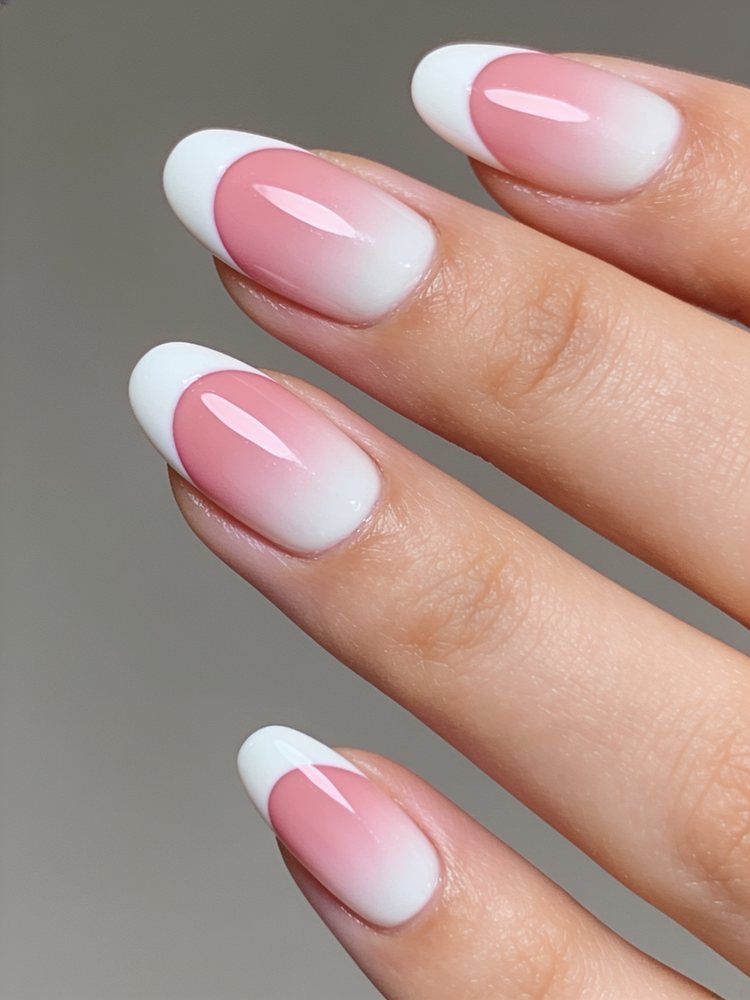
Pink and white ombre
Also called baby boomer. A pink base blended into a white free edge with no visible line, built into the acrylic itself rather than painted on top.
Because it is inside the product, it does not chip, and the grow-out is invisible for far longer than a painted equivalent.

Encapsulated glitter
Glitter suspended inside a clear acrylic layer rather than sitting on top. The surface stays completely smooth and the glitter cannot wear off.
The one design where acrylic is genuinely better than every other product, because nothing else lets you build depth like this.
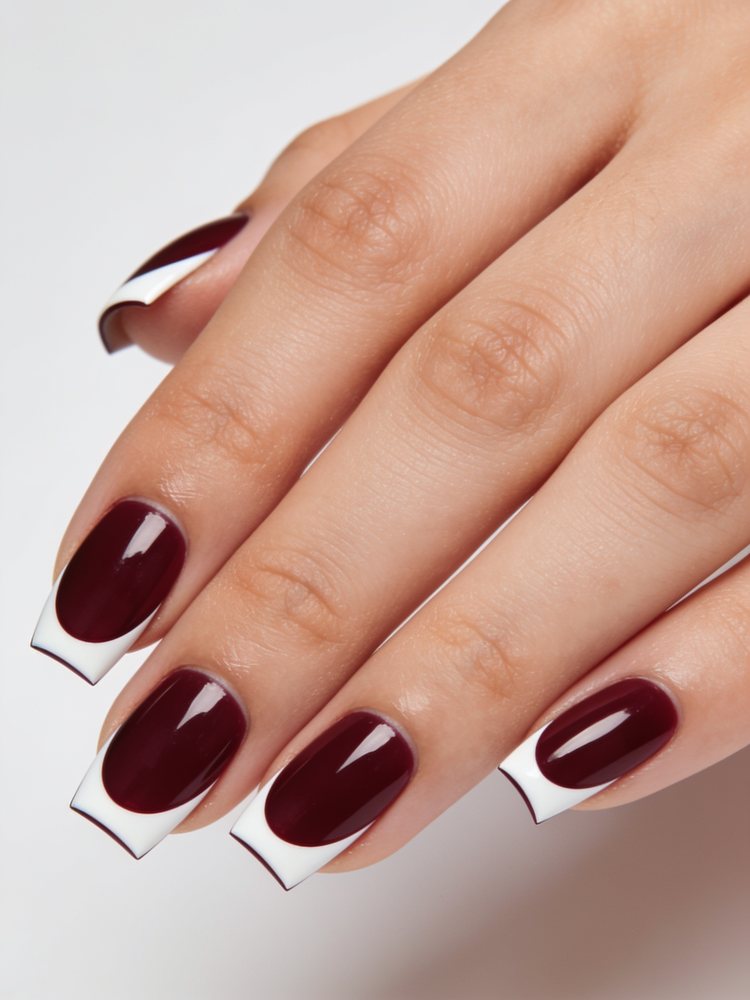
Deep French with a sharp smile line
A true French, built rather than painted, with a crisp smile line and full-depth white tip. Sharp corners at both ends of the smile line are the difference between this and a soft modern French.
Built French does not chip at the tip, which is where painted French always fails first.
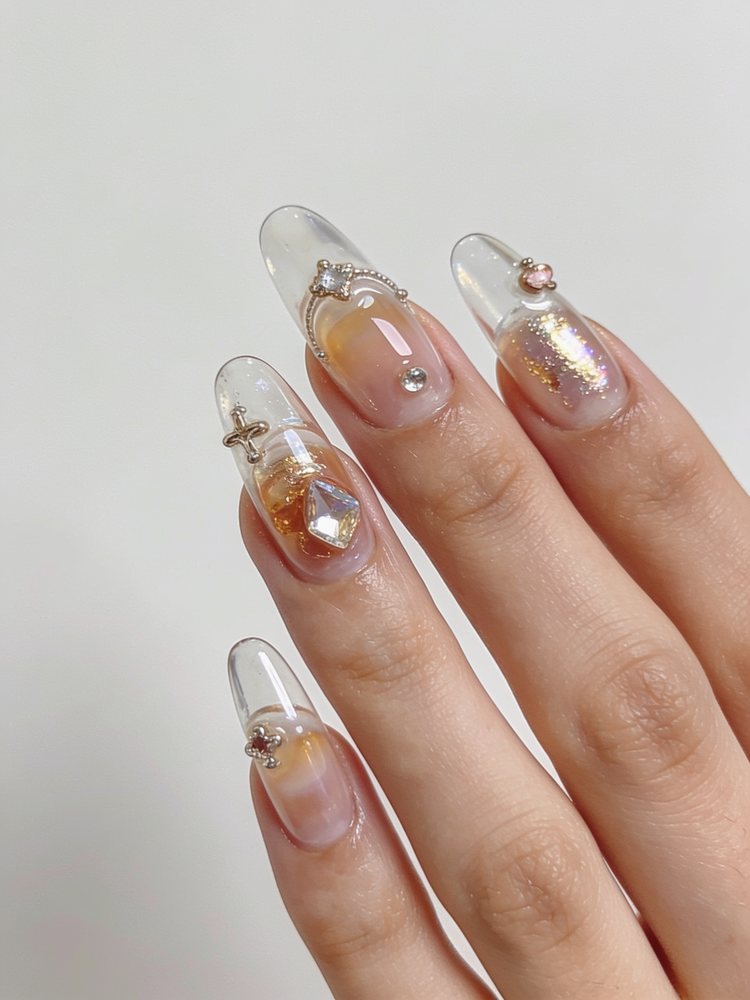
Clear jelly with charms
A translucent clear or tinted acrylic with charms and foil encapsulated at different depths, so the design has real dimension rather than sitting flat.
Ask for the charms placed under the final layer. Anything glued on top comes off.

Matte black coffin
Full black under a matte topcoat. On acrylic it works better than on natural nails because the surface is genuinely flat, and matte shows every dip in a surface that is not.
Refresh the matte topcoat after ten days. It dulls and picks up shine from skin oils.
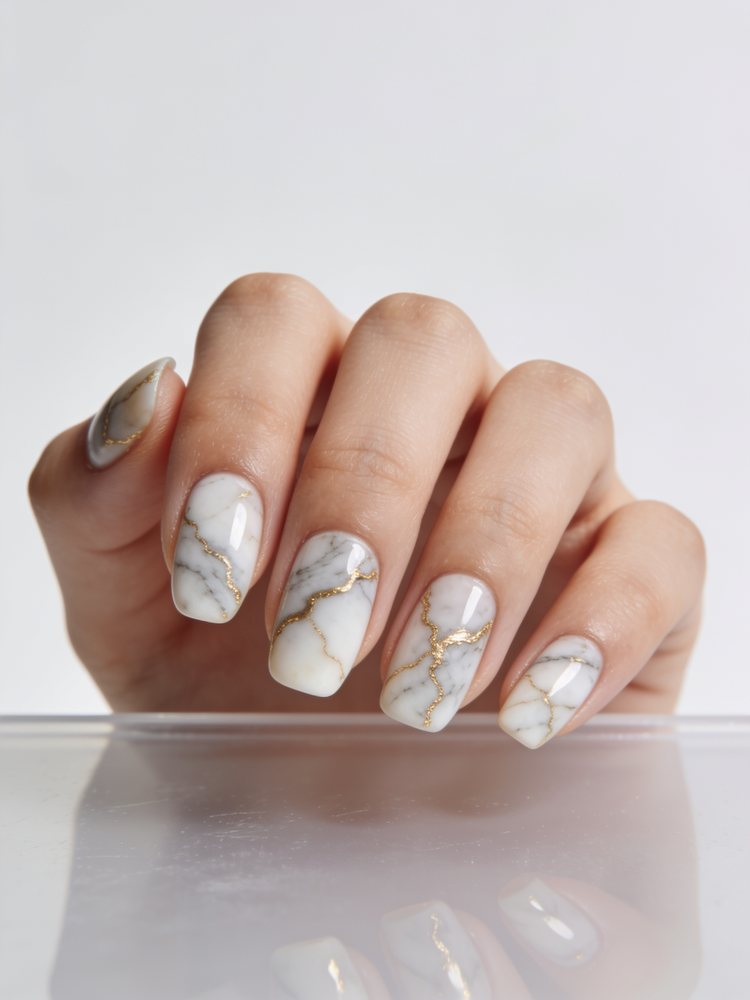
Marble with gold veins
Grey and white marbling with a fine gold vein running through two or three nails. The flat acrylic surface is what lets the veining stay crisp instead of pooling.
Two veins per nail. This is the design people most often ask to have made busier and most often regret.
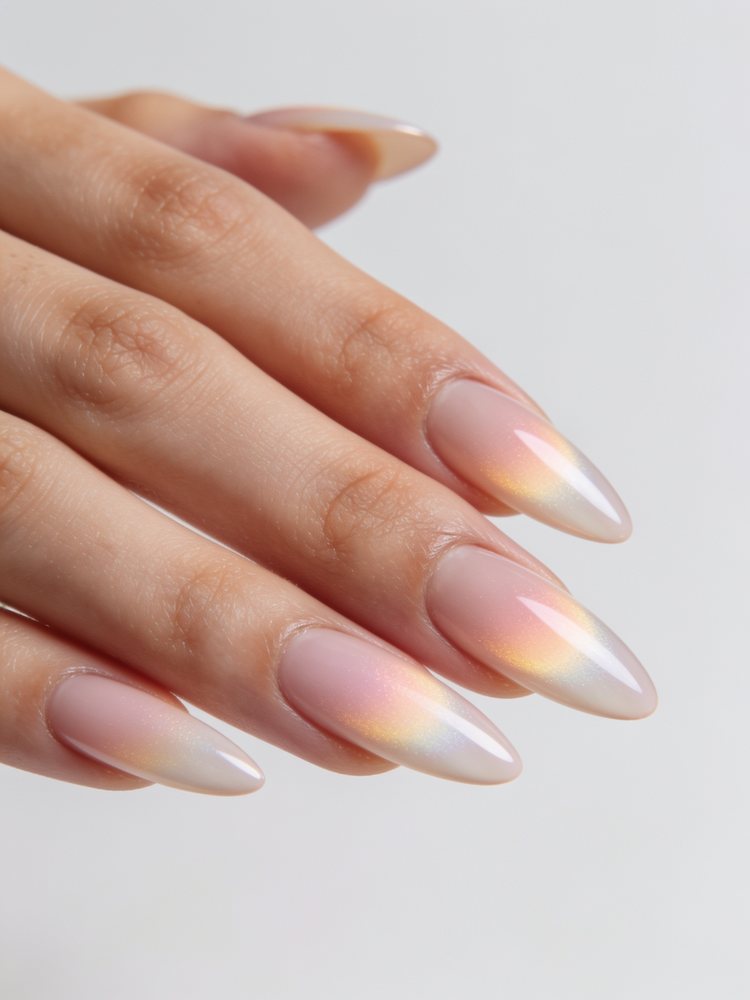
Aura on almond
A soft airbrushed halo in the centre of each nail, fading before it reaches the edges. Acrylic takes airbrush better than most surfaces because there is no texture to interrupt the fade.
Pick a colour close to the base shade. High contrast auras look like a dot with a shadow.
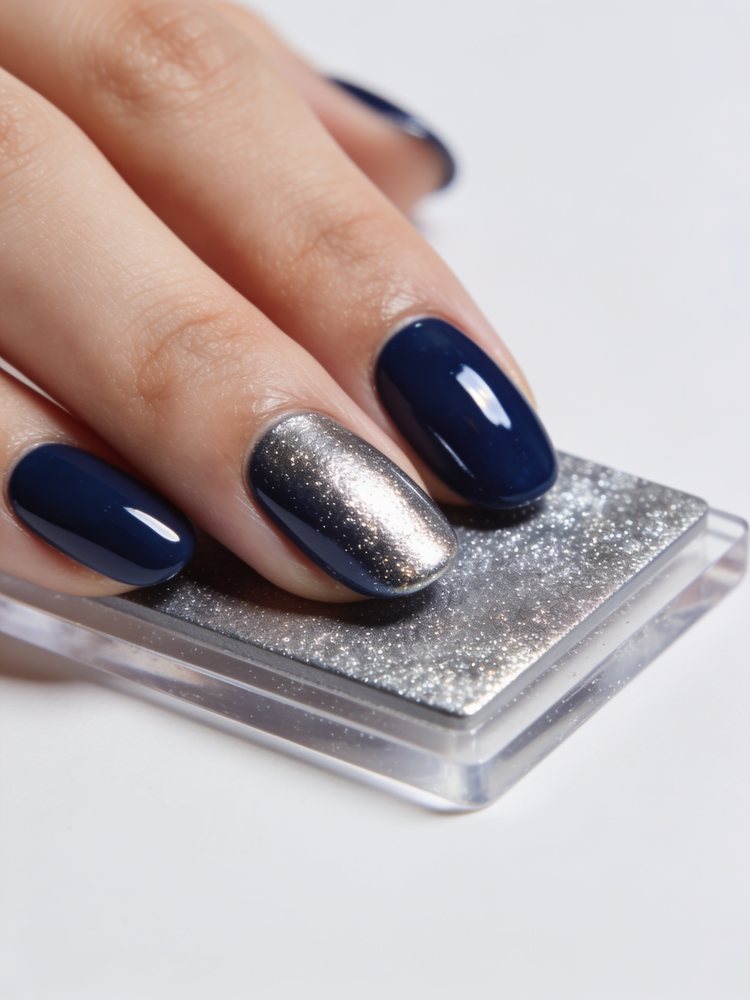
Chrome over navy
Chrome powder buffed over a dark gel topcoat on an acrylic base. The acrylic gives the flat plane, the gel gives the chrome something to grab.
Acrylic alone will not hold chrome. It needs a cured gel layer on top first, so check the salon offers both.
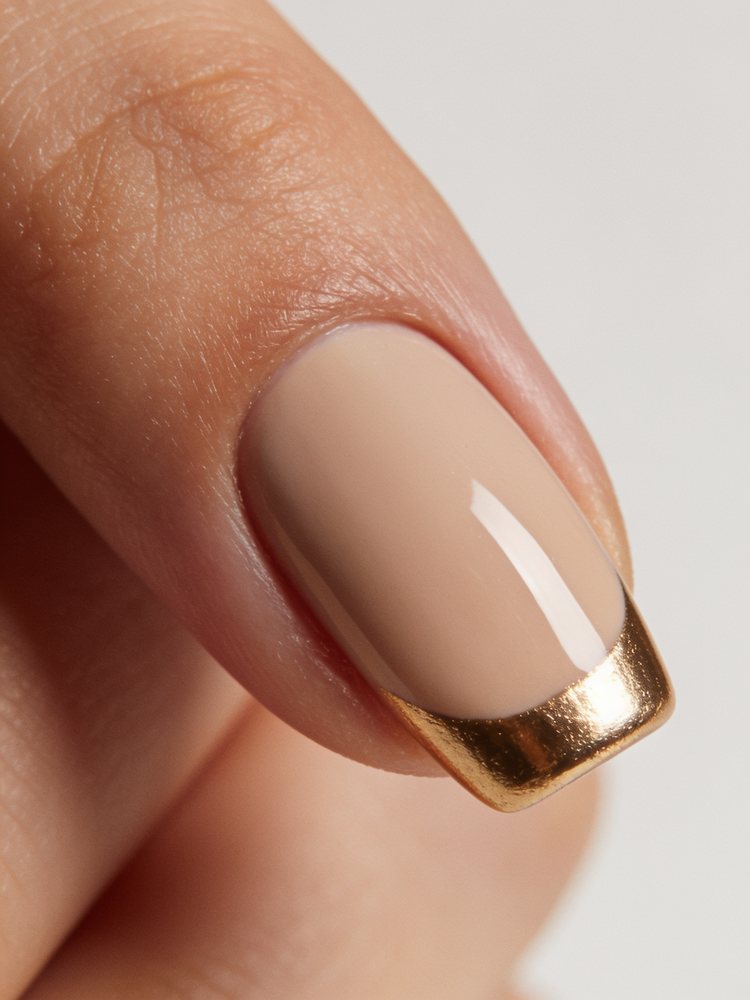
Nude with a gold chrome tip
A French where the tip is chrome instead of white. It is the most wearable version of a metallic and the grow-out is invisible because everything happening is at the far end of the nail.
Warm gold suits more skin tones here than silver. Silver reads cold against a nude base.

Two-length set
Short on the index and middle, longer on the ring and little finger. It is far more practical than it sounds, because the two fingers you actually use stay usable.
Ask for the step to be gradual rather than abrupt or it reads as a broken nail rather than a choice.

Ombre into a colour
The baby boomer technique with the white swapped for a colour. Nude into burgundy, nude into navy, nude into forest green. Softer than a solid and it grows out beautifully.
The fade needs at least a third of the nail. Short gradients look like an accident.
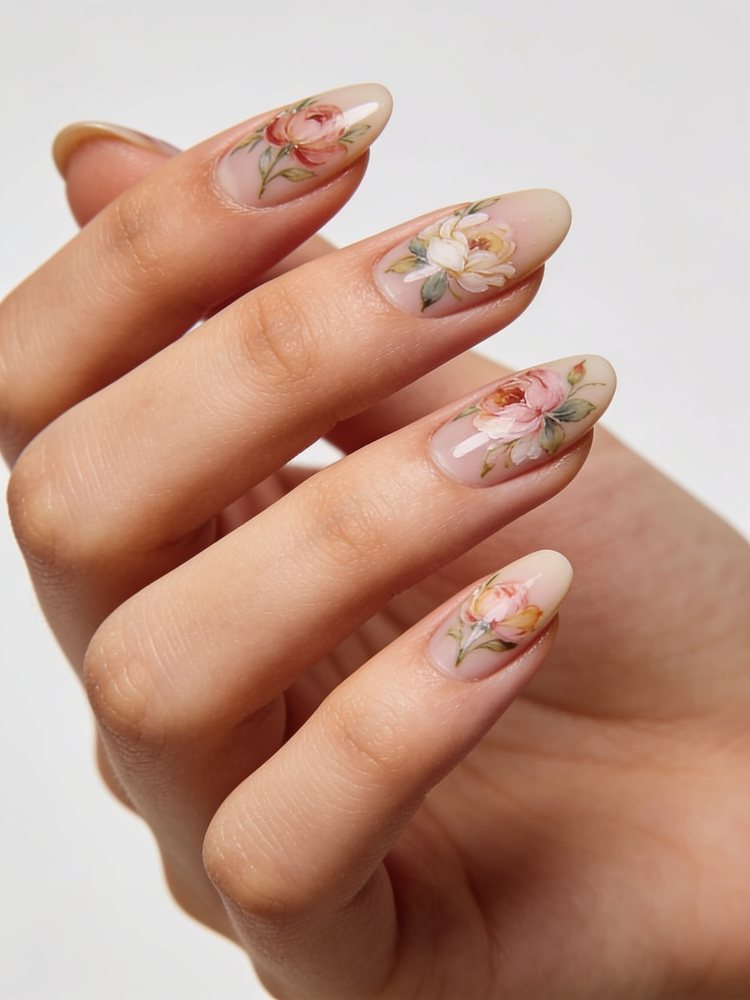
Hand-painted florals
Real freehand painting on two accent nails, the rest kept plain. It is the most expensive thing on this list and the only one where the tech matters more than the product.
Ask to see their own work rather than a reference photo before booking. Floral art is where skill gaps show most clearly.

Milky white long square
Semi-sheer white across a long square set. It reads as an extremely well-kept natural nail from any distance, which is why it has stayed popular for a decade.
It shows lifting faster than any other colour, so it works best with a tech whose cuticle work you already trust.

Cat eye on acrylic
Magnetic gel over an acrylic base, pulled into a diagonal band. The acrylic gives the shape, the gel gives the effect.
It has to be gel over acrylic, not magnetic polish. Regular polish has no metal particles to move.
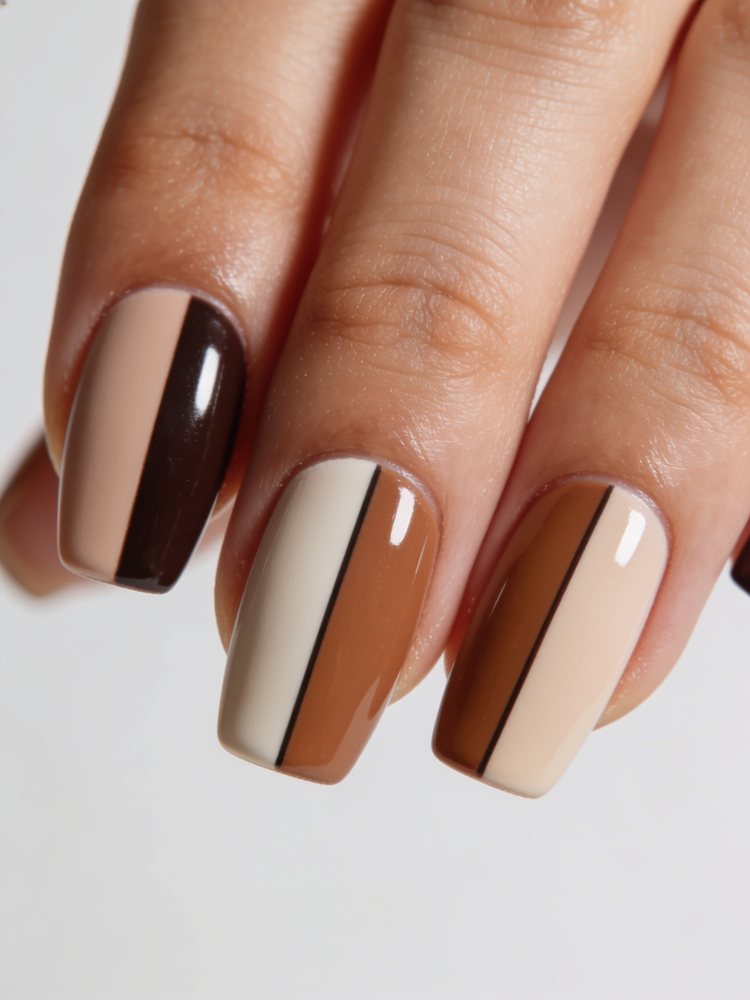
Half and half colour block
The nail split down the middle into two flat colours with a clean vertical line. It only works if the line is genuinely straight, which needs the flat surface acrylic gives you.
Two shades from the same family read as design. Two clashing shades read as unfinished.

Stiletto in a single bright
One saturated colour on a full stiletto set, no design at all. The shape is the design, and adding art to it makes it look busier without making it look better.
Expect to break one. Ask the salon what a single repair costs before you leave.
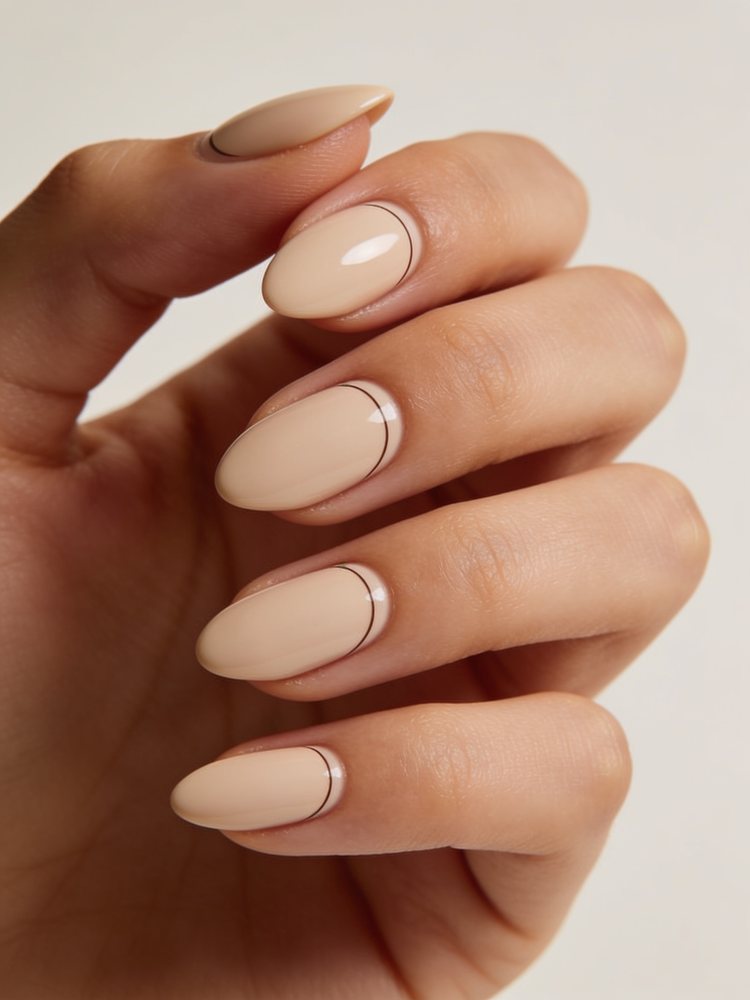
Almond nude with a micro line
A nude acrylic set with one hairline of gold or black running from cuticle to tip on two nails. The most restrained design on the list and the one that suits an office.
The line follows the length of the nail, which makes the finger look longer. A horizontal line does the opposite.
Questions people actually ask
Do acrylic nails ruin your natural nails?
Applied and removed properly, no. What causes damage is over-filing the natural nail during prep, and pulling or levering a set off. Both are avoidable, and both are the reason for almost every thin, peeling nail people blame on the product.
How often do acrylic nails need filling?
Every two to three weeks. It is driven by the visible growth line rather than by the product failing, and going longer increases the chance of a break at the stress point.
How long do acrylic nails last?
The product itself will last six to eight weeks. What ends a set is grow-out or a break, so most people rebalance or remove somewhere between the six and eight week mark after a couple of fills.
Does acrylic hurt when it is applied?
It should not. A burning or throbbing feeling usually means the natural nail has been over-filed or the product is too close to the skin. Say so during the appointment rather than after it.
Can you remove acrylic nails at home?
Yes, with pure acetone, foils and a file, and about half an hour of patience. The step people skip is filing the shine and bulk off first, and skipping it is what makes the acetone useless.
Acrylic or gel: which is better for weak nails?
Acrylic at short lengths. It is more rigid, so it splints a weak nail rather than flexing with it. A short natural-looking acrylic set is one of the more reliable ways to break a nail biting or splitting cycle, though builder gel does the same job with an easier removal.
If it is your first set, ask for short squoval in a sheer or nude, whatever the design you eventually want looks like. You will find out how the product feels, how your own nails grow under it, and how good the salon is at cuticle work, all without committing to a length you may not enjoy. The shapes guide covers what to move to next.