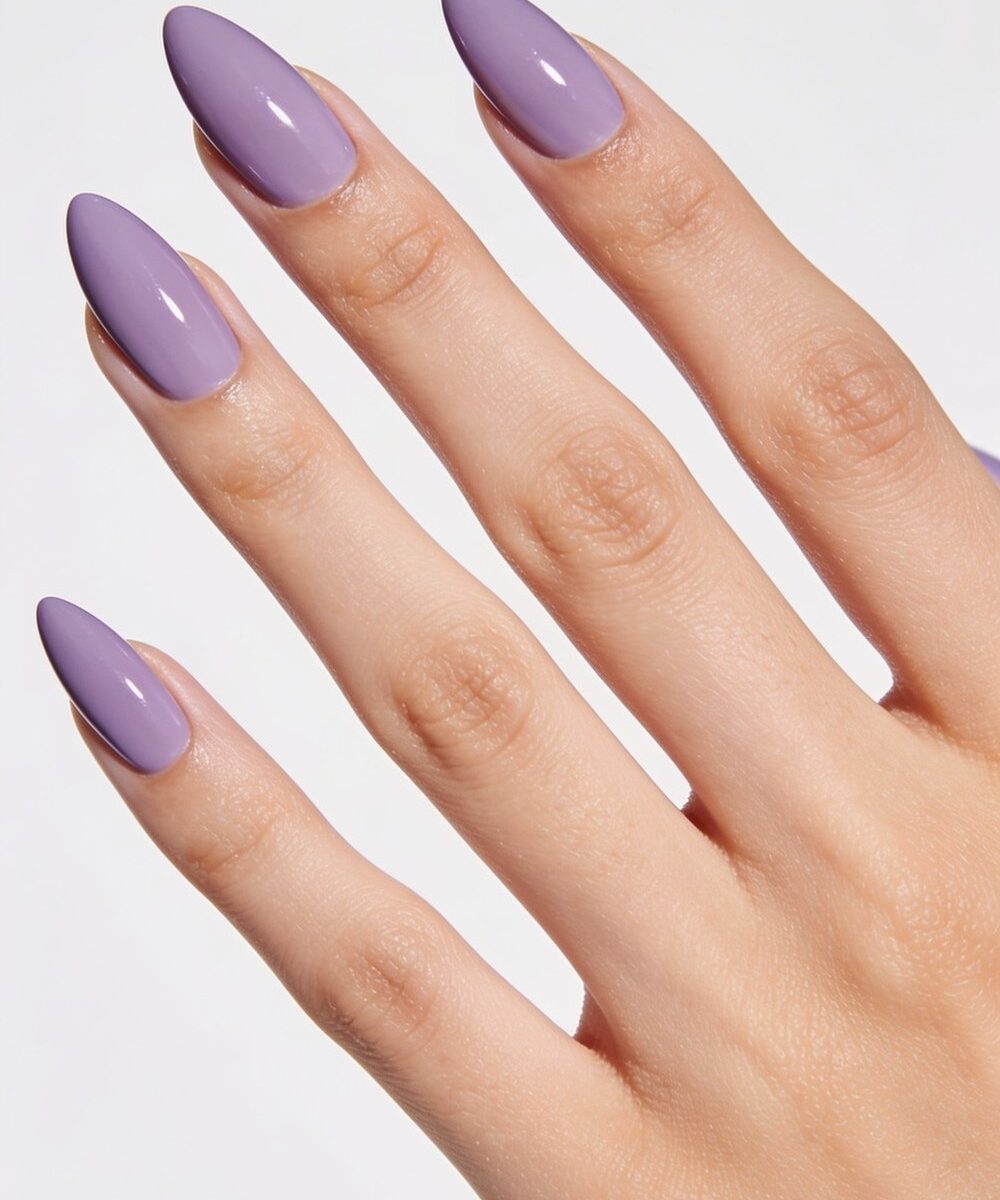
Shape is the decision that changes a manicure more than colour does, and it is the one most people leave to whoever is holding the file. It sets how long your fingers look, how much of your day the nails interrupt, and how often one of them breaks.
There are only three variables underneath all ten shapes below. How much the sides taper in, whether the free edge is flat or curved, and how far the nail extends past the fingertip. Every named shape is a combination of those three, which is why a tech can change your shape without changing anything else about the set.
A shape is only as strong as the narrowest point of the nail. Tapering the sides removes material from exactly the place that carries the load, which is why stiletto and coffin break and square does not.
If you type, lift, cook or handle anything all day, the shapes with straight sides will outlast the tapered ones by weeks, whatever product they are made from.
How to pick, in three questions
First, what do your nail beds look like? Wide beds carry square and squoval well and get swamped by anything heavily tapered. Narrow beds do the opposite. Look at the nail itself rather than the finger.
Second, how much length can you keep? Almond, coffin and stiletto all need extension past the fingertip to read as themselves. On natural nails that means growing them out or accepting a shorter, blunter version of the shape.
Third, what breaks your nails now? If you already snap them at the sides, do not choose a shape that files the sides away. If you catch tips on things, go shorter rather than stronger, because there is no product that beats leverage.
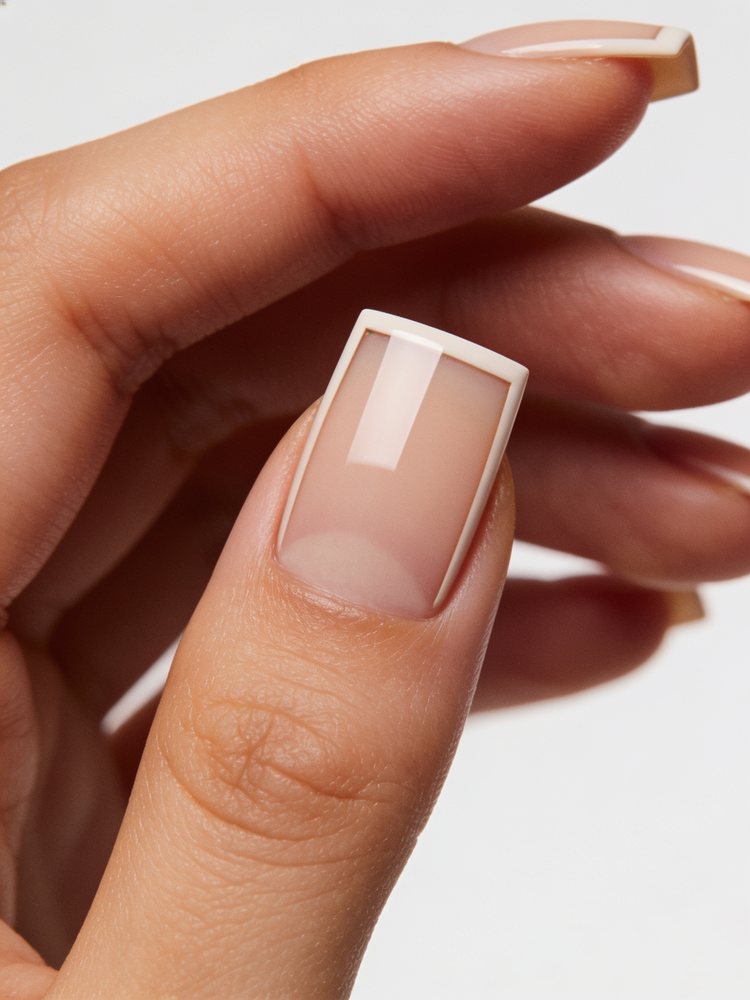
Square
Straight sides, flat free edge, sharp corners. It is the strongest shape available because nothing has been filed away from the stress points, and it holds the most surface area for designs.
The corners are the whole issue. They catch on hair, pockets and car doors, and they are where lifting starts on an enhancement. Ask for the corners to be very slightly softened and you keep the strength without the snagging.
Best on wide nail beds and shorter lengths. On a long narrow nail it reads as a rectangle.
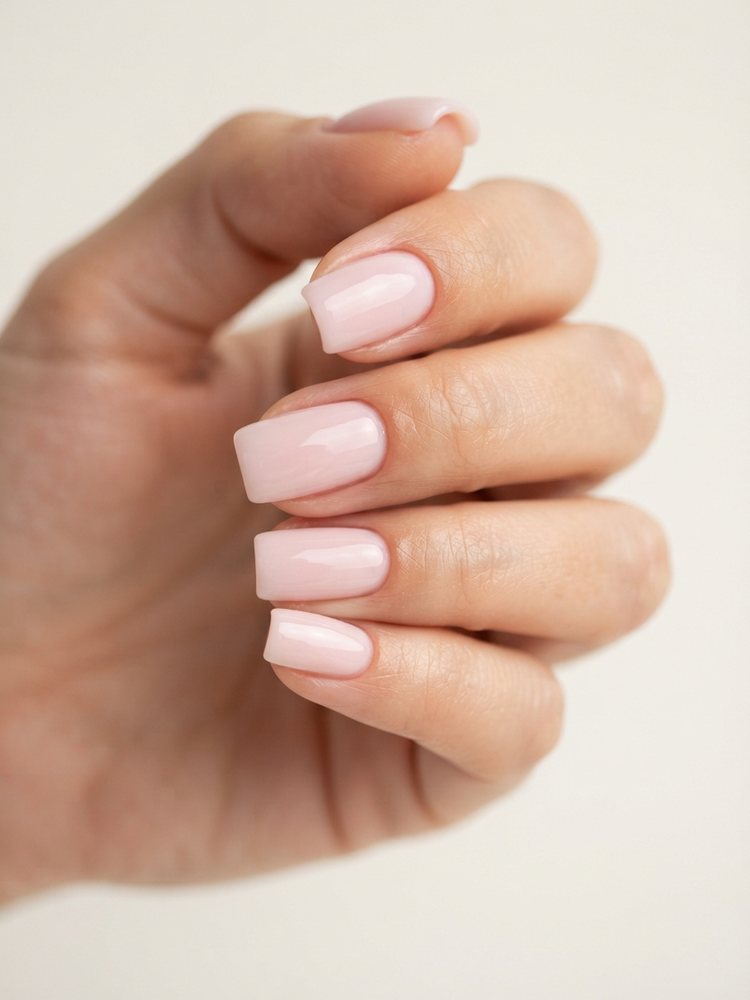
Squoval
A square with the corners rounded off. It is the most worn shape in the world for a reason: it keeps nearly all the strength of a square, loses the snagging, and suits practically every nail bed.
This is the default to ask for if you are unsure. It is also the easiest shape to file yourself, because you shape the sides straight and then just knock the corners back with a few passes.
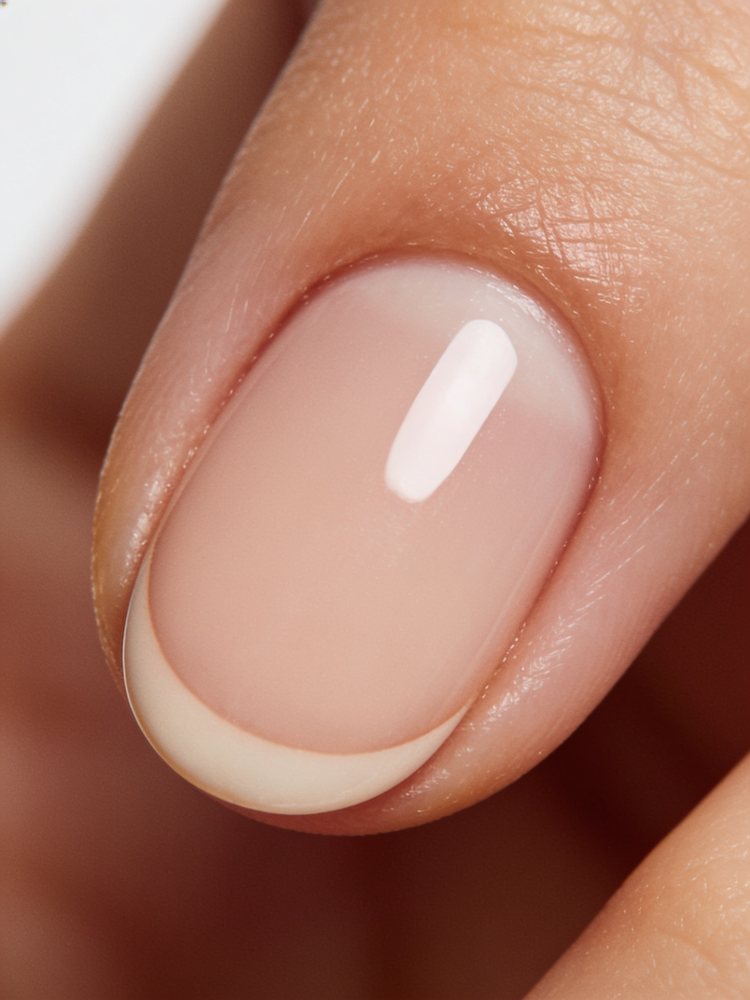
Round
The free edge follows the natural curve of the fingertip. Nothing extends past the finger at all, which makes it the shape for anyone who works with their hands and cannot have length.
It is also the most forgiving shape on wide or short nail beds, because the curve draws the eye down the nail rather than across it. Men who want tidy nails are almost always asking for this without knowing the name.
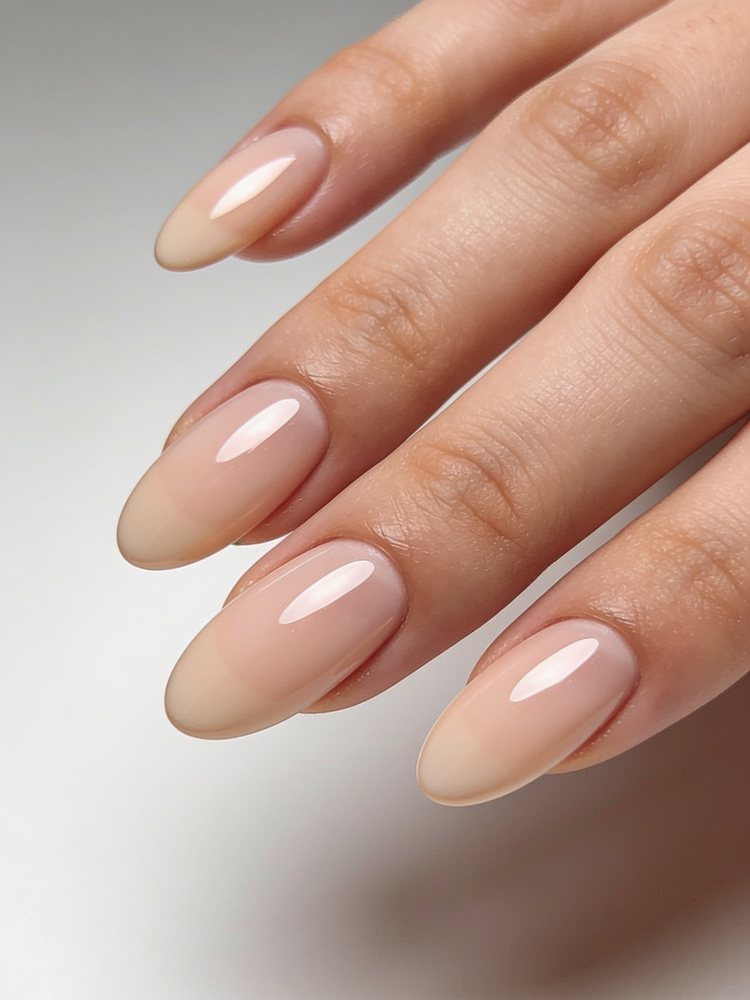
Oval
A round shape stretched out, with the sides gently curved in and an egg-shaped tip. It lengthens the finger more than any shape that does not require real extension, which makes it the best value shape on this list.
It suits short fingers and wide beds particularly well. The curve on the sides has to be gradual. Filed too aggressively it stops being oval and becomes a soft almond with weak sides.
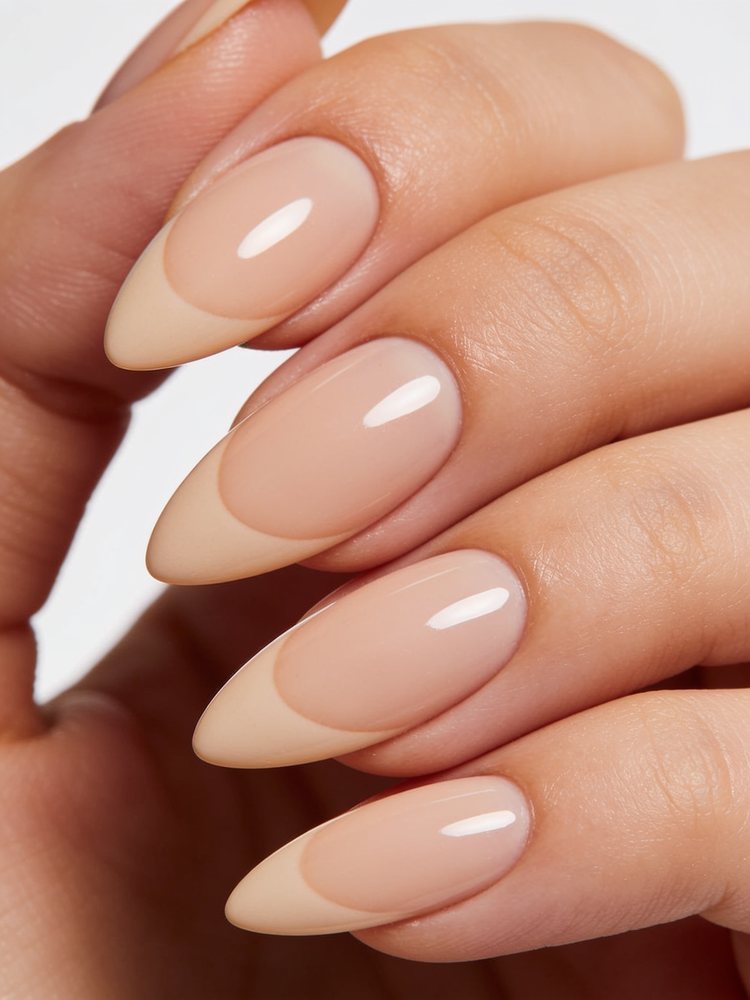
Almond
Tapered sides that come to a soft rounded point, like the nut. It is the most requested shape in salons and the most photographed, because it slims the finger and gives designs a natural direction to run in.
It needs length. On a short nail there is not enough distance to taper over and it ends up looking like a badly filed oval. Ask for the point to stay rounded rather than sharp, both for strength and because sharp almond is really stiletto.
The sides are the weak spot. If you break nails at the corner, this shape will find that out.
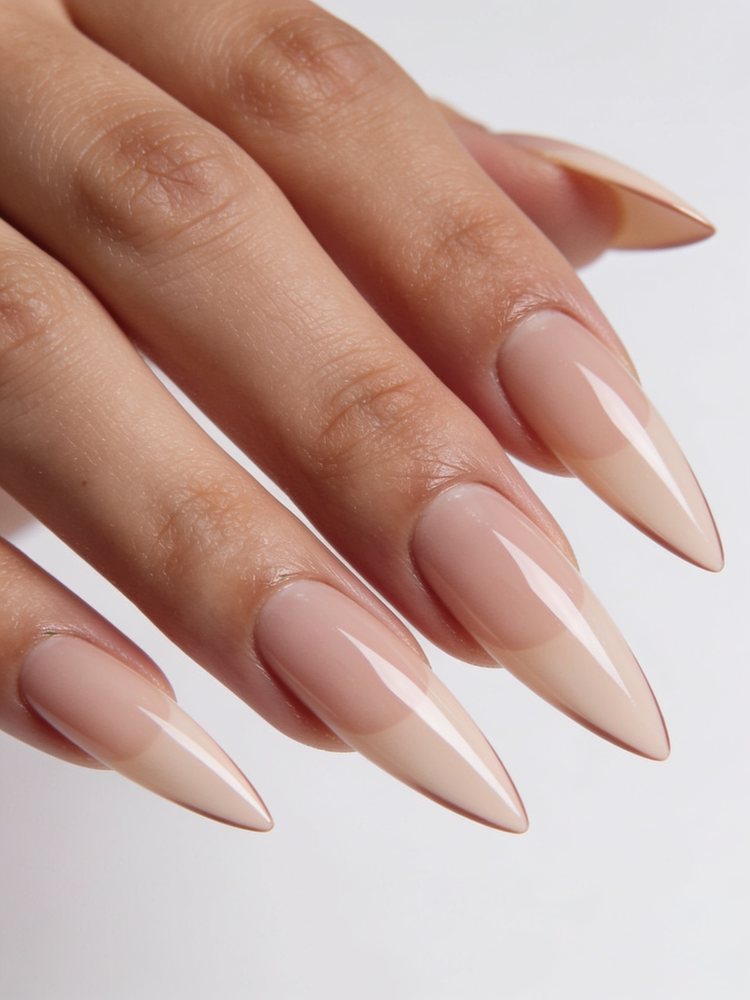
Coffin, also called ballerina
Tapered sides like almond, then cut flat across the tip. It is the shape that made acrylic mainstream, and it is almost impossible to keep on natural nails because the taper needs length that natural nails cannot hold.
The flat tip is the largest usable canvas of any long shape, which is why chrome, marble and encapsulated designs all end up on coffin nails.
Ask for the taper to start further down the nail than feels natural. Techs often start it too high, which leaves a wide waist and a shape that reads more like a wide square.

Stiletto
Straight taper to a sharp point. It is a costume shape and it should be treated as one. Expect to break at least one during the set, expect to relearn how to pick things up, and do not choose it for a holiday.
It photographs better than anything else on this list, which is the entire reason it survives. If you want the look with a fraction of the problems, ask for a short stiletto with the point blunted, sometimes called an edge or arrowhead.
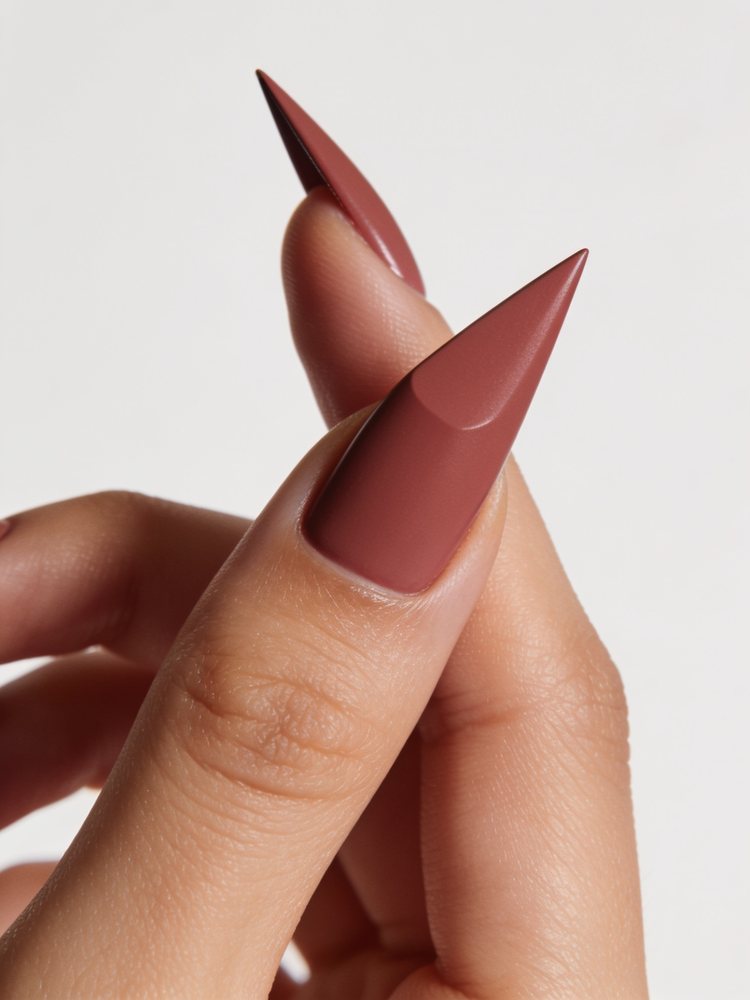
Lipstick
The tip is cut on a diagonal, like the slant on a new lipstick. It is rare, it looks deliberate, and it works best when only the slant is doing the talking and the colour stays plain.
Both hands need the slant angled the same way relative to the thumb or it reads as an accident. Say which way you want it before the filing starts.
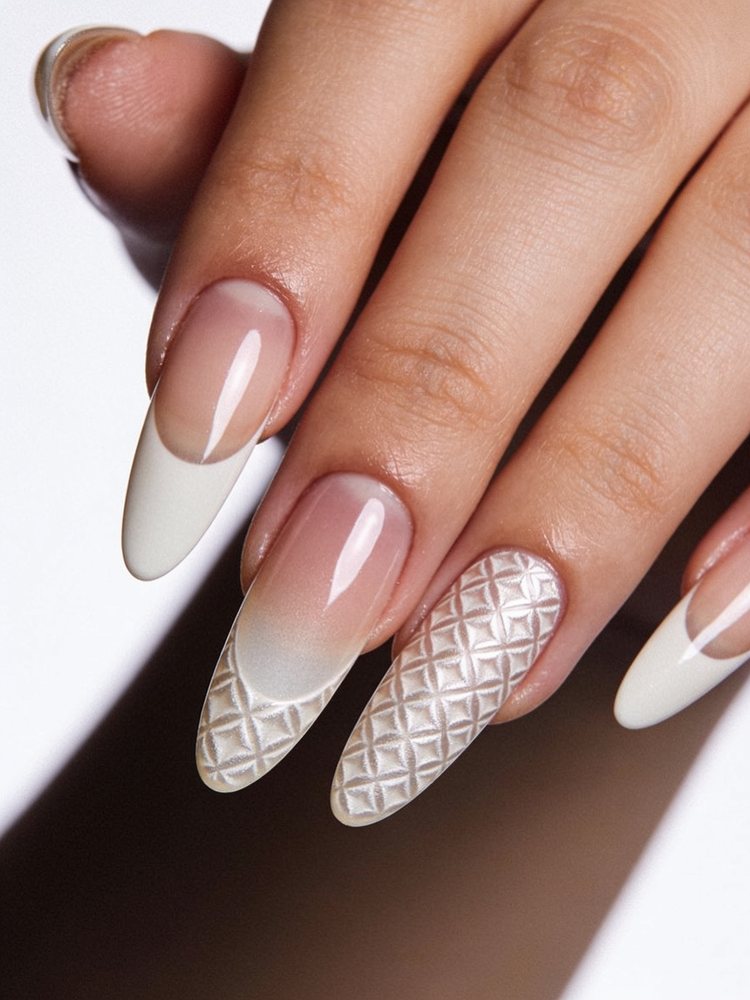
Flare, also called duck
The nail widens out towards the tip instead of tapering in, which gives you an unusually large flat area to decorate. It was a nineties shape and it has come back properly, helped along by how well it holds a design.
It needs a form or a tip to build on, so it is an enhancement shape only. The flare should be subtle. Past a certain angle it stops being a shape and starts being a novelty.
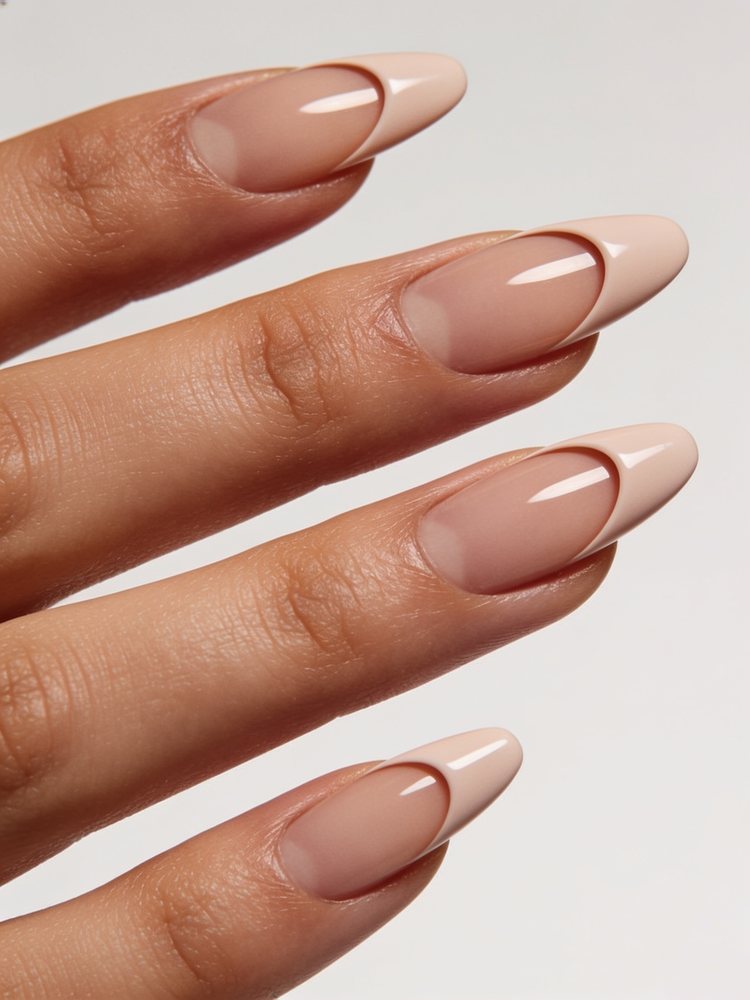
Squoval with a deep C curve
Not a different outline, a different cross-section. The nail is built with a deeper arch from side to side, which makes it dramatically stronger and makes a flat natural nail look like a naturally curved one.
Worth asking about specifically if your nails are flat and keep cracking down the middle. Most techs will do it if you ask, and almost none will offer. Builder gel does much the same job on natural nails.
Length is a separate decision
Salons rarely agree on what short means, so use the fingertip as the reference instead. Short is level with or just under the fingertip. Medium is up to about a quarter of an inch past it. Long is anything beyond that. Saying “a couple of millimetres past my fingertip” gets you far closer to what you pictured than saying “medium”.
Length also changes which designs work. Repeating patterns and deep French tips need surface area, while sheer washes and micro details look best short. The designs guide flags the length each look needs, and the ideas list has a whole group built around short nails.
Filing your own shape without wrecking it
- File dry, never after a soak. Wet nails are soft and tear rather than cut.
- Work in one direction on natural nails. Sawing back and forth separates the layers at the free edge and that is what causes peeling.
- Shape the sides first, then the tip. Doing it the other way round is how people end up with two different shapes on one hand.
- Check the outline from the front of the fingertip, not from above. From above every shape looks symmetrical.
- A 180 grit file is right for natural nails. Anything coarser is for enhancements.
Questions people actually ask
Which nail shape makes fingers look longer?
Almond first, oval second. Both taper the sides, which narrows the visual width of the finger. Coffin and stiletto lengthen too, but they need enhancement to hold. Square and round do the opposite and read wider.
What is the strongest nail shape?
Square, then squoval, then round. Strength comes from keeping material at the sides where the stress sits, so any shape that tapers is trading durability for the look.
What is the difference between coffin and ballerina nails?
Nothing. They are two names for the same shape, tapered sides with a flat tip. Ballerina refers to the pointe shoe it resembles.
Can I change shape at a fill appointment?
Going narrower is easy and can be done any time. Going wider or longer means rebuilding the sides, which takes extra time and usually costs more, so mention it when you book rather than when you sit down. The acrylic guide covers what a rebalance involves.
Which shape works best on short natural nails?
Round or squoval. Both work with the length you already have rather than requiring more. Almond on short natural nails is the single most common disappointment in this category.
If you are choosing for the first time, ask for squoval and live with it for one cycle. It is the shape that reveals what you actually need, because whatever annoys you about it points straight at the shape you should try next.