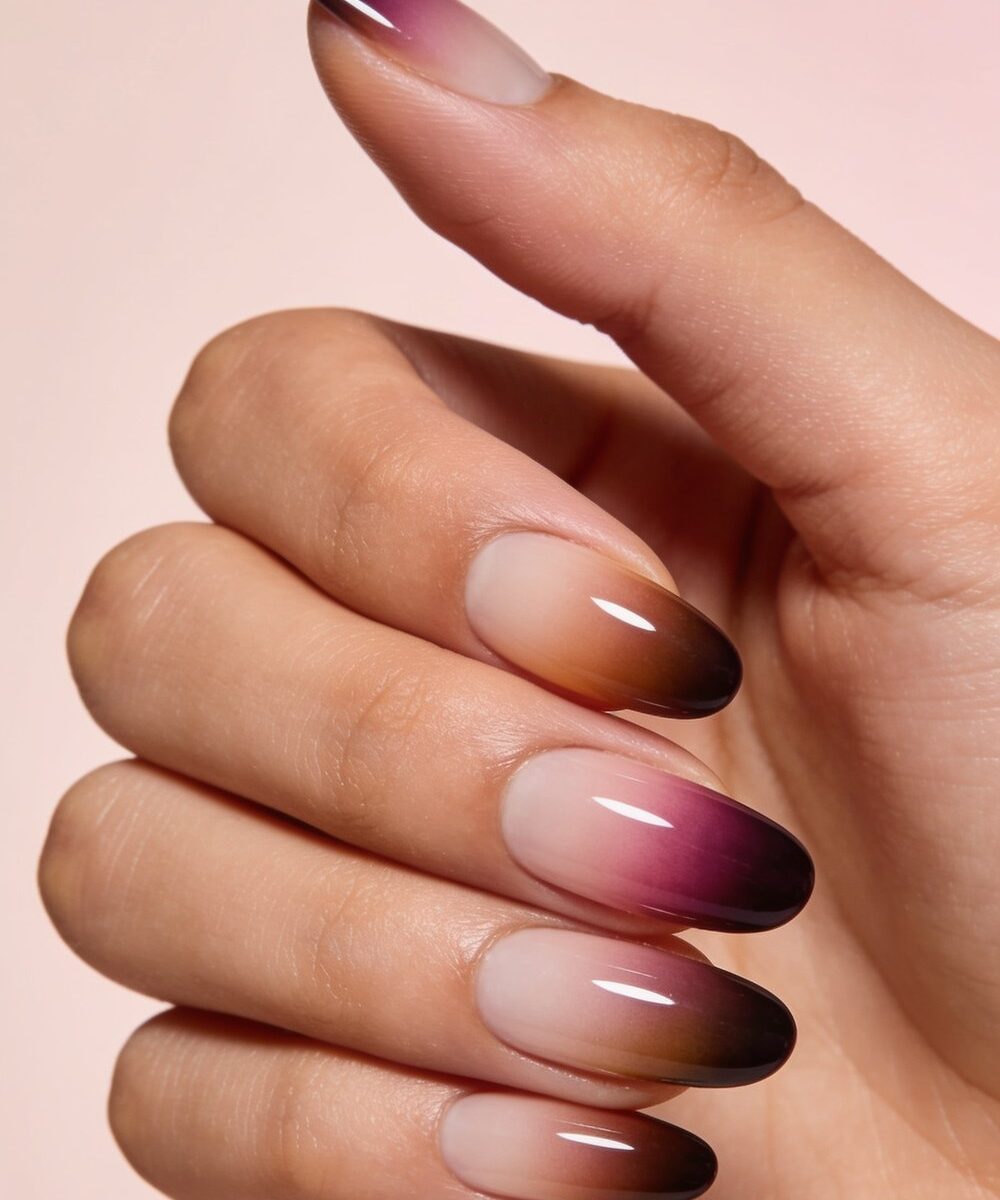
An ombre is two colours with no visible boundary. Everything that goes wrong with one goes wrong in the same place: the transition is too short, so instead of reading as a fade it reads as a smudged line.
The blend needs to happen over at least a third of the nail, and preferably half. A gradient squeezed into the top few millimetres is the single most common way an ombre disappoints.
Colours from the same family blend far more cleanly than contrasting ones, because the midpoint stays a colour rather than turning to mud.
Classic fades
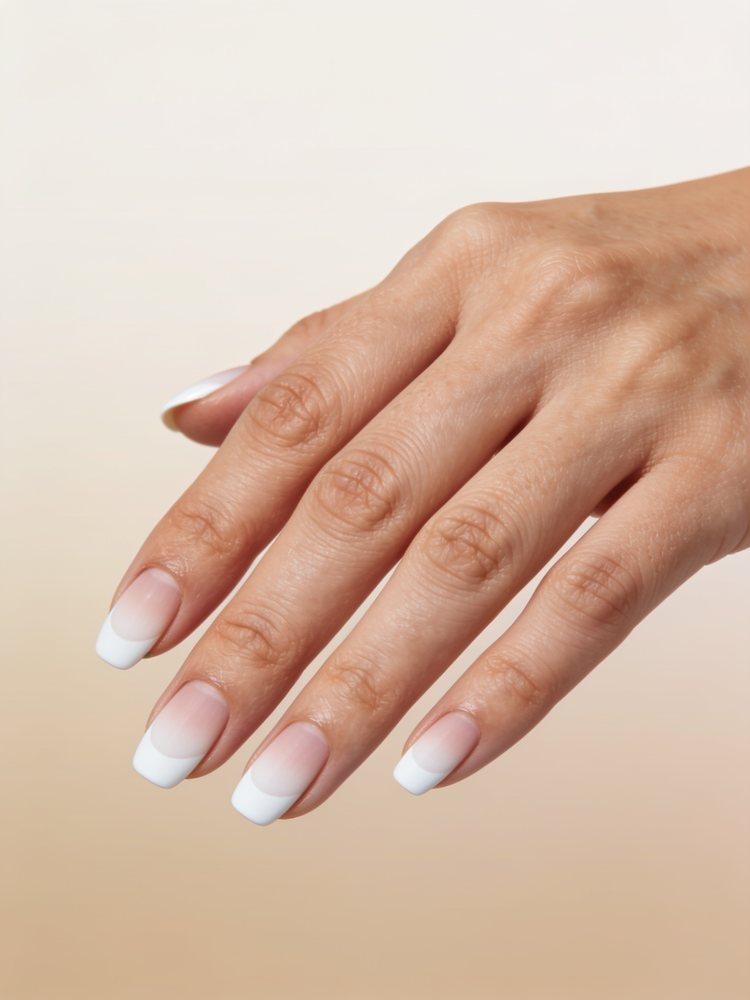
Baby boomer
Nude fading into a white tip with no line at all. The most requested ombre there is.
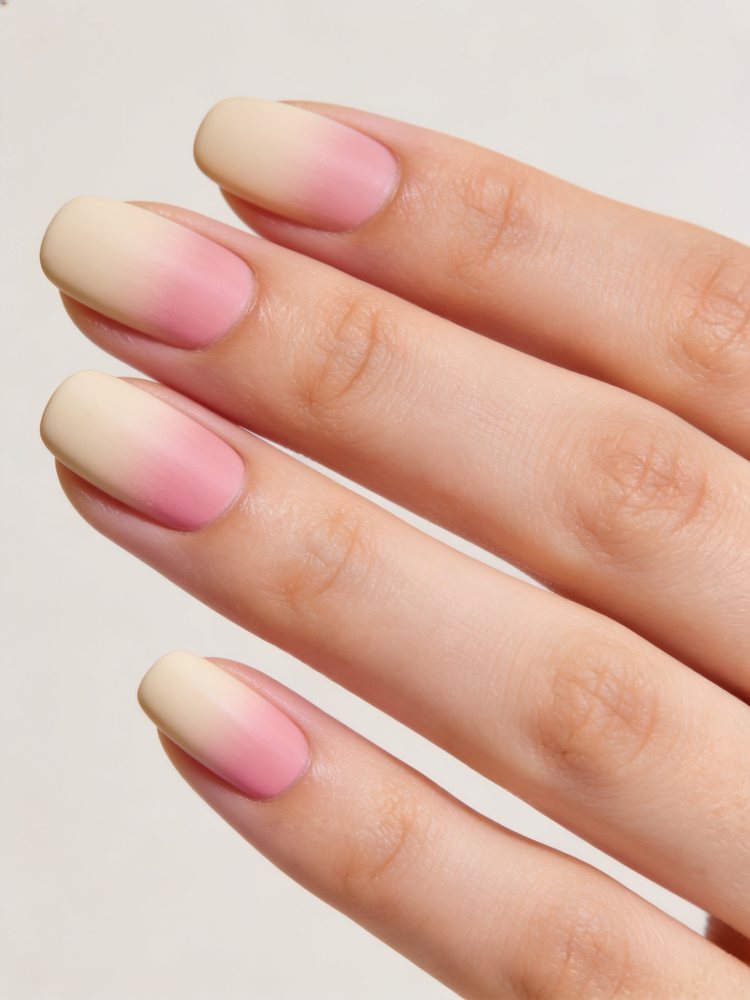
Nude into pink
The softest possible version. Barely reads as a design.
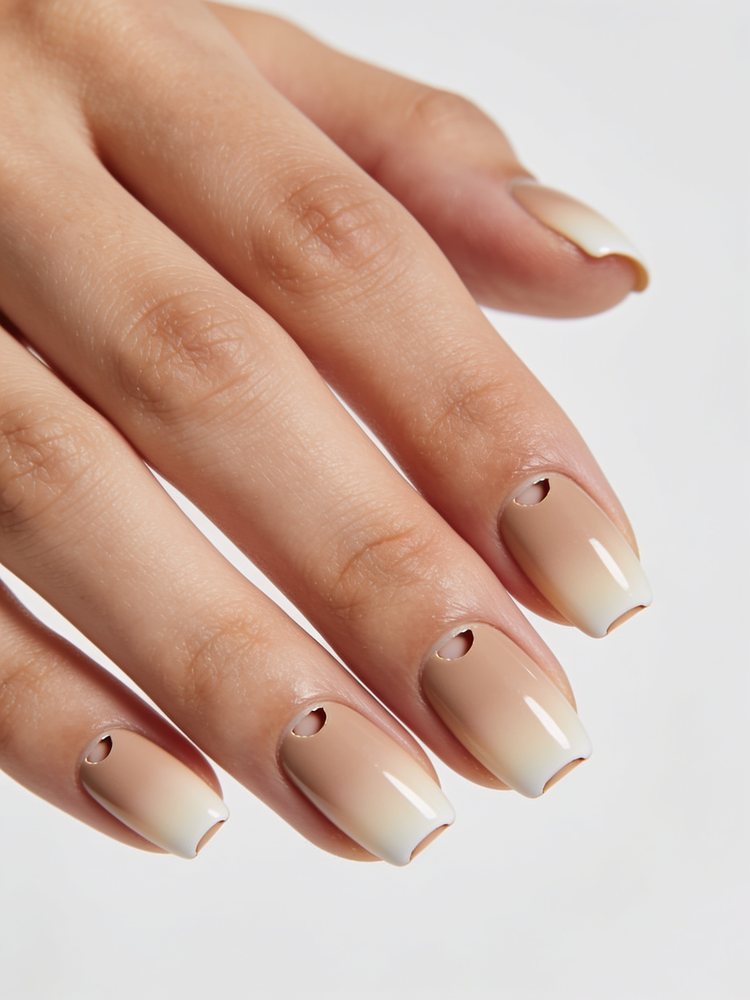
Cuticle-out nude
Pale at the base deepening to the tip, which hides regrowth in the base colour.
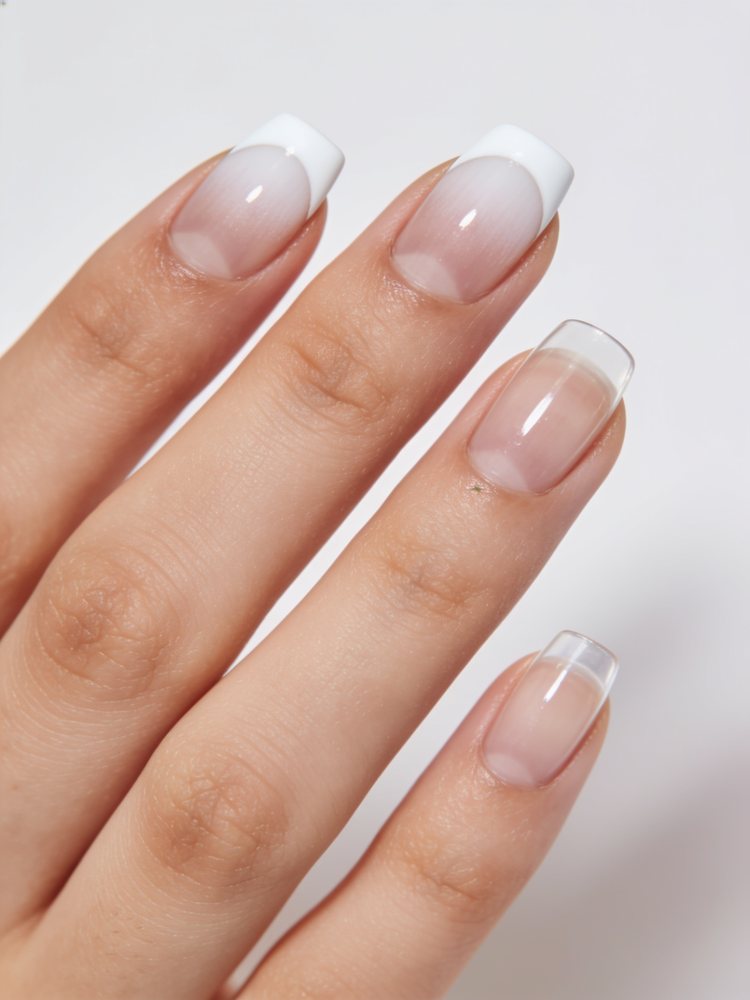
White into clear
A white cuticle fading to bare nail. The inverse of a French.
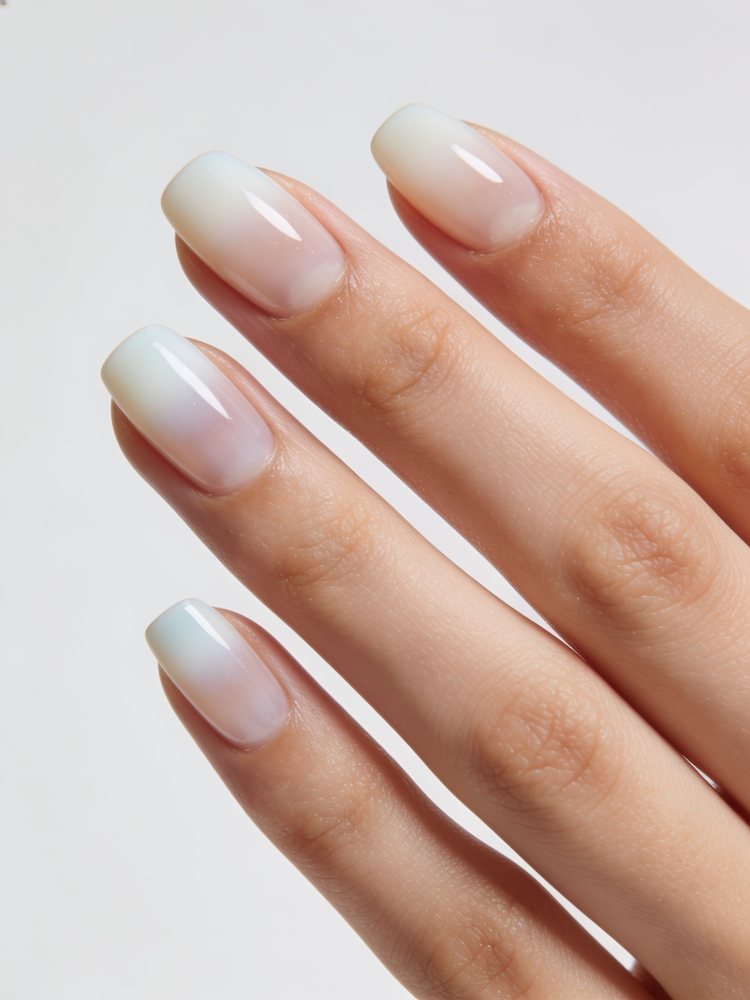
Milky into sheer
Two sheers a shade apart. The easiest ombre to attempt at home.
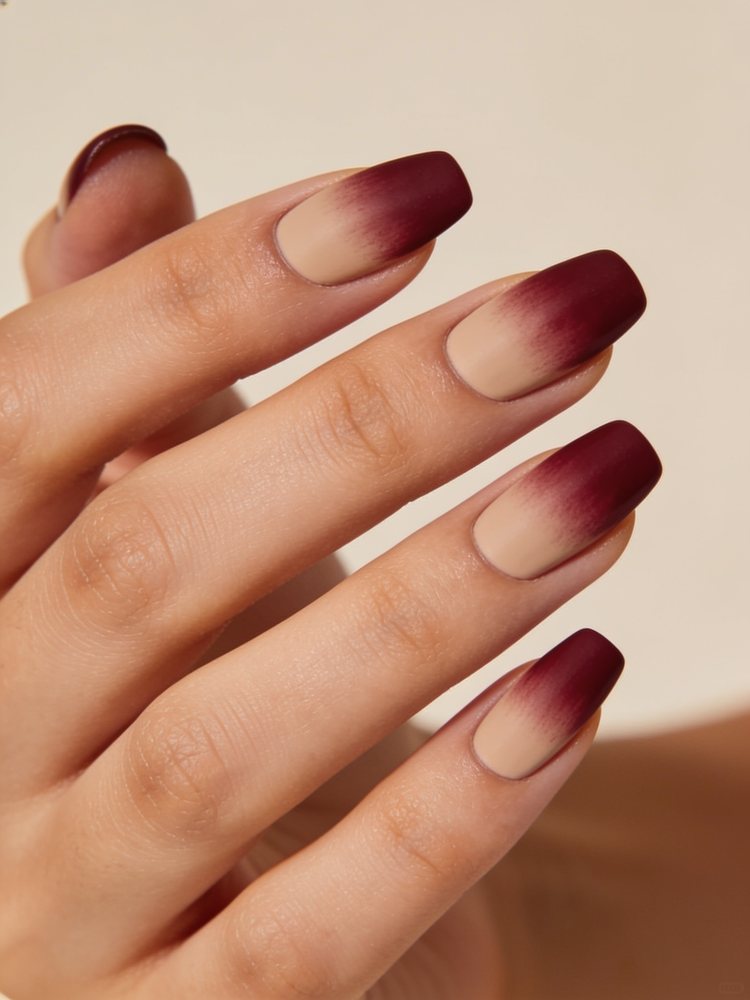
Nude into burgundy
Warm neutral into deep wine. Excellent for autumn.
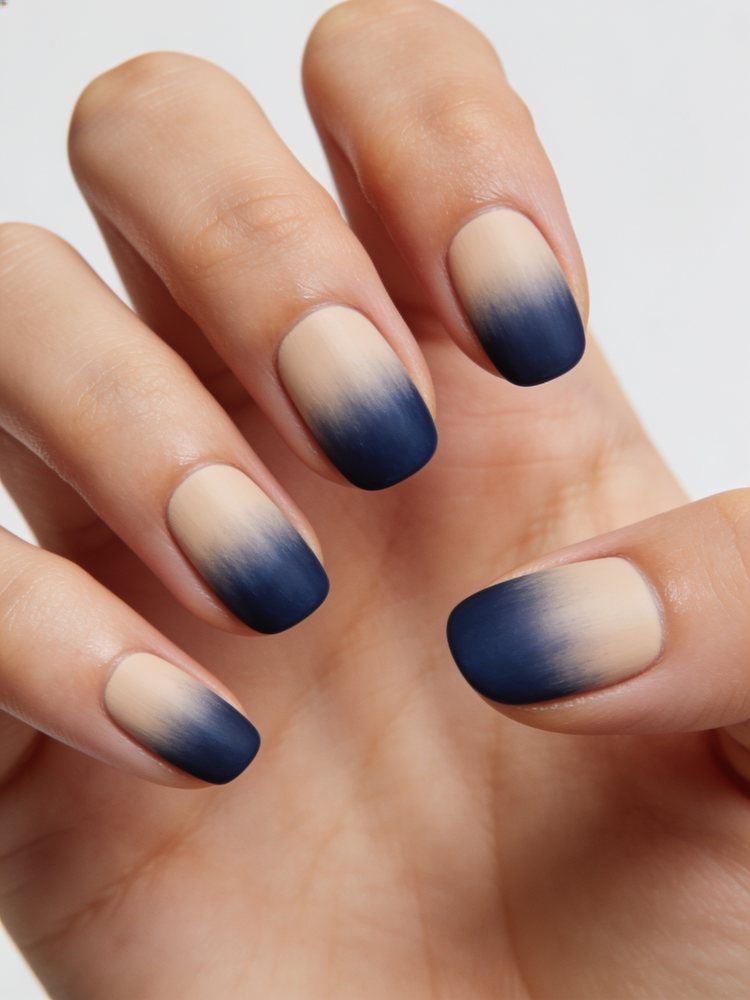
Nude into navy
Neutral into deep blue.
Colour gradients
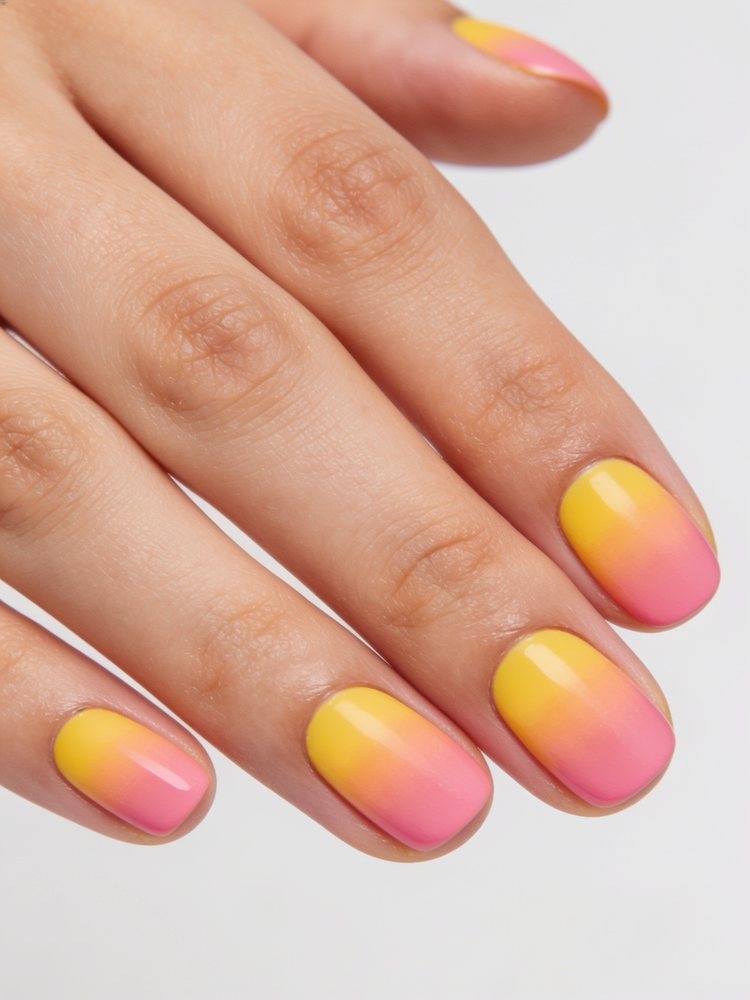
Sunset
Yellow through peach into pink across each nail.
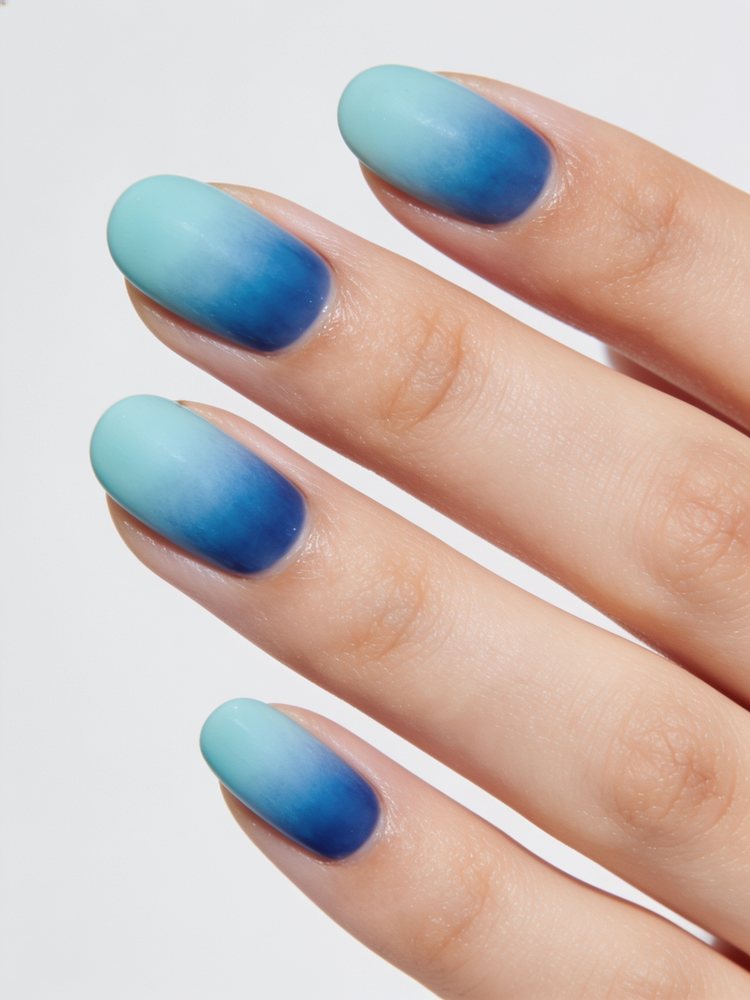
Ocean
Pale aqua into deep blue.
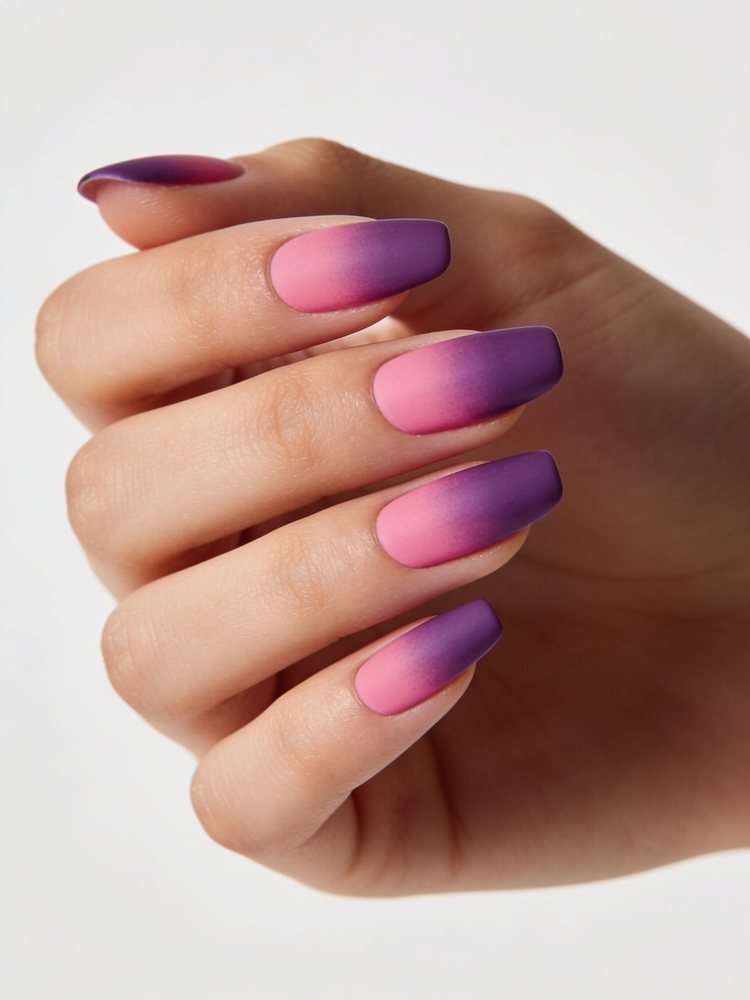
Pink into purple
Same-family blend, which keeps the midpoint clean.
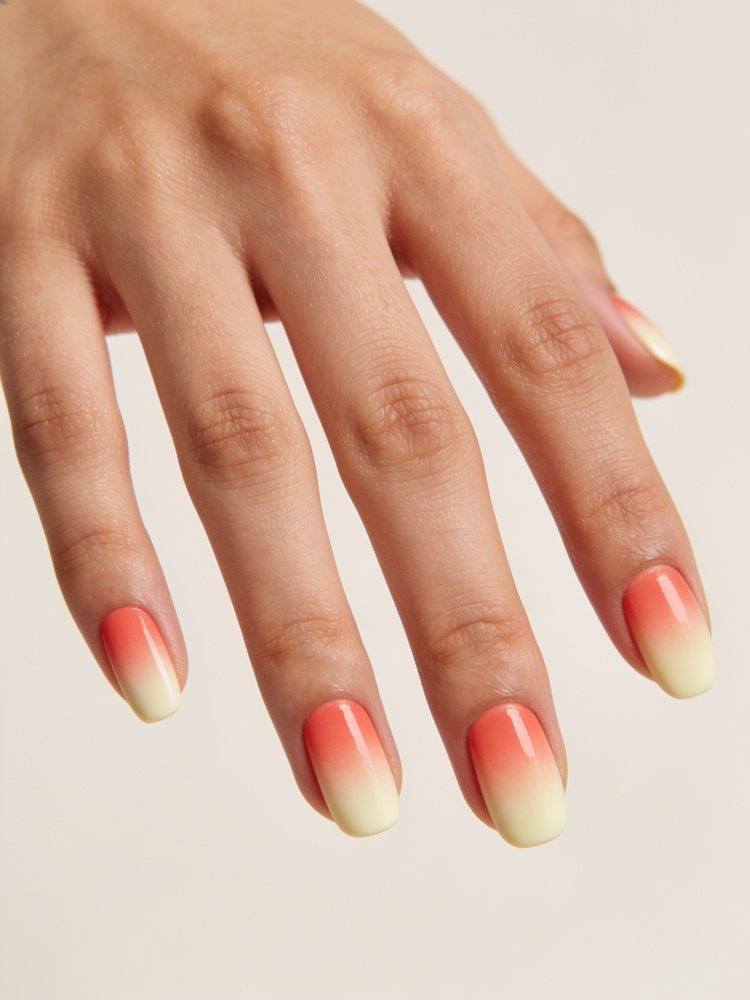
Coral into cream
Warm and forgiving.
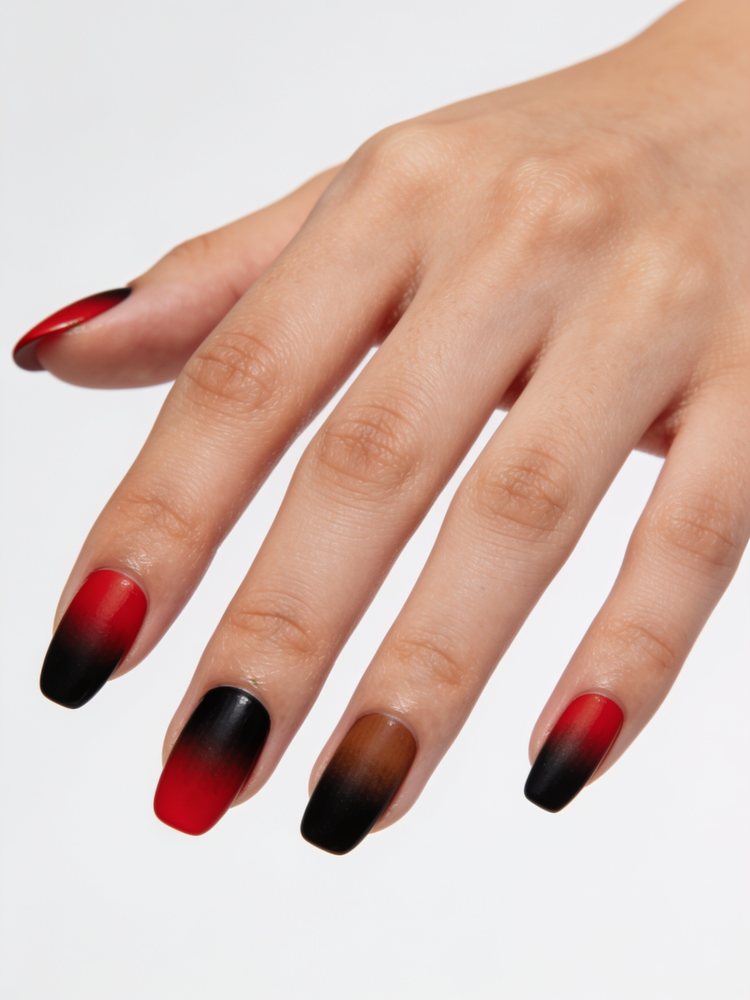
Red into black
High contrast. The midpoint needs care or it goes brown.
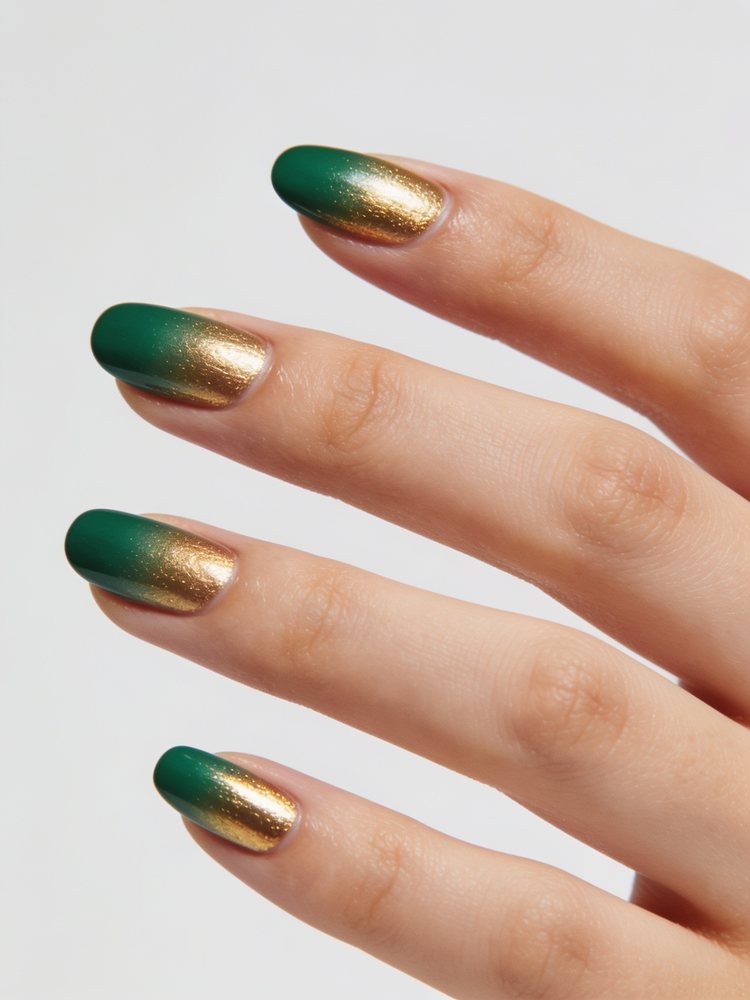
Green into gold
Deep green fading into a metallic tip.
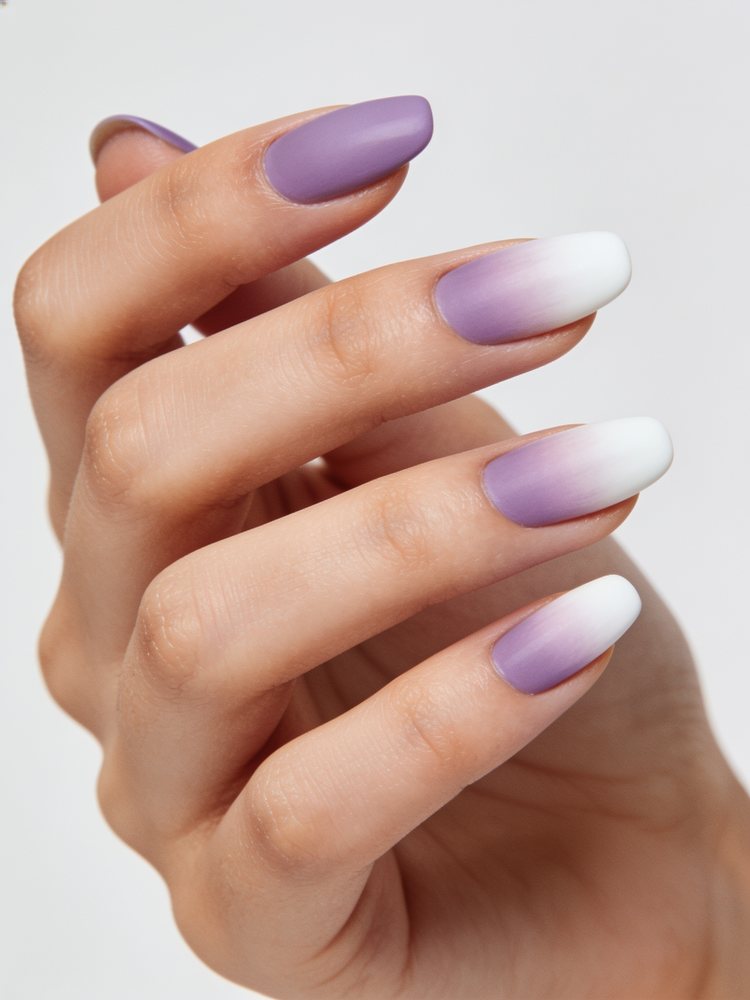
Lilac into white
Soft and very wearable.
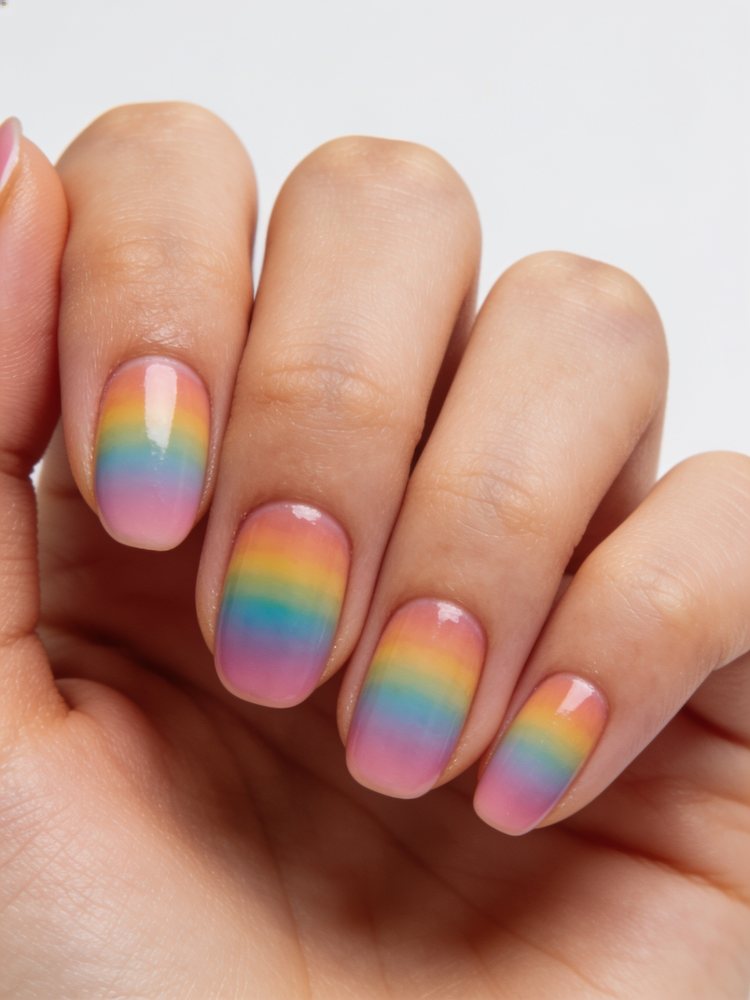
Rainbow across the hand
Each nail a different point in one gradient rather than a gradient per nail.
Finish gradients
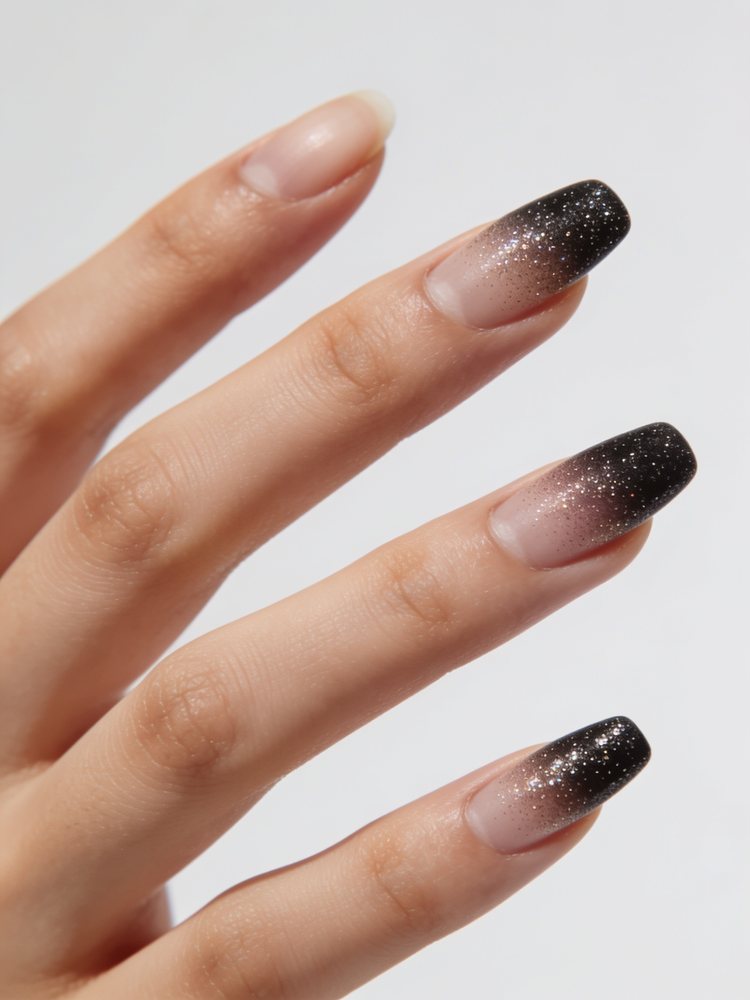
Glitter gradient
Density building from nothing at the cuticle to heavy at the tip.
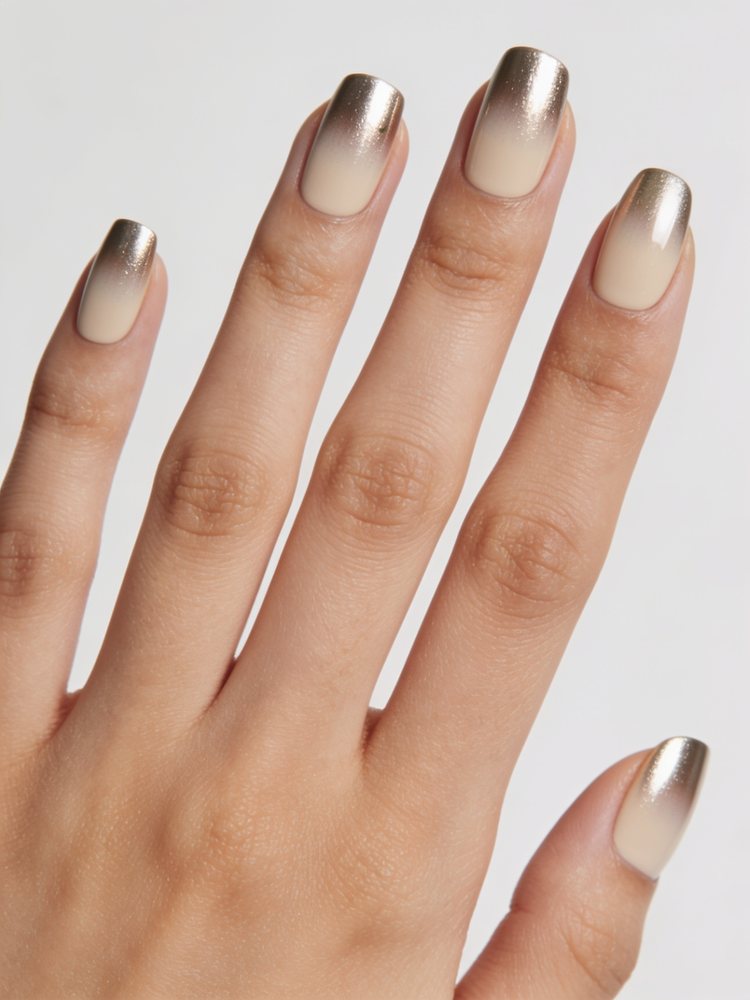
Chrome into nude
Metallic at the tip fading into a plain base.
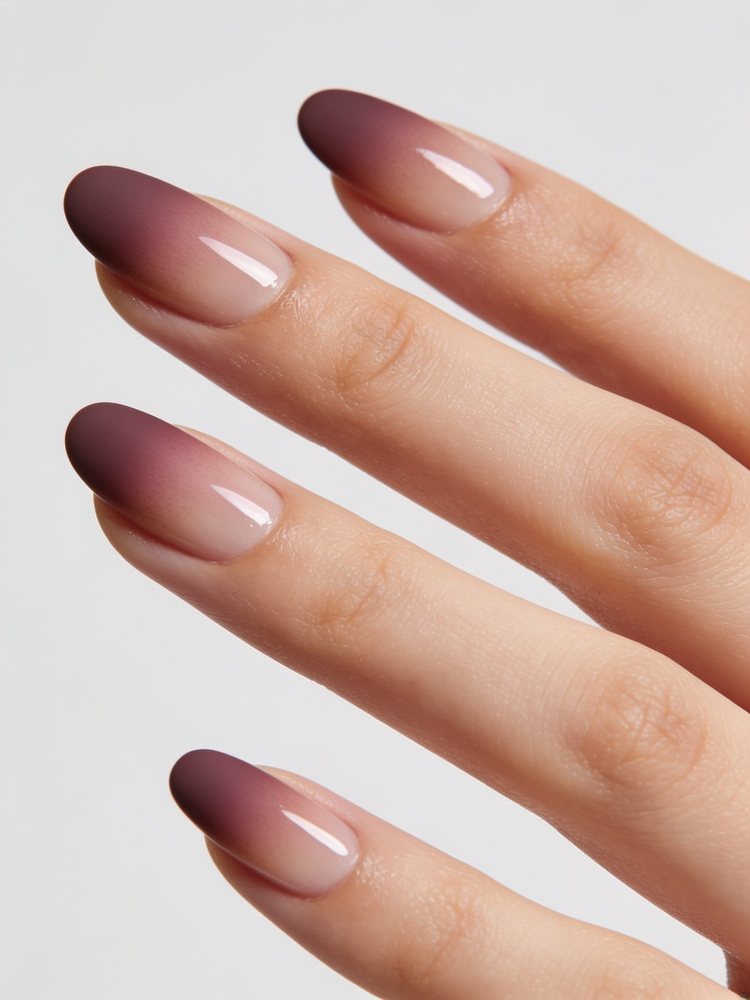
Matte into gloss
The same colour, two finishes, blended. Very unusual and very good.
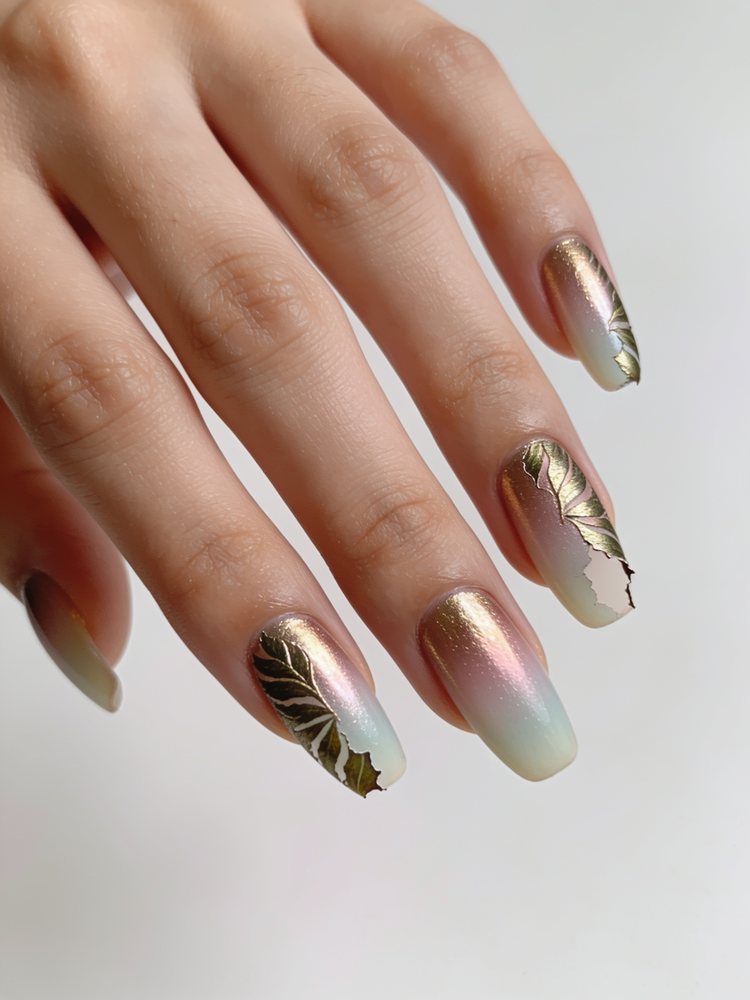
Foil gradient
Torn leaf dense at one end thinning to nothing.
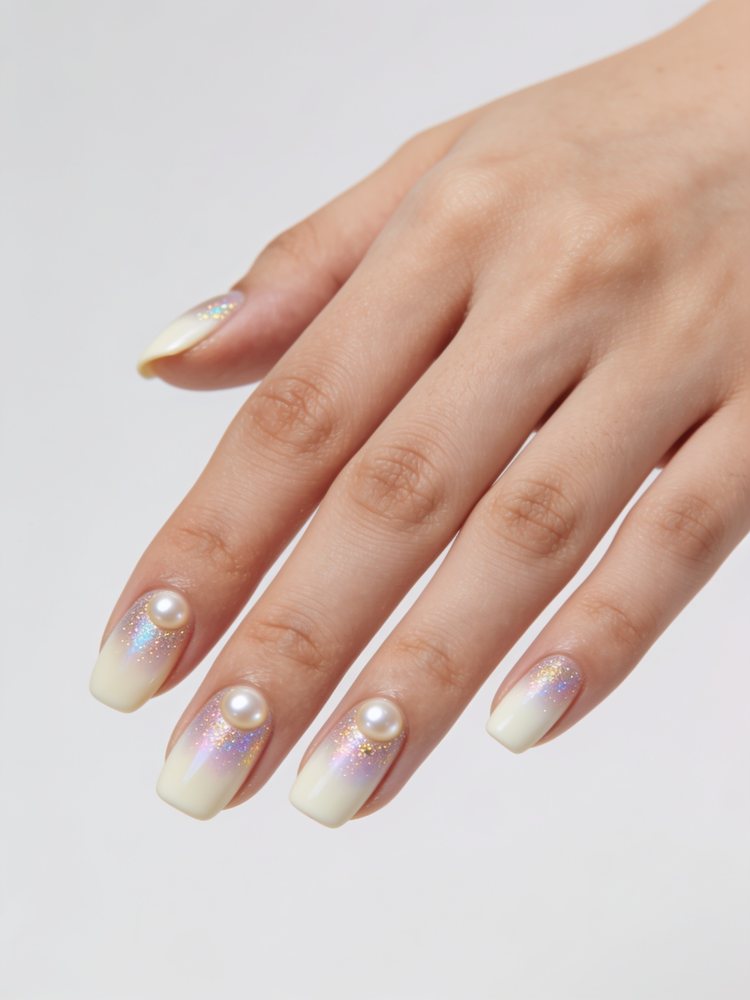
Pearl into cream
Iridescent powder fading into an opaque base.
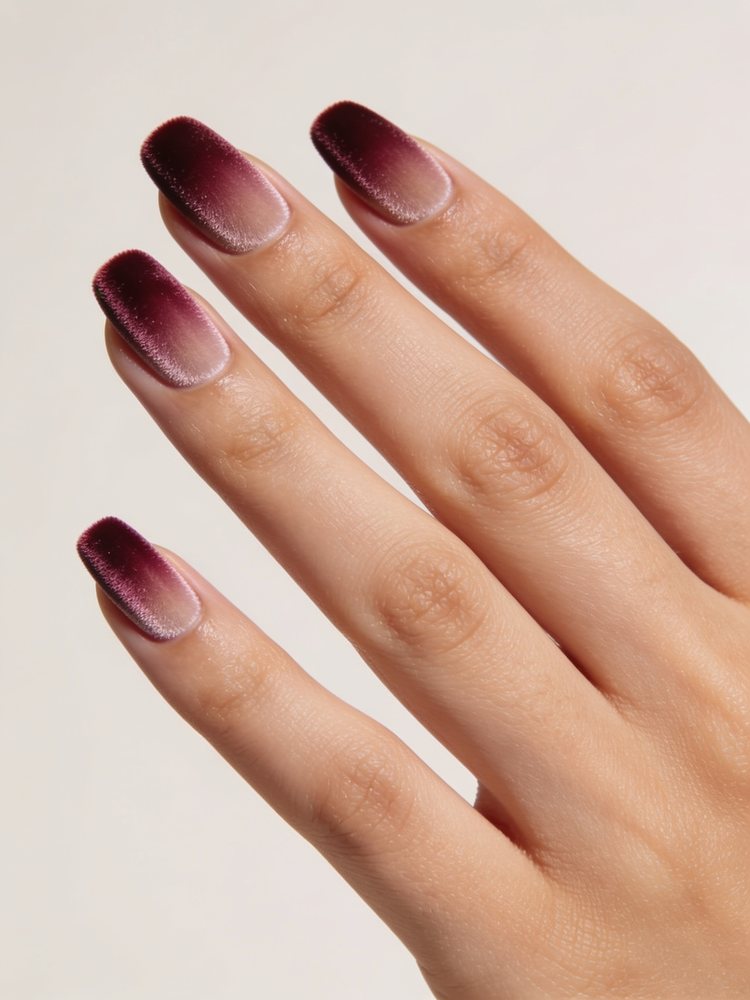
Velvet gradient
Magnetic shimmer stronger at one end of the nail.
Placement variations
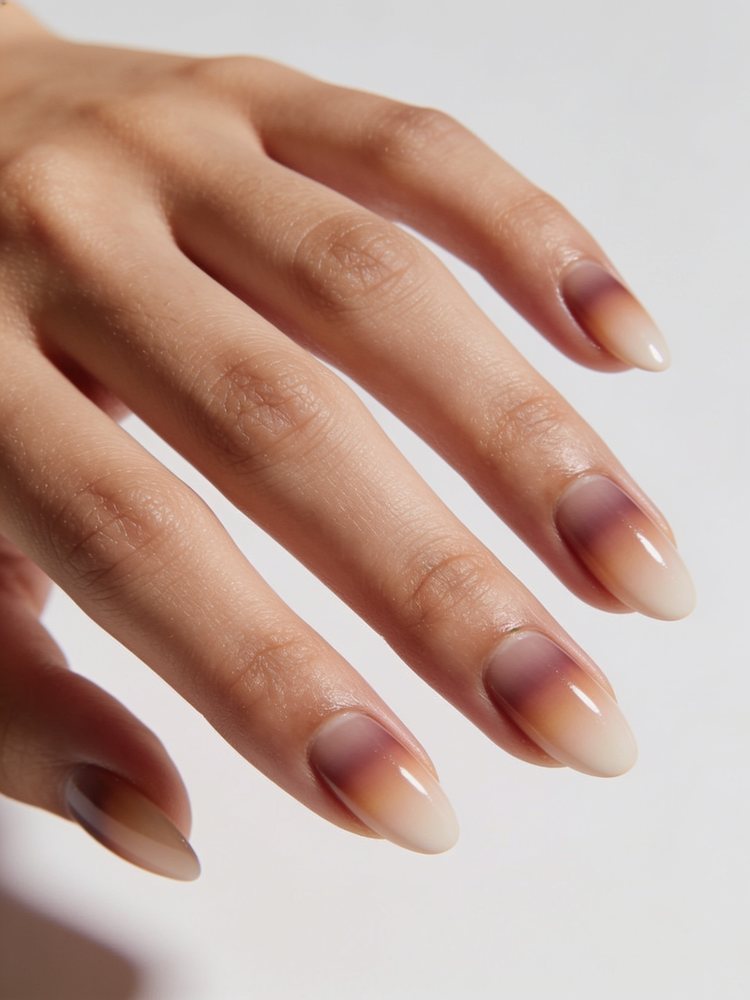
Side to side
The fade running across the nail rather than up it.
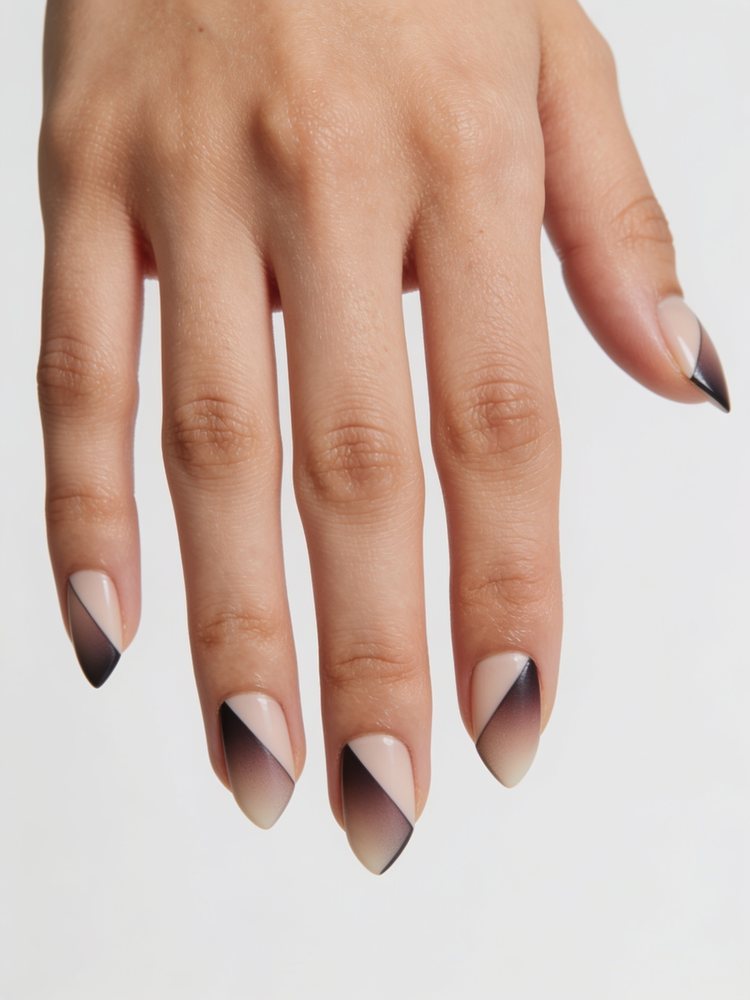
Diagonal
Corner to corner. Unexpected and it photographs well.
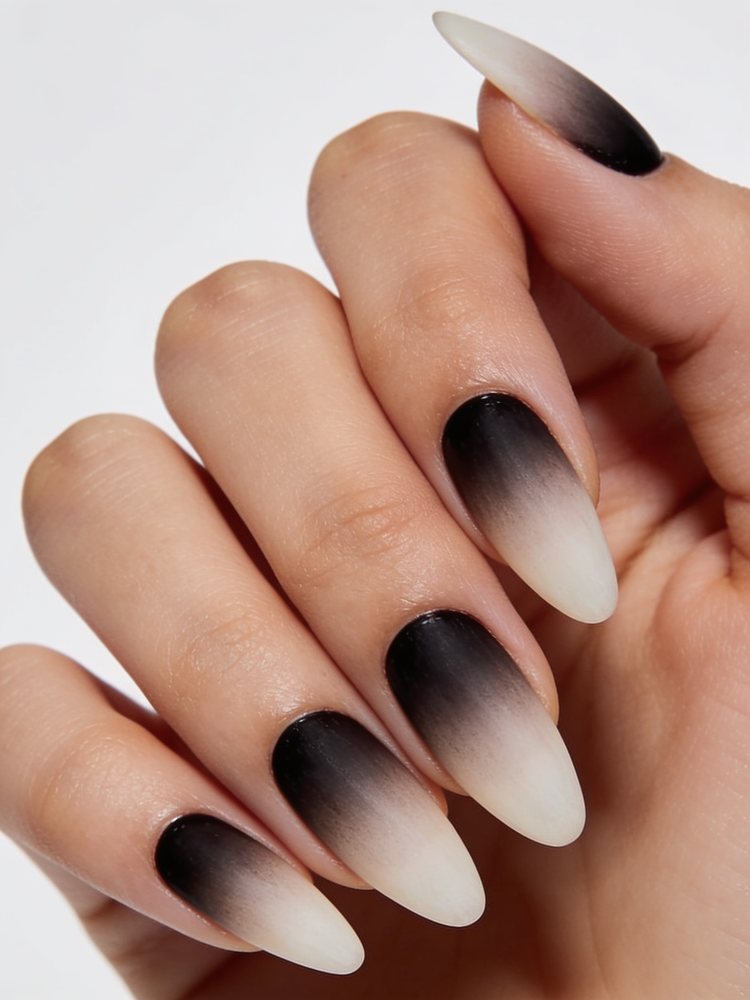
Reverse ombre
Dark at the cuticle into light at the tip. Grows out badly, looks striking.
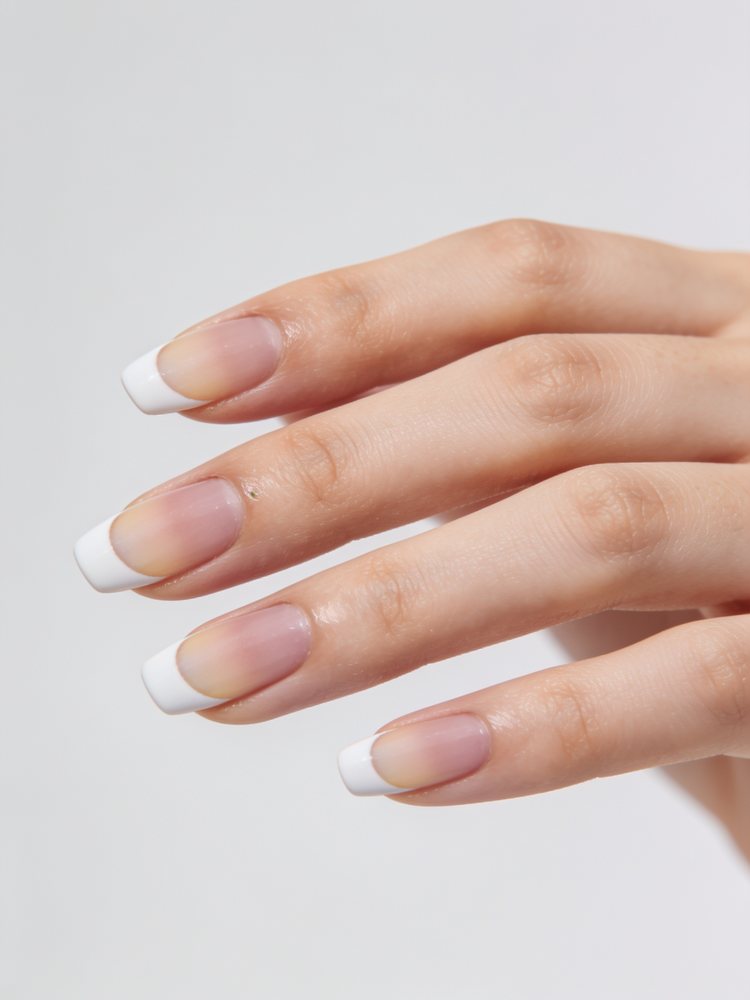
Ombre French tip
The fade confined to the tip area only.
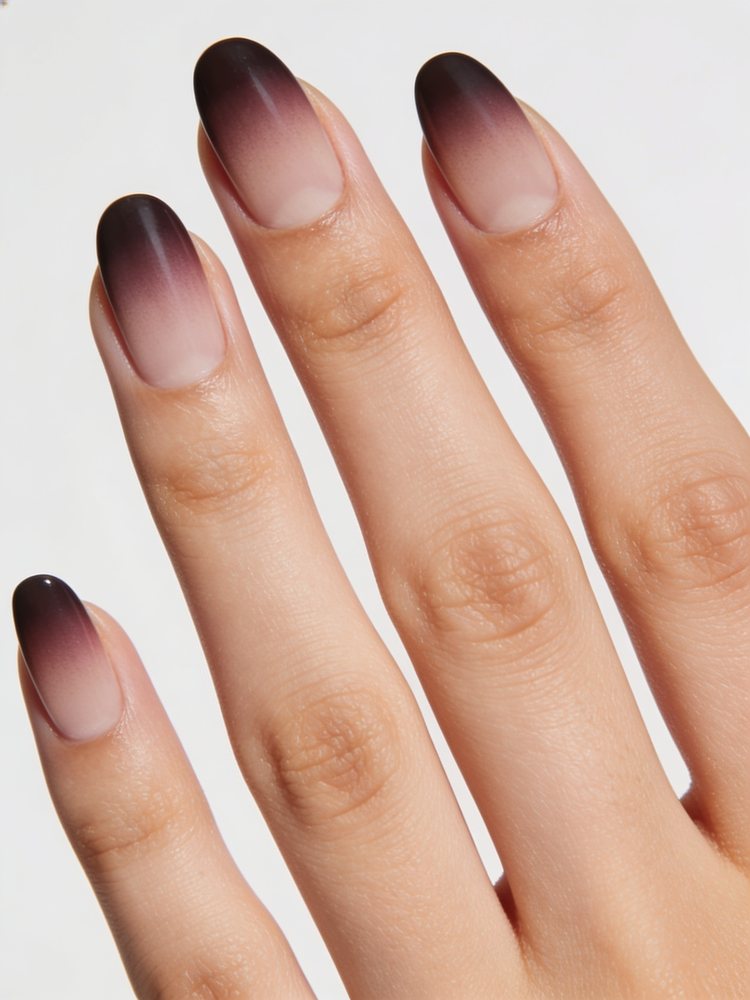
Ombre across five nails
One shade per nail, getting deeper along the hand.
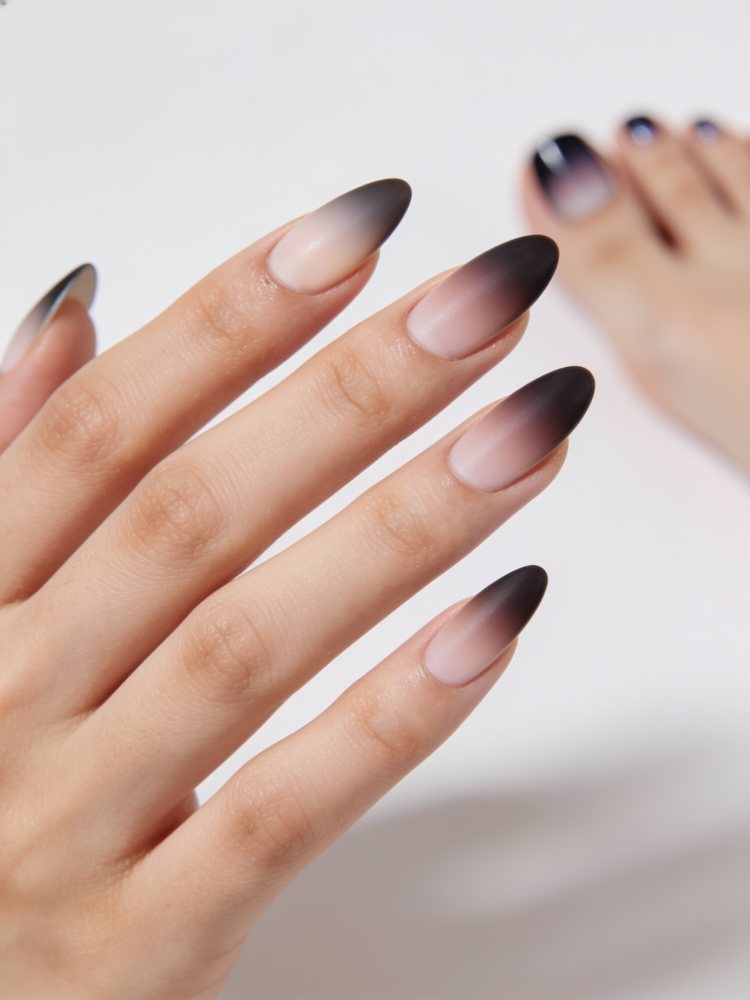
Ombre on toes
Lasts four to six weeks because toes take no impact.
Doing it at home
- Dab both colours side by side onto a makeup sponge, then press the sponge onto the nail repeatedly.
- Press more times than feels necessary. The blend appears in the last few presses.
- Reload the sponge every two nails or the colours muddy.
- Clean the skin with a brush dipped in remover afterwards. Sponging is messy by design.
For the same effect built into an extension rather than painted on, the acrylic guide covers baby boomer properly.
Questions people actually ask
Why does my ombre look like a line instead of a fade?
The blend is too short. It needs at least a third of the nail, and preferably half, to read as a gradient.
Can you do ombre nails with regular polish?
Yes, with a makeup sponge. The result is softer than a salon airbrush but the technique is genuinely forgiving.
What is a baby boomer manicure?
A nude base fading into a white tip with no visible line. It is a blurred French, and it is the most requested ombre in salons.
Which ombre colors blend best?
Two shades from the same family. Contrasting colours meet in a muddy midpoint, which is why nude and white works and red and green does not.