The French tip is the most durable idea in nail design because it is not really a design. It is a place to put one. Everything below is the same shape with a different decision made about the edge.
Depth. A nineties French sits three or four millimetres deep in bright white. A current one sits at about one millimetre in an off-white or a colour. Nothing else about the technique moved.
On short nails go thinner still. A deep tip eats the plate and makes the finger look shorter.
The quiet ones

Barely-there white
Soft off-white at a millimetre. Reads as a very healthy nail rather than a manicure.
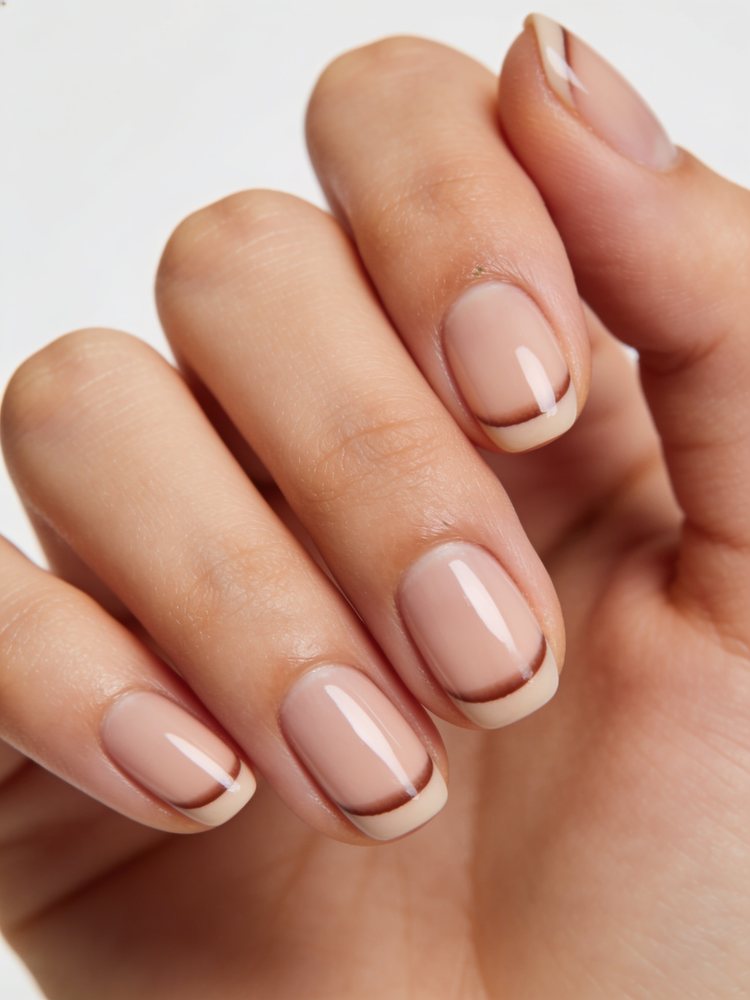
Micro French in nude
A tip barely darker than the base. The subtlest version there is.

Sheer pink base, white tip
The classic proportions with everything dialled down.
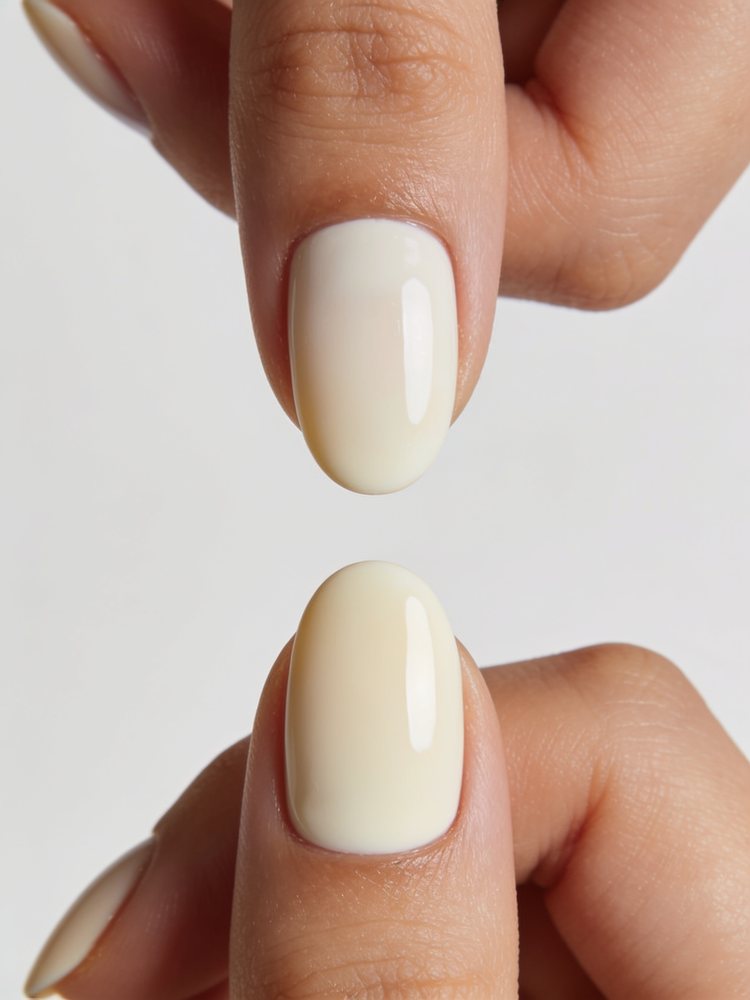
Cream on cream
Two off-whites a shade apart. Visible only up close.
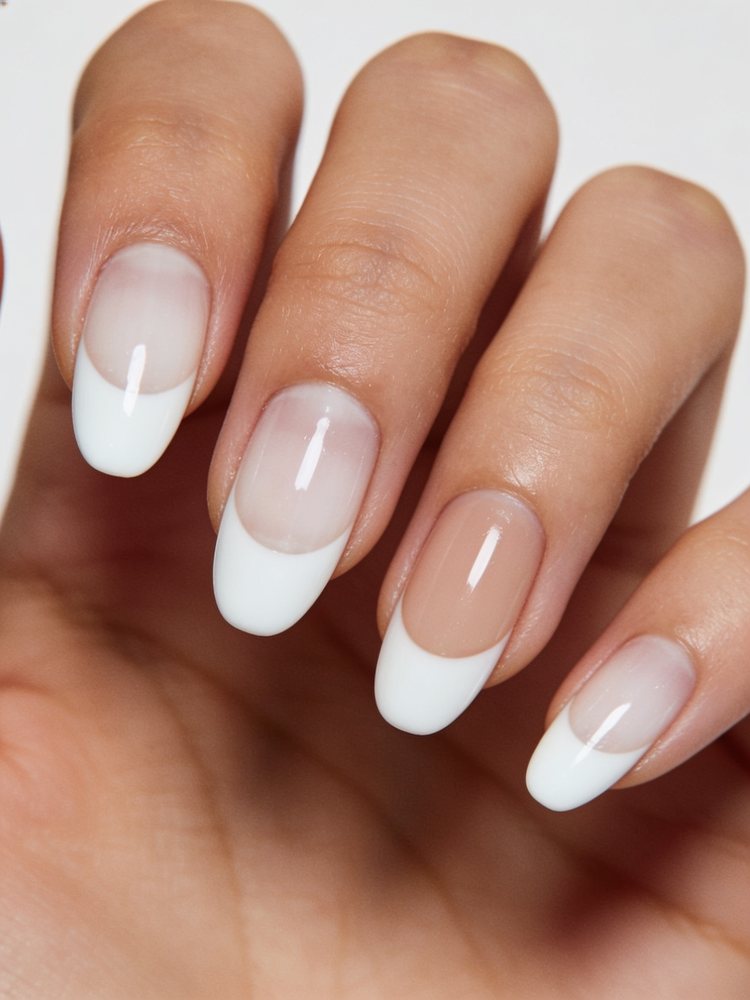
Milky white tip
Semi-sheer white on a bare nail.
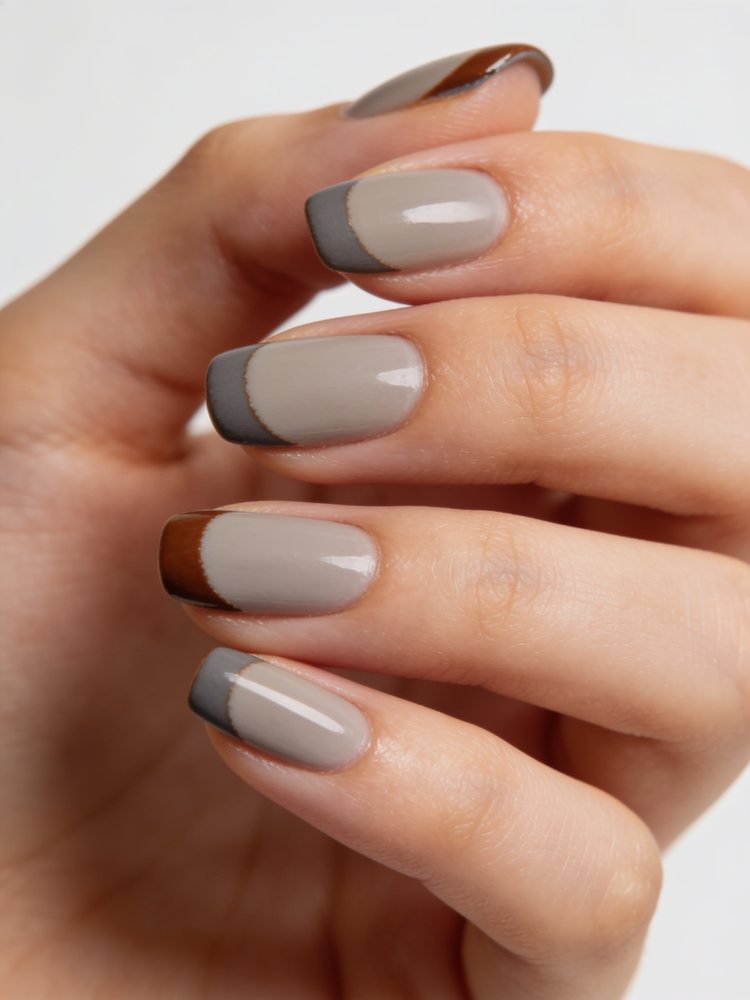
Warm greige edge
Grey-brown at the tip. Neutral but not invisible.
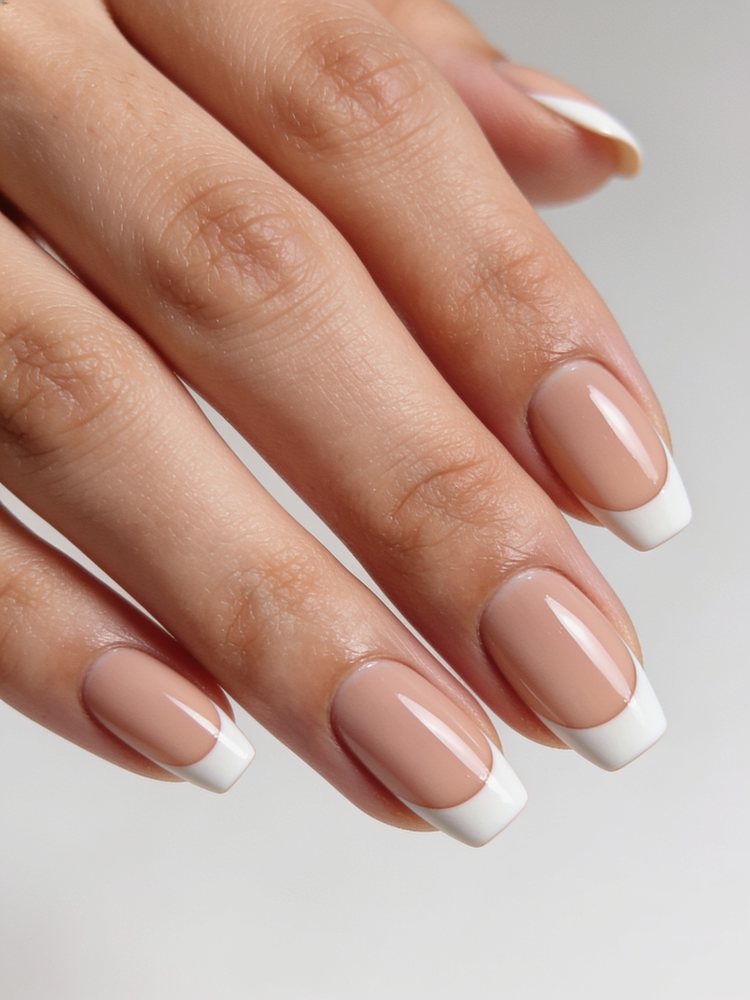
Skin-match French
Base matched to your tone, tip one shade lighter.
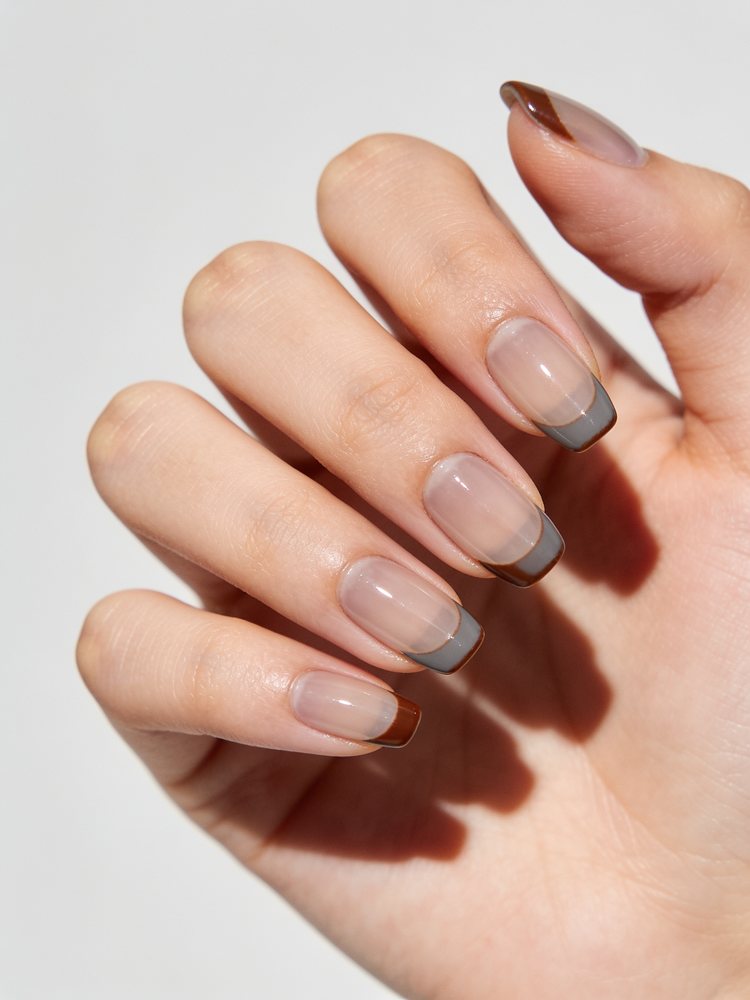
Soft taupe tip
Grey-brown edge on a sheer base.
Colour tips

Cherry red
Blue-toned red at the edge on a bare base. The most-requested colour French.
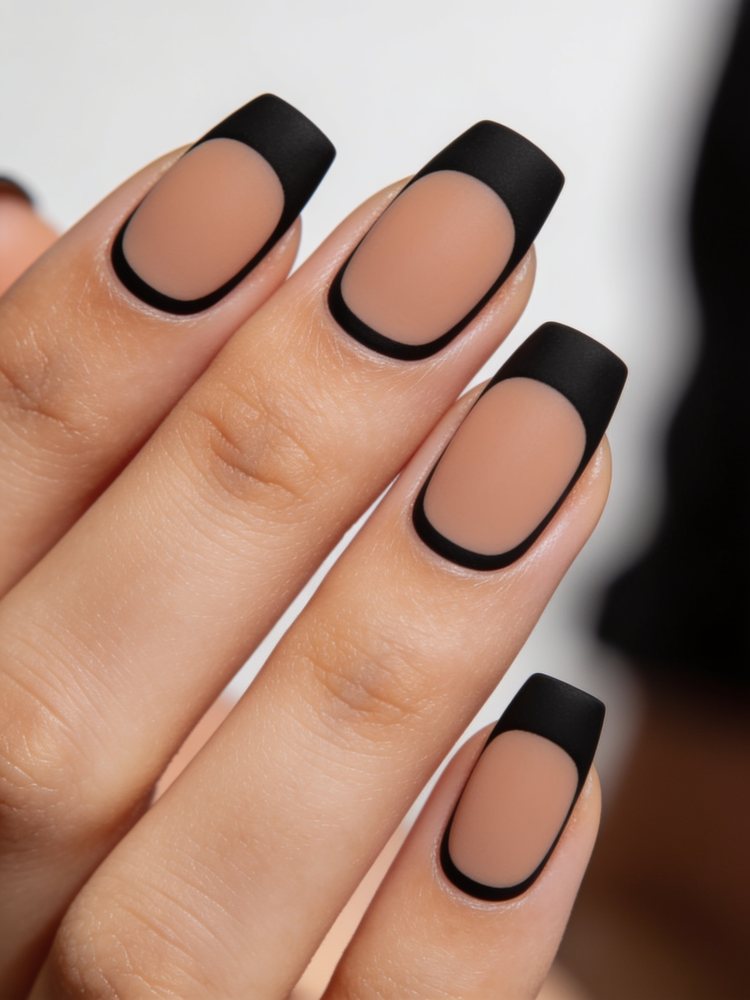
Matte black
Black tip on warm nude, matte across the whole nail.
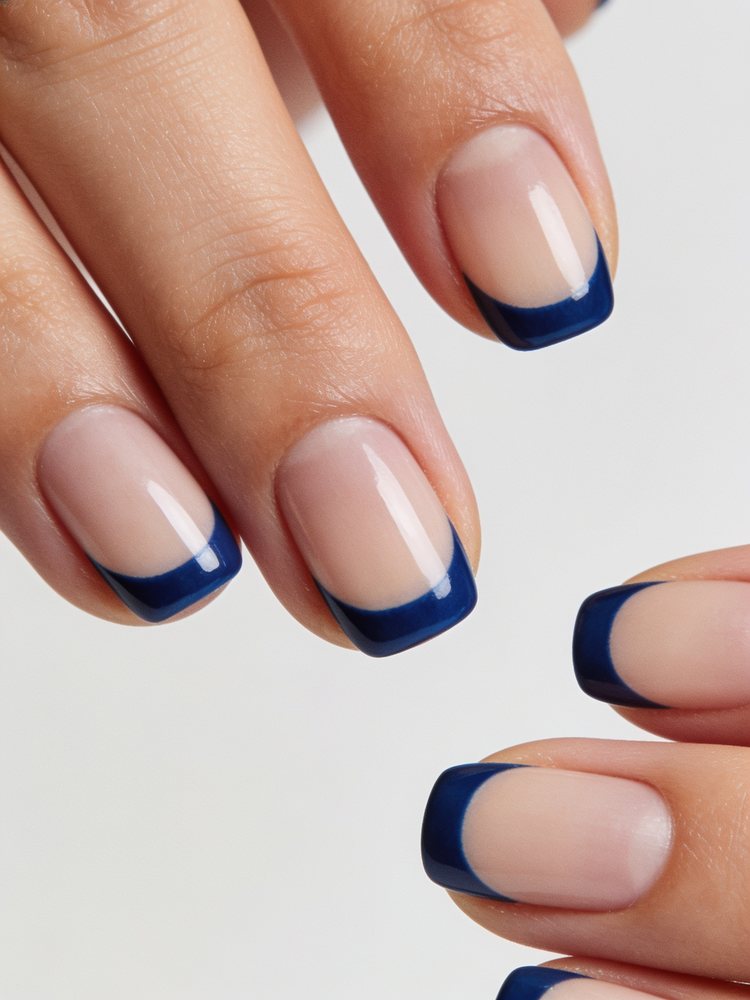
Navy edge
Deep blue at the tip. Quiet at a distance, sharp up close.
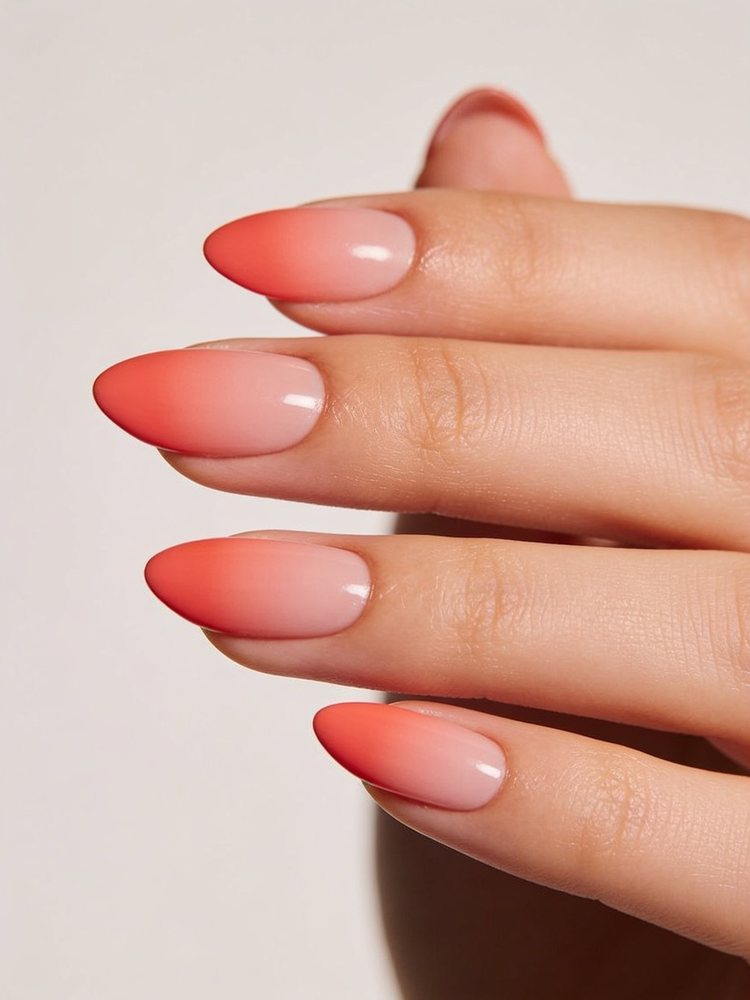
Coral tip
The summer default.
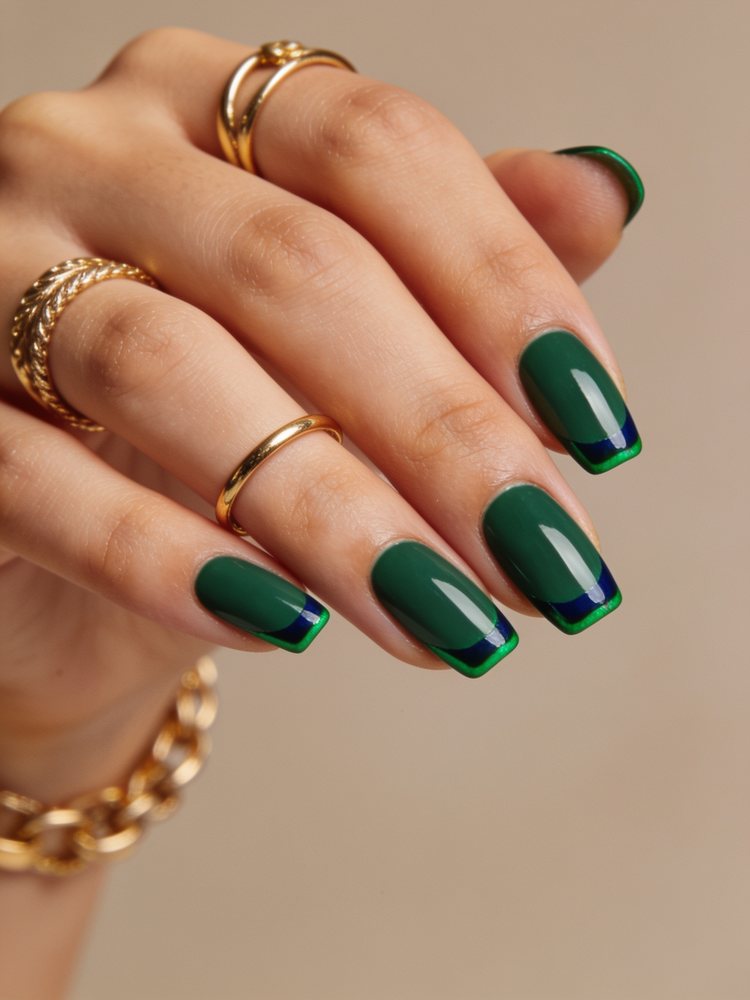
Forest green
Deep green edge. Excellent with gold jewellery.
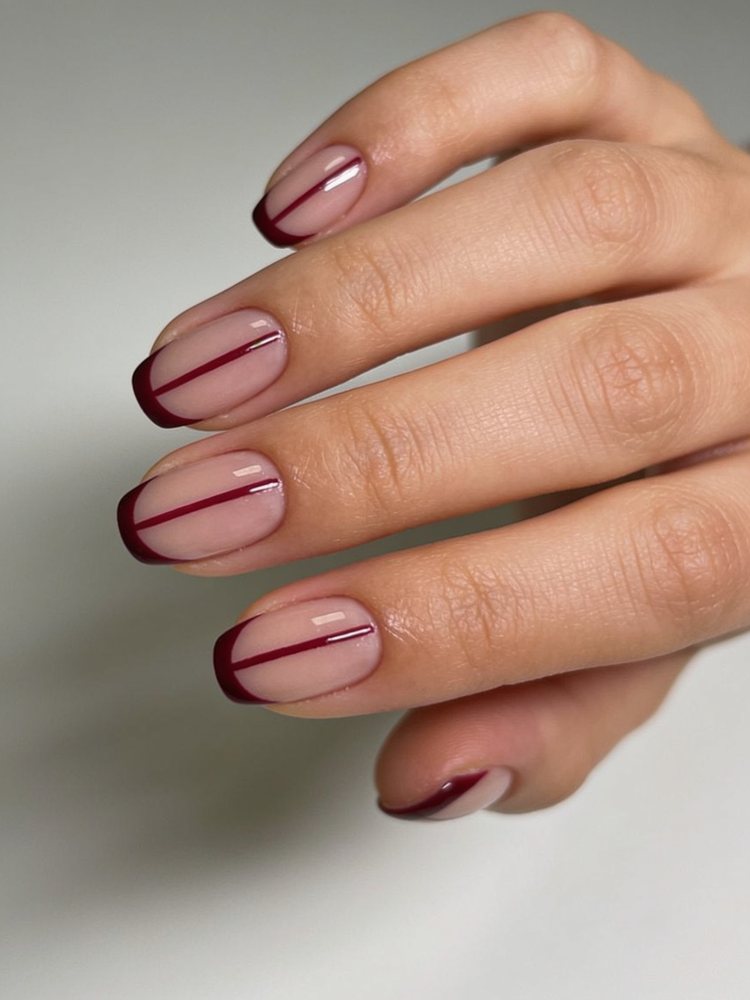
Burgundy micro
Hairline wine red. The most restrained autumn French.
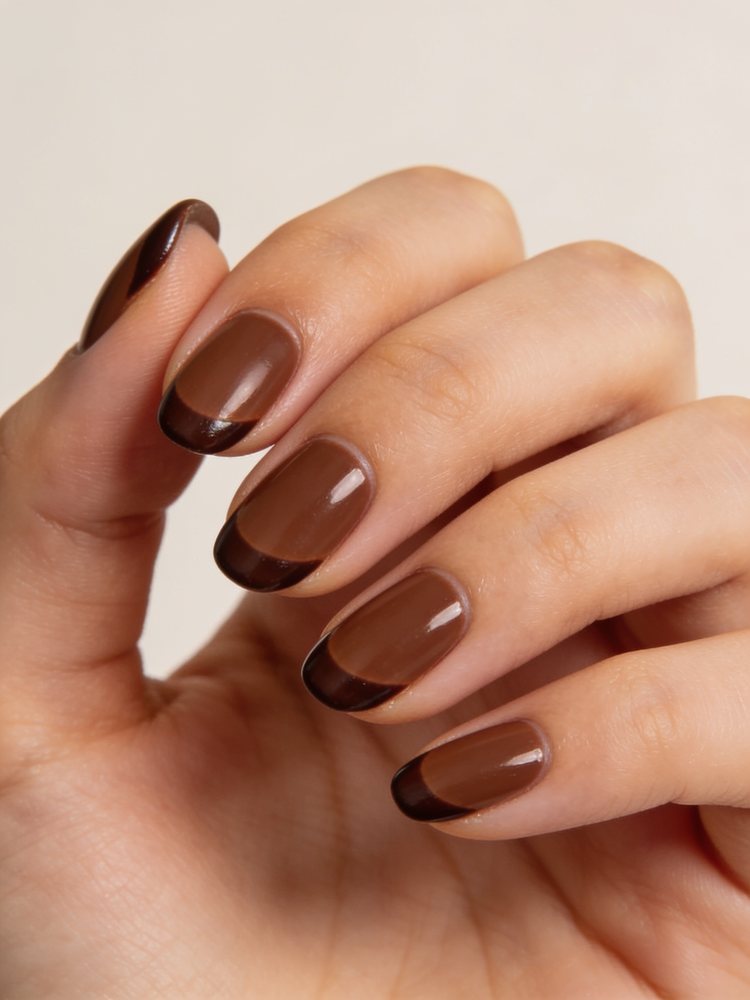
Chocolate tip
Warm espresso brown at the edge.
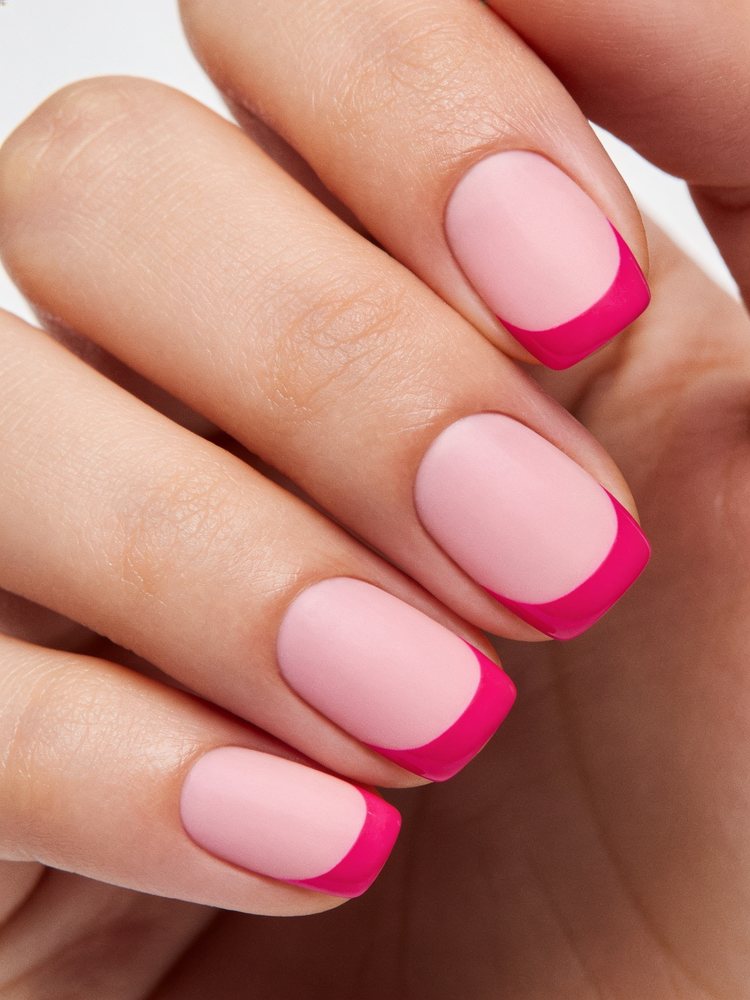
Hot pink edge
Saturated pink at the tip, contained by short length.
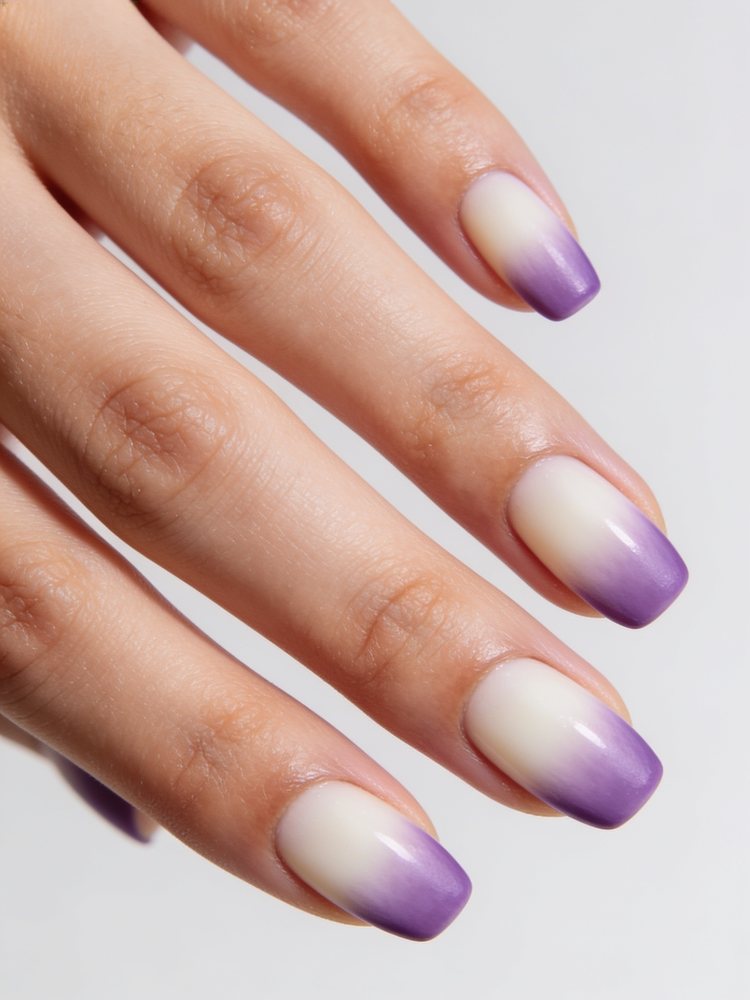
Lilac tip
Soft purple over a milky base.

Cobalt edge
Deep blue. Reads expensive rather than novelty.
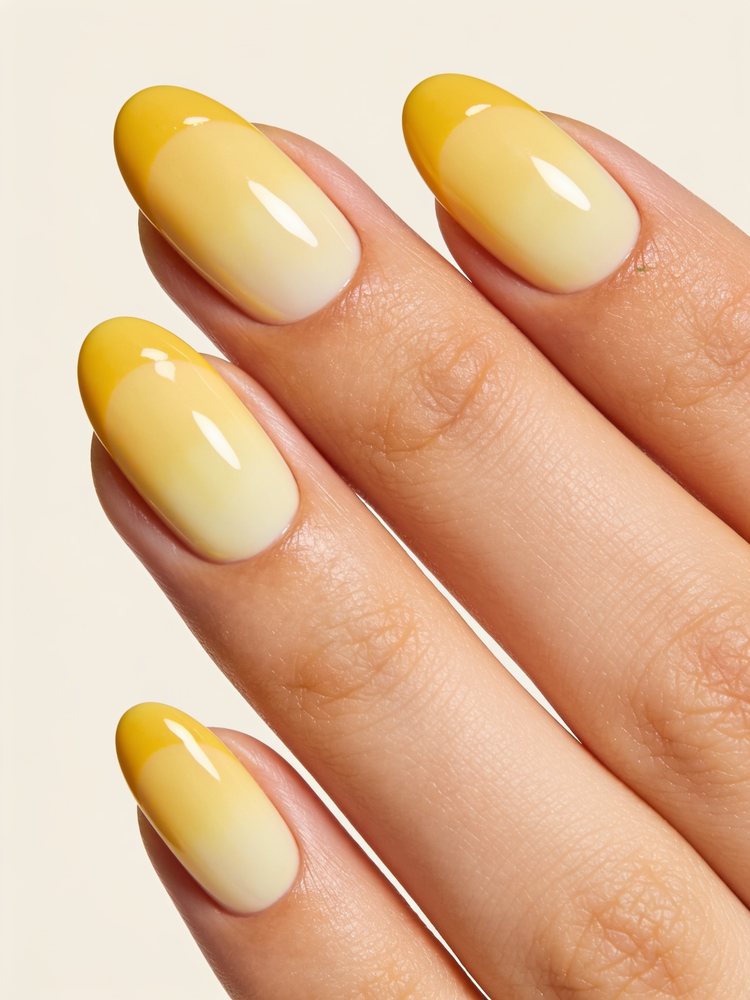
Butter yellow tip
Pale yellow. The quietest bright.
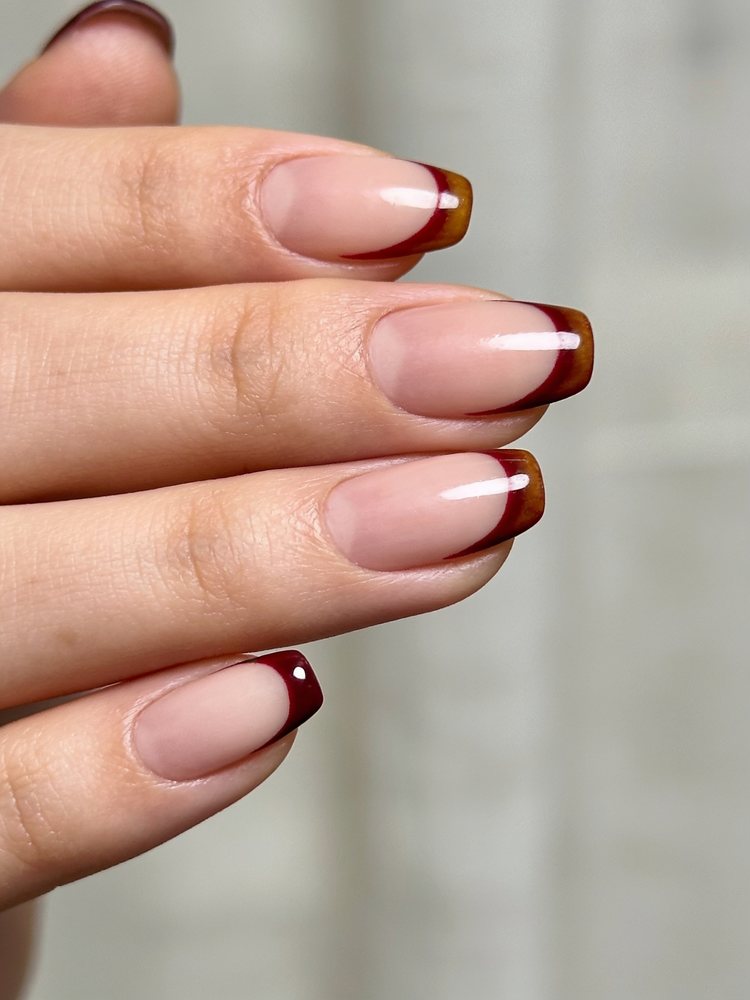
Oxblood edge
Deep brownish red at the tip.
Metallic and finish tips
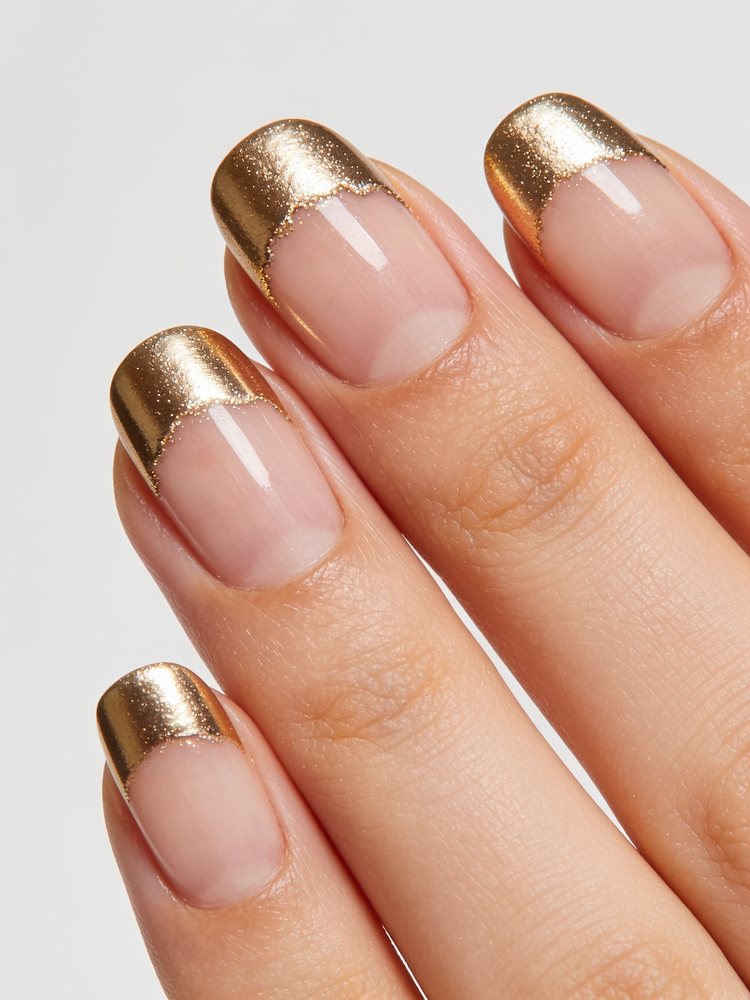
Gold chrome tip
Chrome powder at the edge only. Invisible grow-out.

Silver chrome tip
Cooler than gold and higher contrast on pale bases.
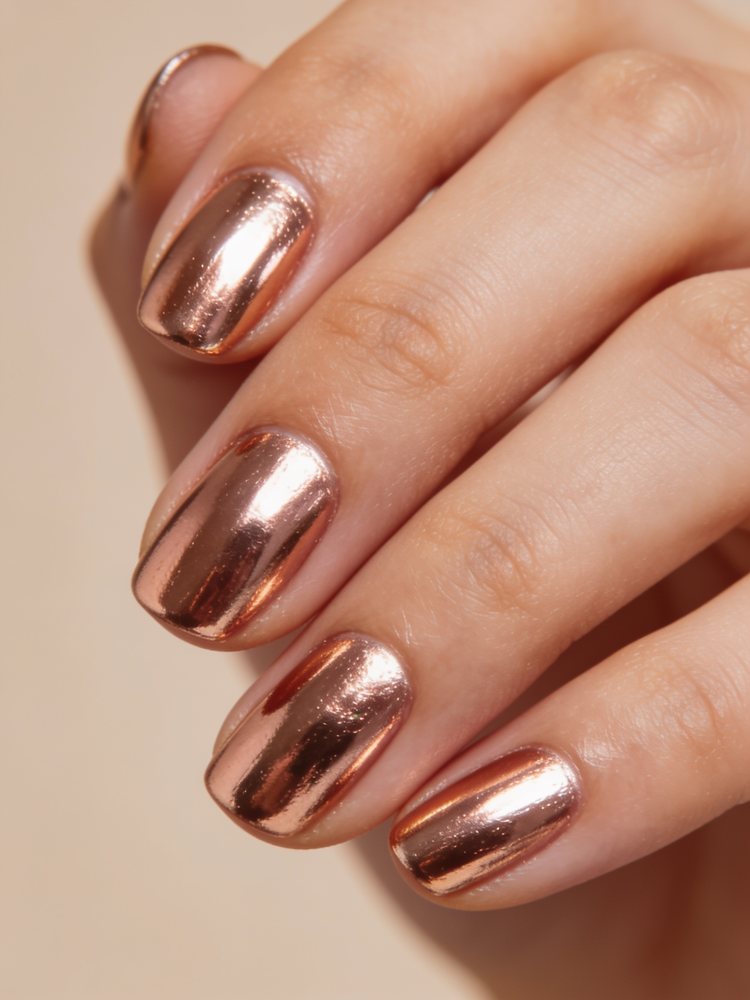
Rose gold chrome
Warm metallic. Flatters more skin tones than silver.
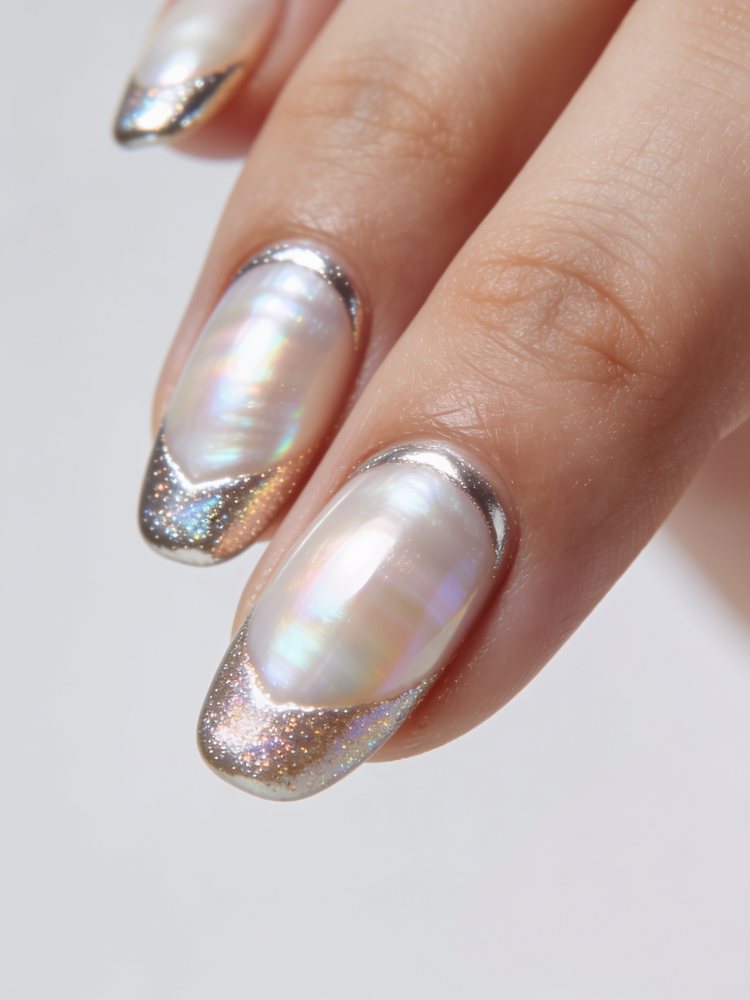
Pearl chrome edge
Iridescent powder at the tip, shifting in light.
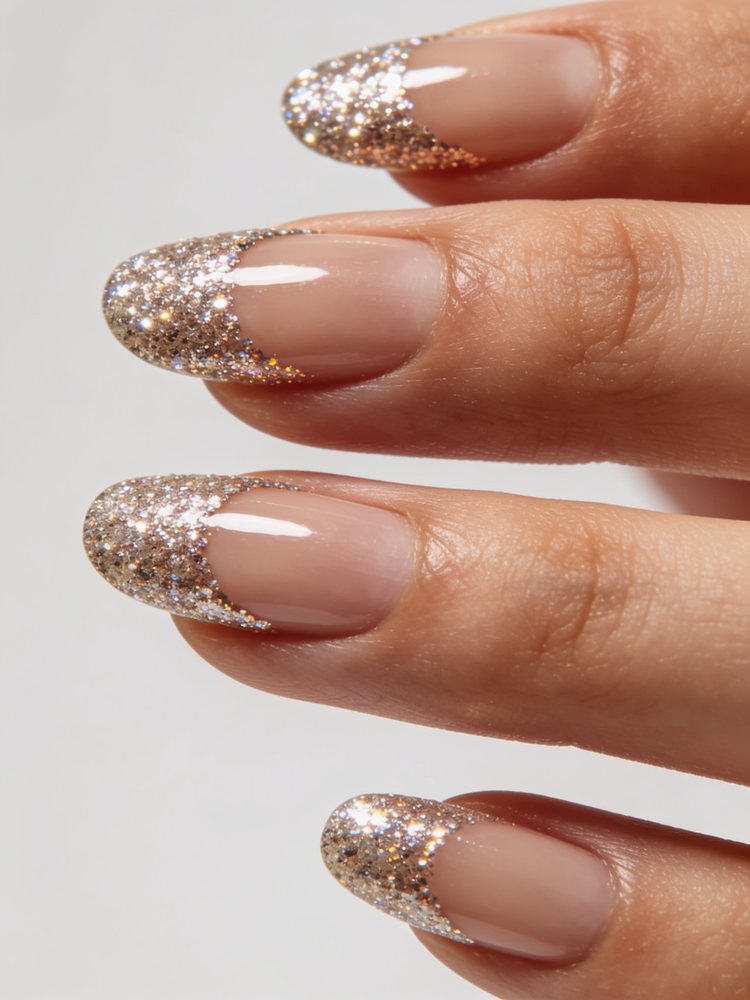
Glitter tip
Densely packed fine glitter at the free edge.
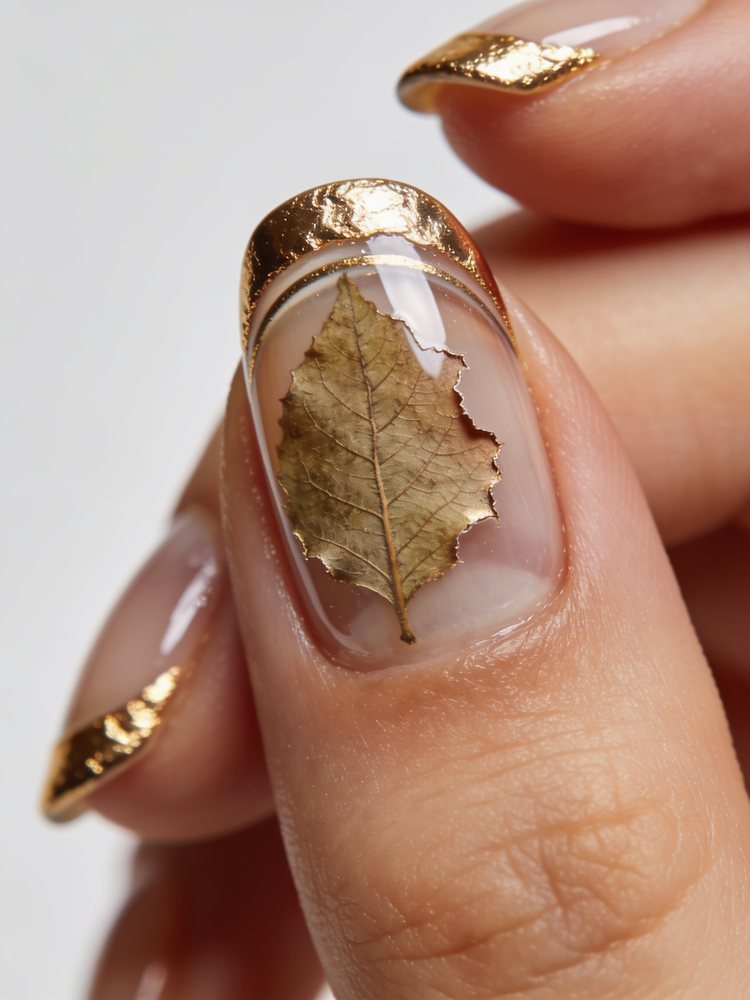
Gold foil edge
Torn leaf along the tip, sealed under two topcoats.
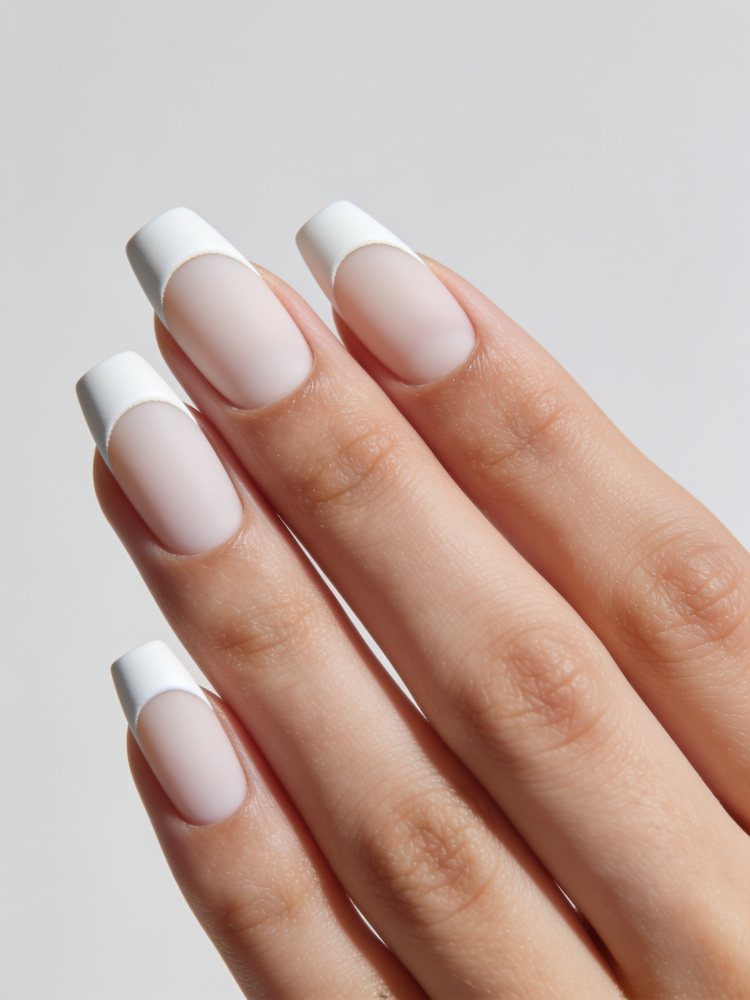
Matte white tip
Off-white edge with matte over the whole nail.
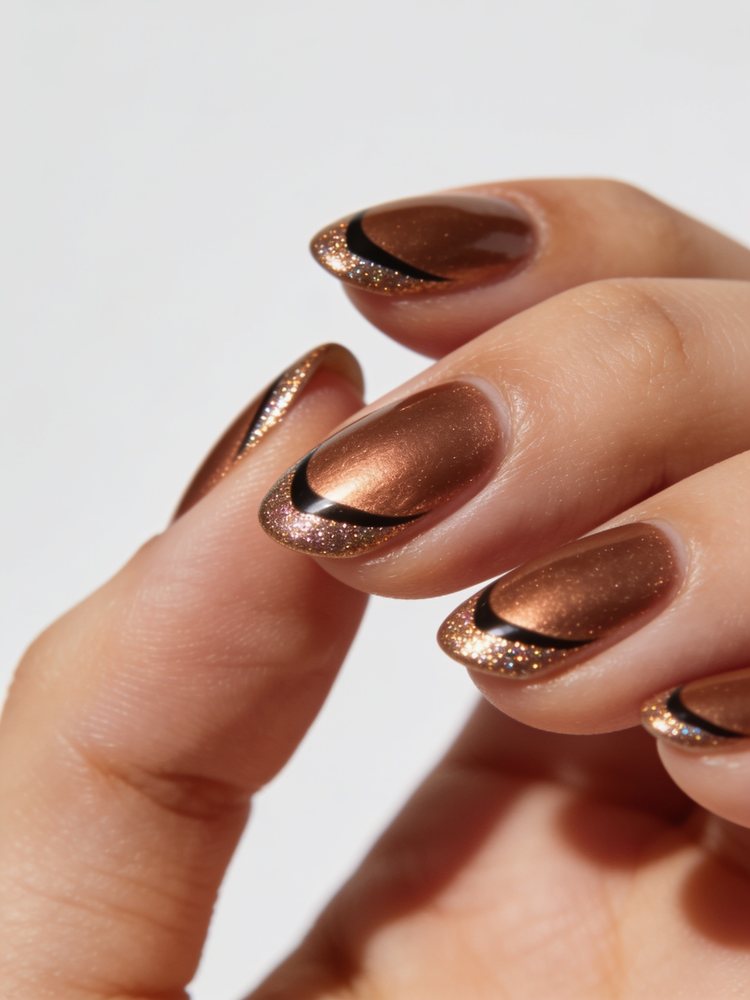
Bronze cat eye tip
Magnetic shimmer confined to the free edge.
Shape variations

Deep colour block
A wide tip in a saturated shade. The one deep French that still works.
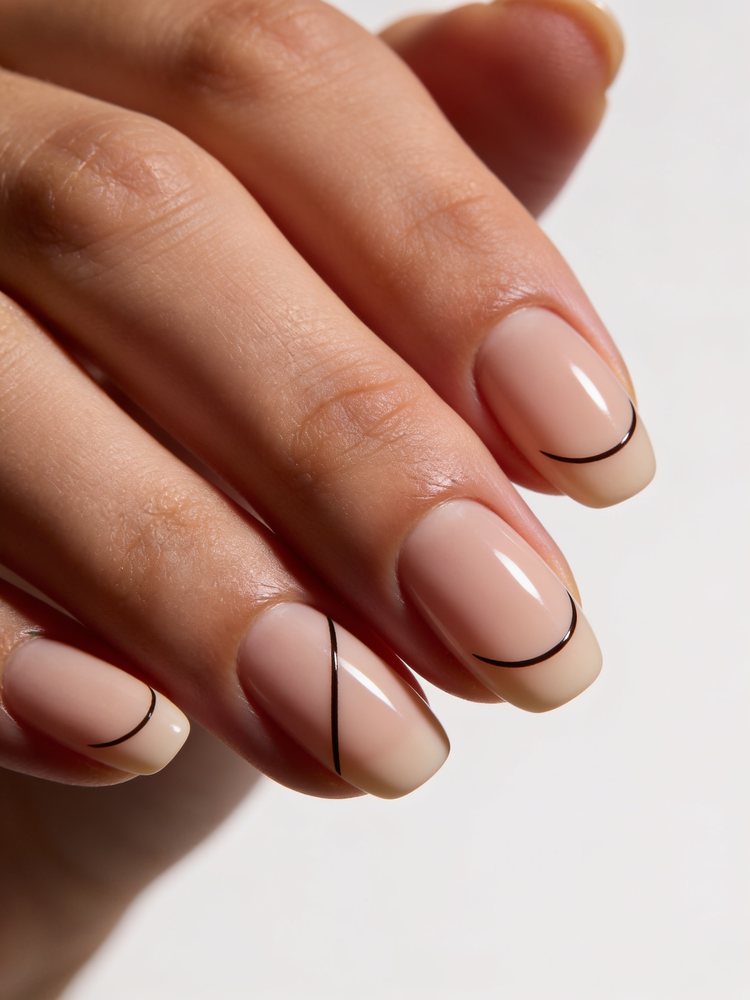
Diagonal smile line
The line cut on an angle rather than a curve.
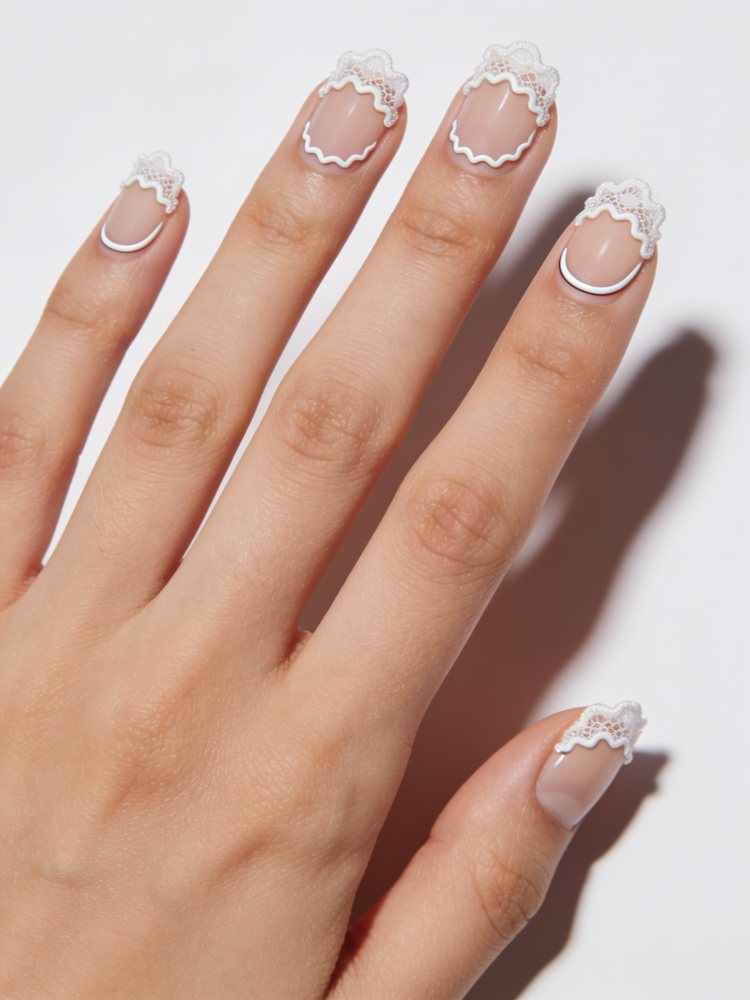
Scalloped lace edge
A lace-edged smile line in fine white gel. Keep it to two nails.
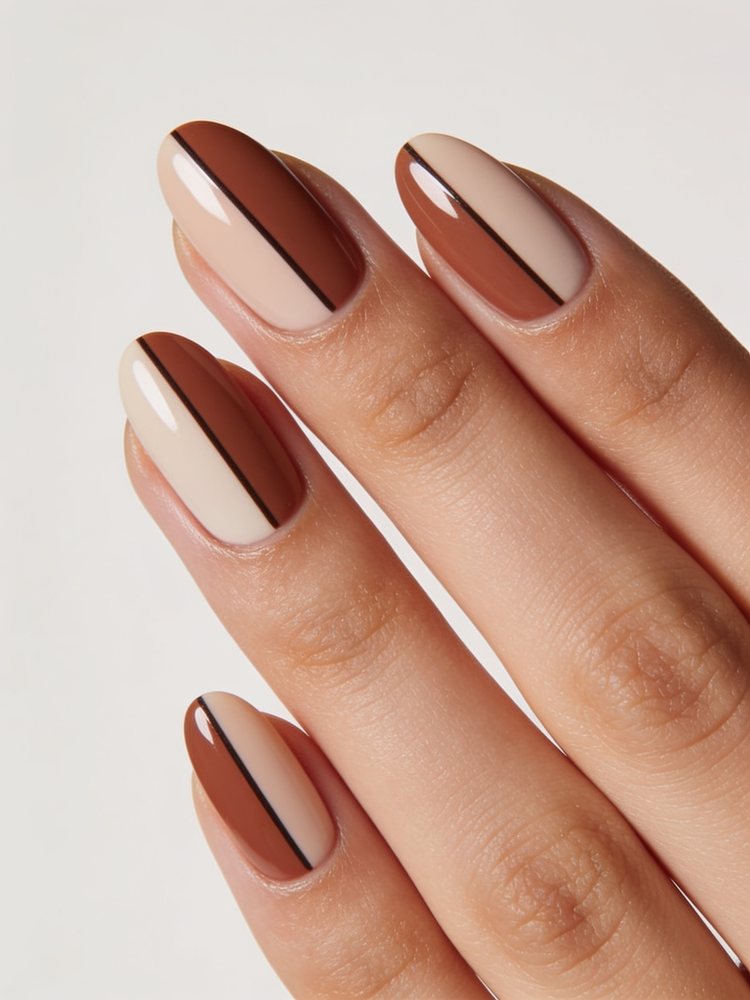
Double line
Two hairlines a millimetre apart in two colours.

Half moon reverse
The curve at the cuticle rather than the tip. Grows out invisibly.
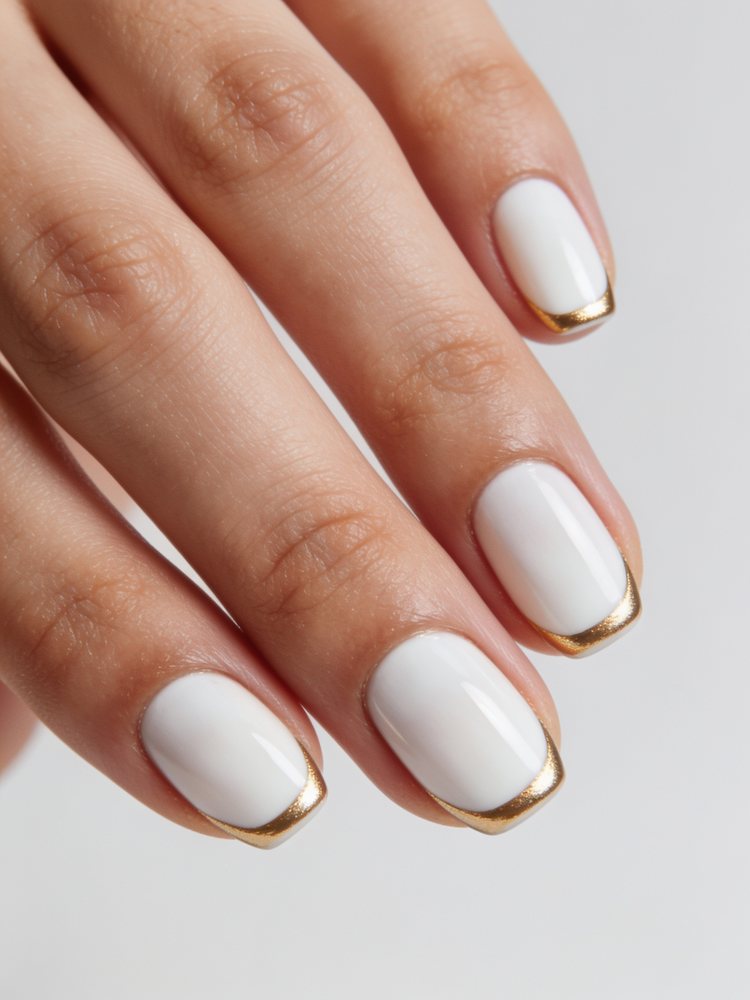
Outlined French
A white tip traced with a hairline of gold.

V-tip
The smile line meeting at a point in the centre.

Ombre into the tip
Baby boomer: nude fading into white with no visible line.
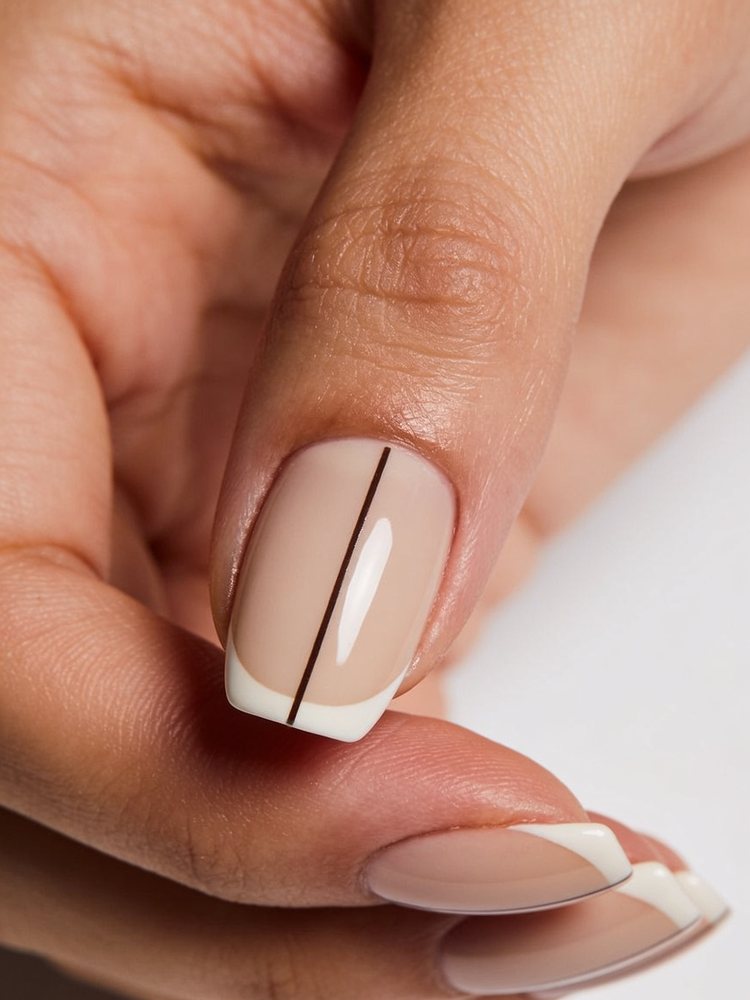
Side French
The line running down one sidewall instead of across the tip.

Bare tip
Colour everywhere except the free edge. The inverse.

Two-tone tip
Half the edge in one colour, half in another.
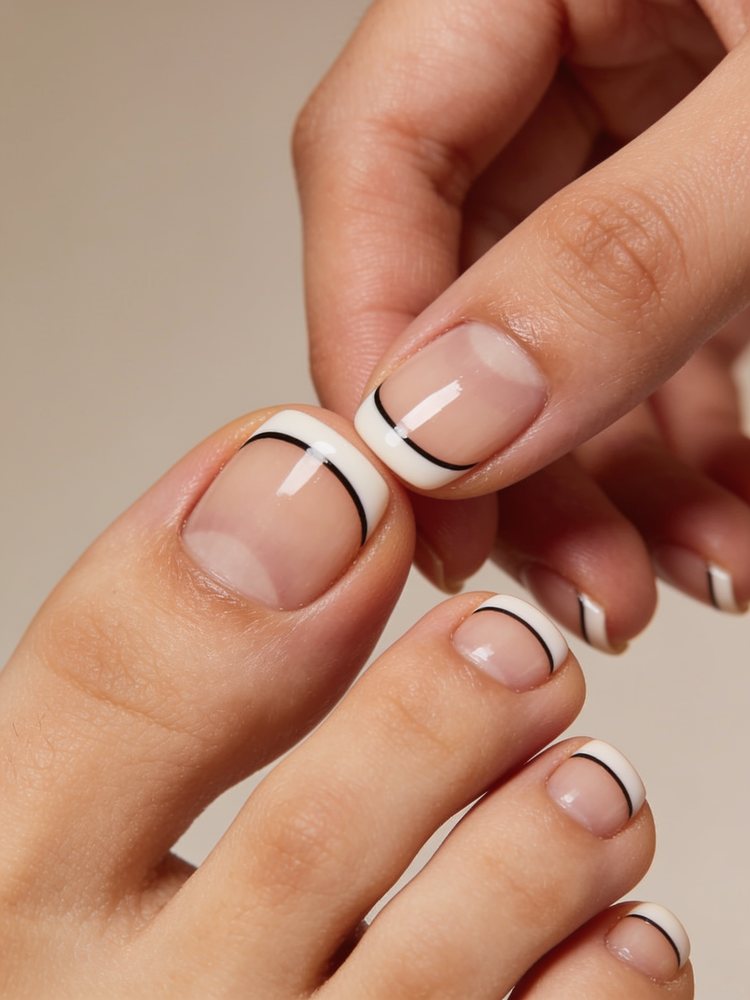
Micro French on toes
The same hairline edge on a pedicure, lasting twice as long.
Getting it right
- Curved guide stickers give you the line without freehand. Peel while tacky, never dry.
- Freehand it in three short strokes from the outside in, never one long sweep.
- Sharp corners where the smile line meets the sidewall. A soft corner reads blurry.
- Topcoat the whole nail, not just the tip, or the edge lifts within days.
For seasonal versions, summer french tip nail designs covers the warm months. For which shape holds a French best, see the shapes guide.
Questions people actually ask
How thick should a French tip be?
About a millimetre on medium nails, thinner on short ones. Depth is the single clearest way to date a manicure.
What is the difference between a French and an ombre French?
A French has a defined line where the tip starts. A baby boomer ombre blurs that line over at least a third of the nail so no edge is visible.
Can I do a French tip myself?
Yes, with curved guide stickers. They cost almost nothing and remove the only hard part.
Why does my French tip chip first?
Because the design sits at the free edge, which is where all chips start. Sealing with topcoat over the whole nail and capping the edge closes most of that gap.