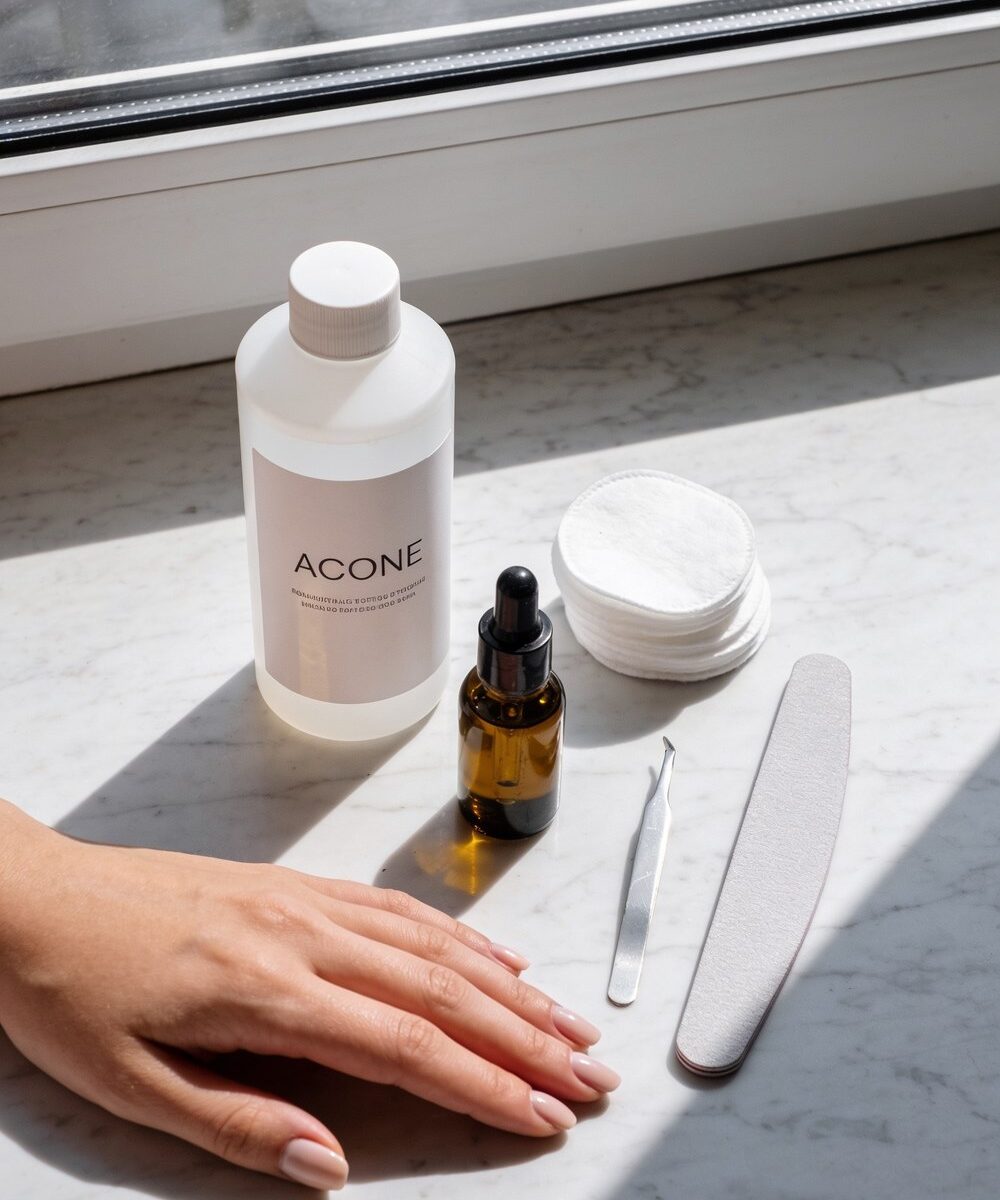
A nail is keratin, the same structural protein as hair and the outer layer of skin. In a nail it is packed into flattened, dead, tightly bonded cells arranged in three layers, which is why a nail is rigid where hair is flexible.
The parts
- The nail plate is the hard visible part. It is dead tissue, which is why filing it does not hurt.
- The nail bed is the skin underneath. It is what gives the plate its pink colour.
- The matrix sits under the skin at the base and is the only part that grows. Everything you see was made there.
- The lunula is the pale half moon at the base, the visible front edge of the matrix.
- The cuticle is the seal between the plate and the skin, which is why cutting it opens a gap.
- The free edge is the part past the fingertip, and the only part you can safely shape.
Because the plate is dead and the matrix is hidden, nothing applied to the surface can change how a nail grows. Treatments work on the plate that already exists. Growth is decided at the matrix, weeks or months earlier.
The three layers
The plate is built in three sheets bonded together. Peeling happens when those sheets separate at the free edge, which is what a coarse file or a back and forth sawing motion does. That is also why peeling looks like a nail coming apart in flakes rather than snapping.
How fast it grows
- Fingernails grow roughly three to four millimetres a month.
- A full fingernail replaces itself in about six months.
- Toenails take twelve to eighteen months.
- Growth is slightly faster in summer, on your dominant hand, and on longer fingers.
What nails are not made of
Not calcium, despite the persistence of that idea. Calcium is a trace component and eating more of it does nothing for nail strength. Nails also contain water, around fifteen percent, and that fraction is what makes the difference between a flexible nail and a brittle one. Which is why oil helps and supplements mostly do not.
For the practical side, nail care covers the habits that matter.
Questions people actually ask
What are fingernails made of?
Keratin, a structural protein, packed into flattened dead cells in three bonded layers. The same protein as hair and the outer layer of skin.
Are nails made of calcium?
No. Calcium is a trace component and dietary calcium does not affect nail strength. The persistent idea comes from nails being white and hard like bone.
Why do nails peel in layers?
The plate is built in three bonded sheets. A coarse file or a sawing motion separates them at the free edge.
Do nails keep growing after death?
No. The skin around them retracts as it dehydrates, which makes them look longer.