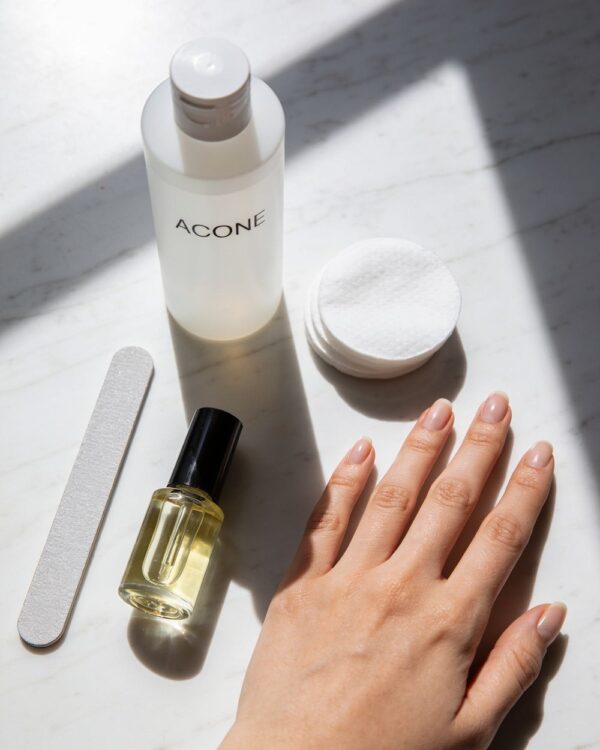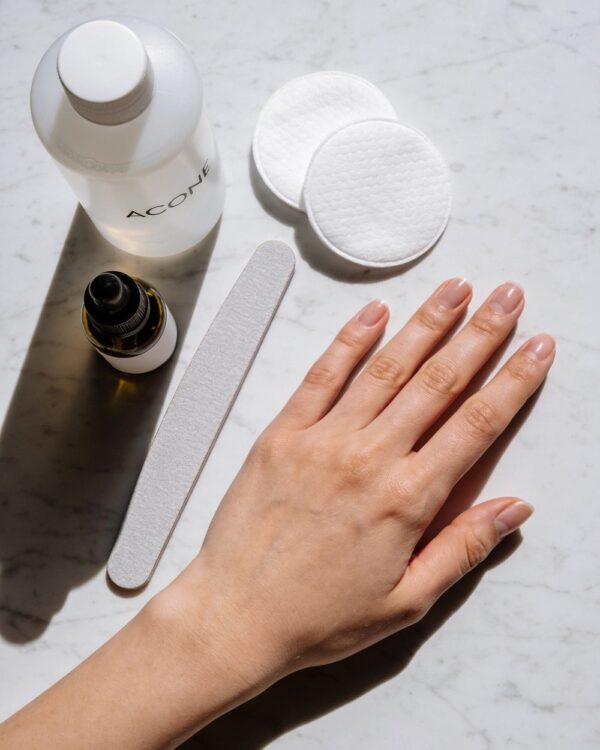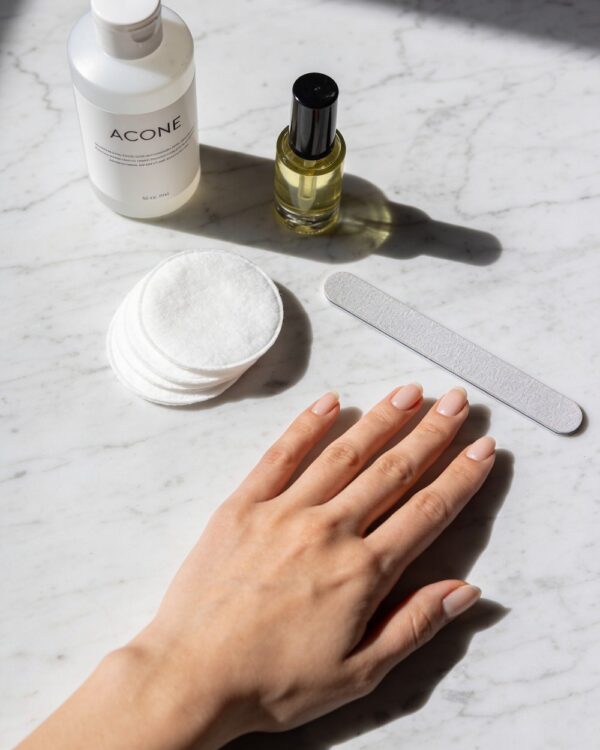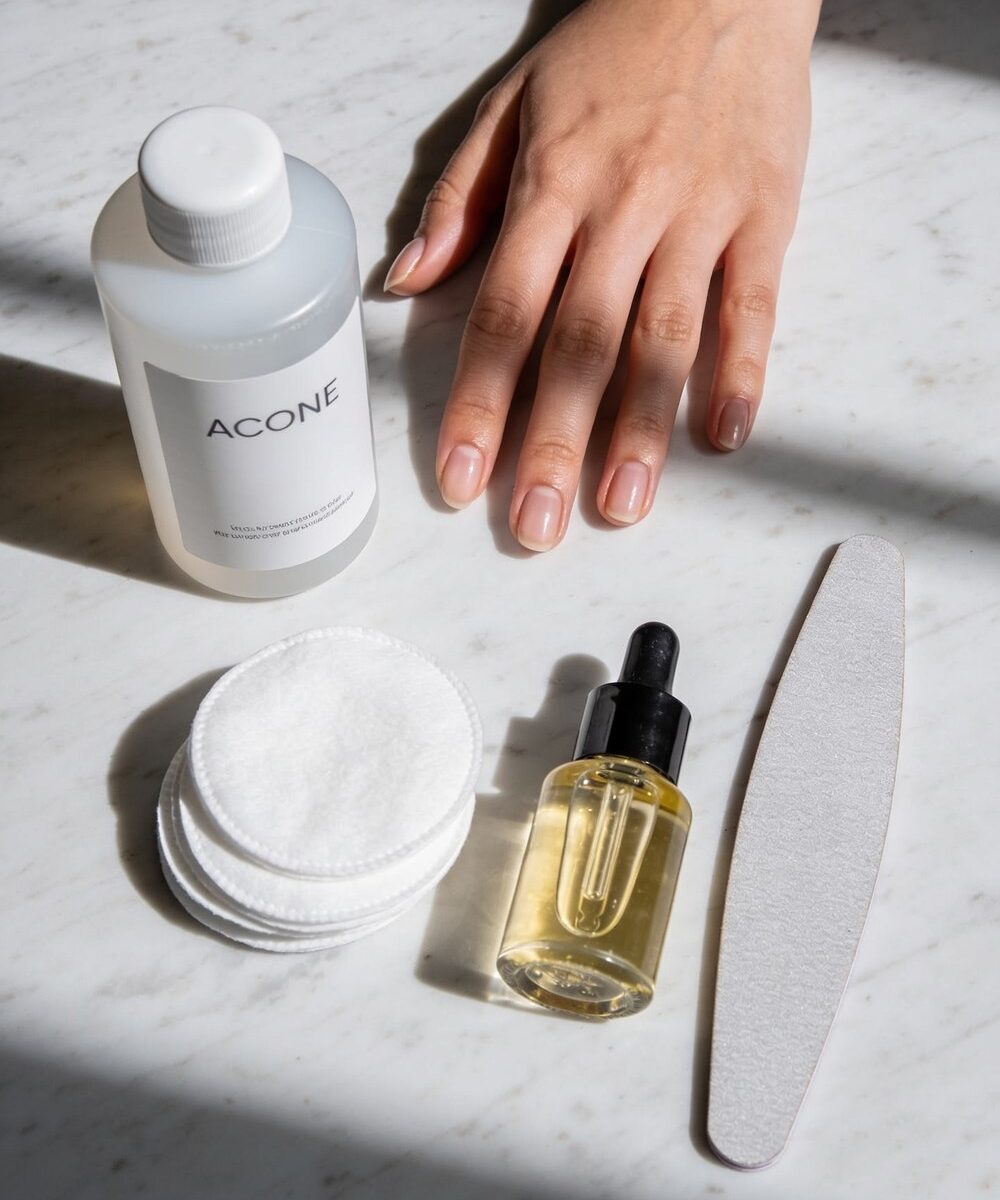
Acetone breaks the bonds in acrylic and turns it into a soft paste. It works from the outside in, which is why thickness is the whole variable. A thin overlay takes fifteen minutes and a long sculpted set takes an hour.
Why filing first is not optional
The topcoat is sealed. Acetone cannot cross it. Filing until the surface goes dull opens the way in, and skipping that step is the single reason home removal fails.
Protecting your skin
- Oil or petroleum jelly on the skin around each nail before you start.
- Wrap rather than soaking a whole hand in a bowl. A bowl strips far more skin for no extra speed.
- Ventilate the room. Acetone fumes build up quickly in a small space.
- Moisturise afterwards, and oil the nails daily for a week.
It is flammable and the vapour ignites easily. Warm the room rather than the bottle. A warm room genuinely does speed the process up.
How long each product takes
- Gel polish: ten to fifteen minutes.
- Gel-X: twenty to thirty.
- Dip: twenty to thirty.
- Acrylic: forty to sixty, often across two or three rounds.
- Hard gel: does not soak off at all. It has to be filed.
Signs you have gone too far
White patchy marks, a nail that hurts to press, or a plate that bends under light pressure all mean the natural nail has been filed into rather than the product. Stop, oil daily, and leave enhancements alone for a month.
The full method is at how to remove acrylic nails.
Questions people actually ask
How long does acetone take to remove acrylic?
Forty to sixty minutes, usually across two or three wraps. It is roughly three times as long as gel polish.
Can I speed up acrylic removal?
File more of the bulk off first and work in a warm room. Never warm the acetone itself.
Does acetone damage nails?
It dries them out for about a week. The damage people describe comes from filing or scraping, not from the acetone.