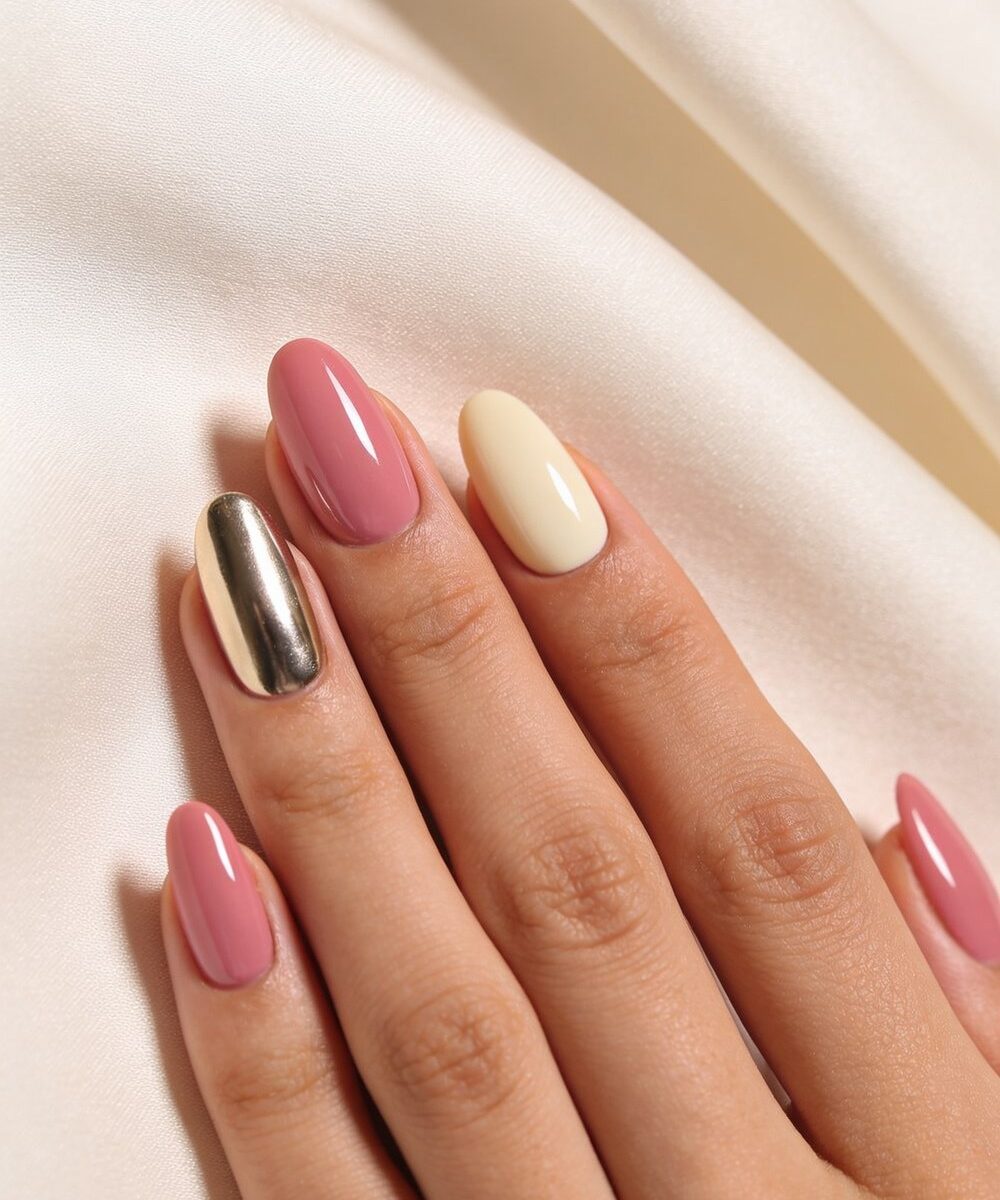
Screenshot the photo, not the description. Nail techs work from images, and the words you use for a design almost never match the words they use. Bring three pictures, say which part of each one you want, and let them tell you what fits your nail length.
Everything below was chosen on one measure: the gap between how complicated a design looks and how long it actually takes in the chair. A few of these are twenty minutes of freehand work. Most are a base coat, one technique and a top coat, which is why they survive contact with a real appointment.
Design pricing is almost always per nail, not per set. Ten hand-painted nails can cost double a set with two accent nails and eight plain ones, and the two-accent version usually photographs better anyway.
Ask for the design in gel rather than regular polish if it involves any layering. Regular polish needs the layer underneath to be genuinely dry, and it rarely is.
The three decisions that set the whole look
Shape comes first, because it changes which designs read well. Anything with a repeating pattern needs surface area, so it lands better on square, squoval or coffin than on a short almond. French variations do the opposite and look cleanest on almond and oval, where the curve of the smile line follows the curve of the tip. If you are not sure what you are working with, the shape guide covers all of them.
Finish comes second, and it is the most underrated decision on this page. The same shade of pink reads soft and expensive in a milky sheer, girly in a glossy cream, and completely different again in chrome. Matte topcoat makes any color look more deliberate and hides brush strokes, which is why it rescues at-home sets.
Placement is third. Two accent nails beat ten busy ones every time. The ring finger is the default, but the index reads better in photos because it sits higher when your hand is relaxed.
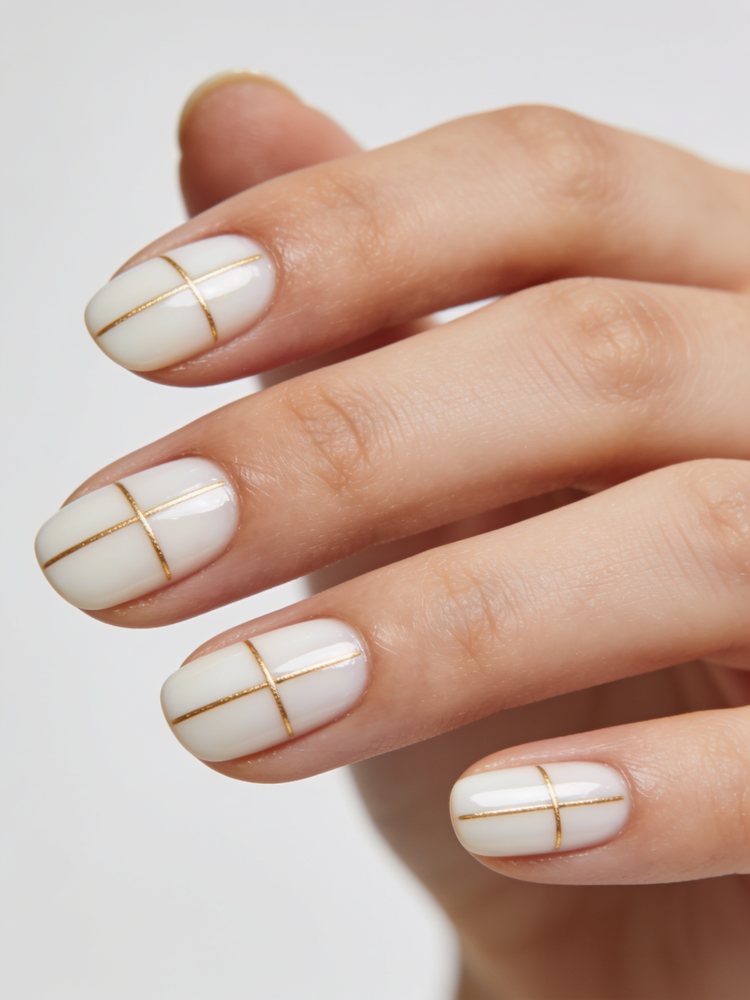
Milky white with a gold micro-line
Two sheer coats of milky white so the nail line still shows through, then a single hairline of gold striping tape down the centre of two nails. The whole effect depends on the line being thin. Anything thicker than a millimetre stops looking like jewellery and starts looking like a stripe.
This is the design that works on the shortest nails on the list. It grows out invisibly, which buys you an extra week between fills.
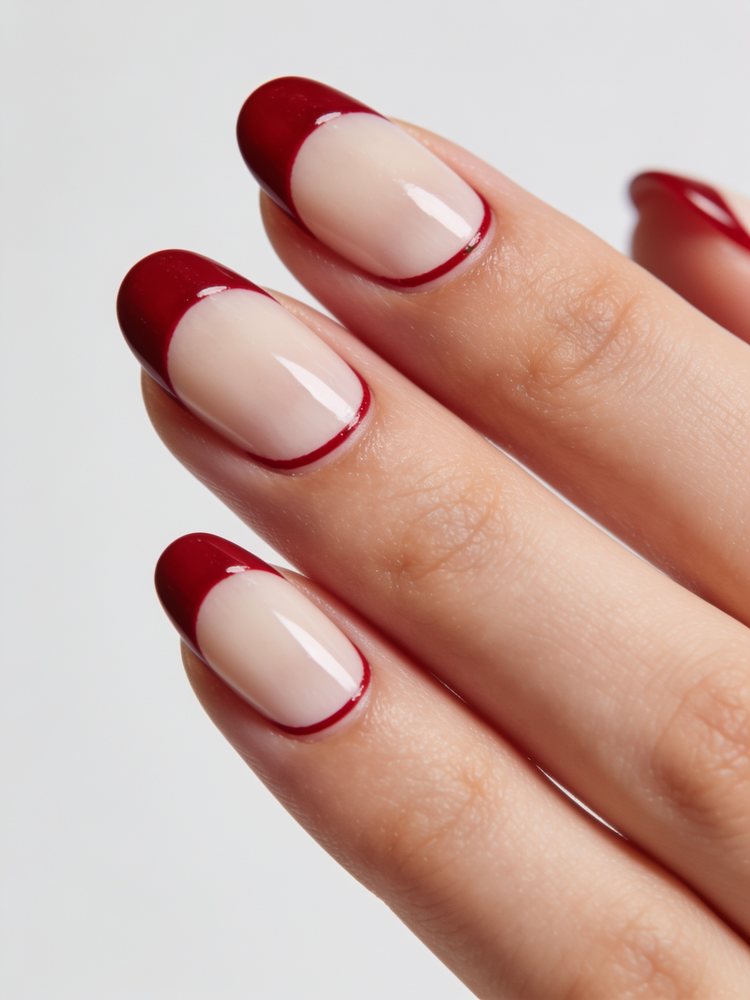
Micro French in cherry red
A classic French with the white swapped for cherry red and the tip painted a third of its usual depth. Thin is the entire point. The line should look like it was drawn with a pen, not painted with a brush.
Ask for it on a bare or barely-tinted base. A pink base fights the red and makes the tip read orange in daylight.
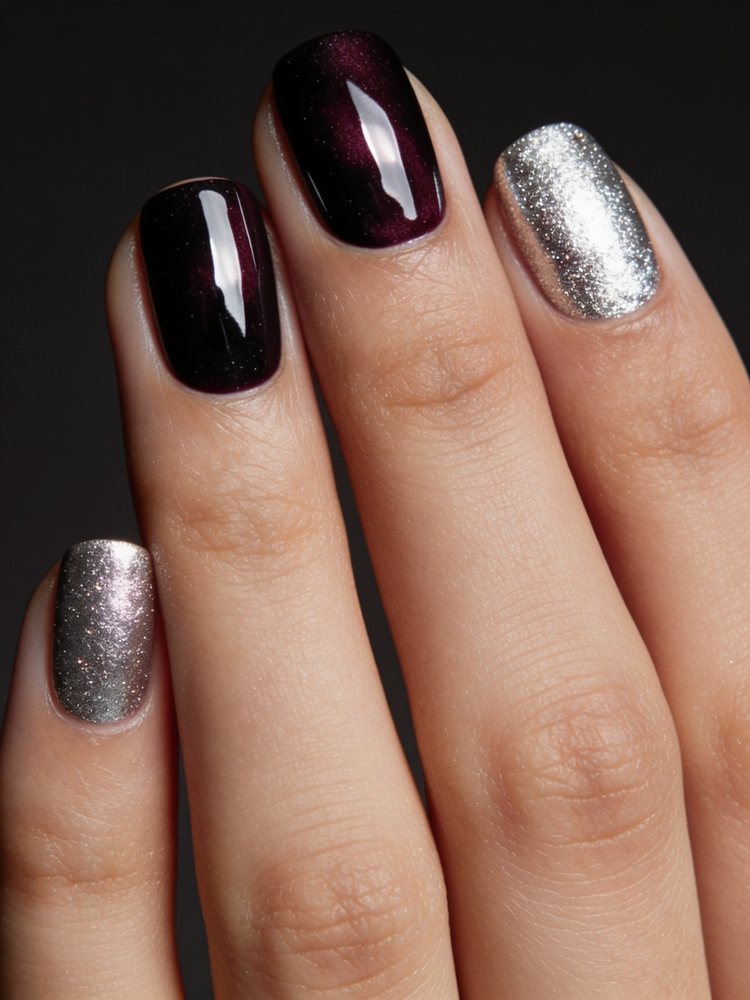
Chrome on a dark base
Chrome powder buffed over a black or deep plum gel base gives you the mirror effect without the silver looking like foil. The dark underneath is what makes it read as metal rather than glitter.
It needs a no-wipe topcoat and a proper cure or the powder lifts at the edges within days. This is one to pay for rather than attempt at home.

Cat eye in emerald
Magnetic gel polish pulled into a single bright band with a magnet held at an angle for ten seconds. Emerald and navy show the effect far better than pastels, which need three coats before the shimmer separates properly.
Ask for the band to run diagonally rather than straight across. Straight bands sit at exactly the same height on every nail and start to look printed.

Glazed donut pearl
Sheer pink base with iridescent chrome powder buffed lightly over the top, so it shifts between pearl and lilac depending on the light. The trick is restraint on the powder. Two passes, not four.
It reads as expensive in person and photographs beautifully, which is why it has not gone away since 2022.
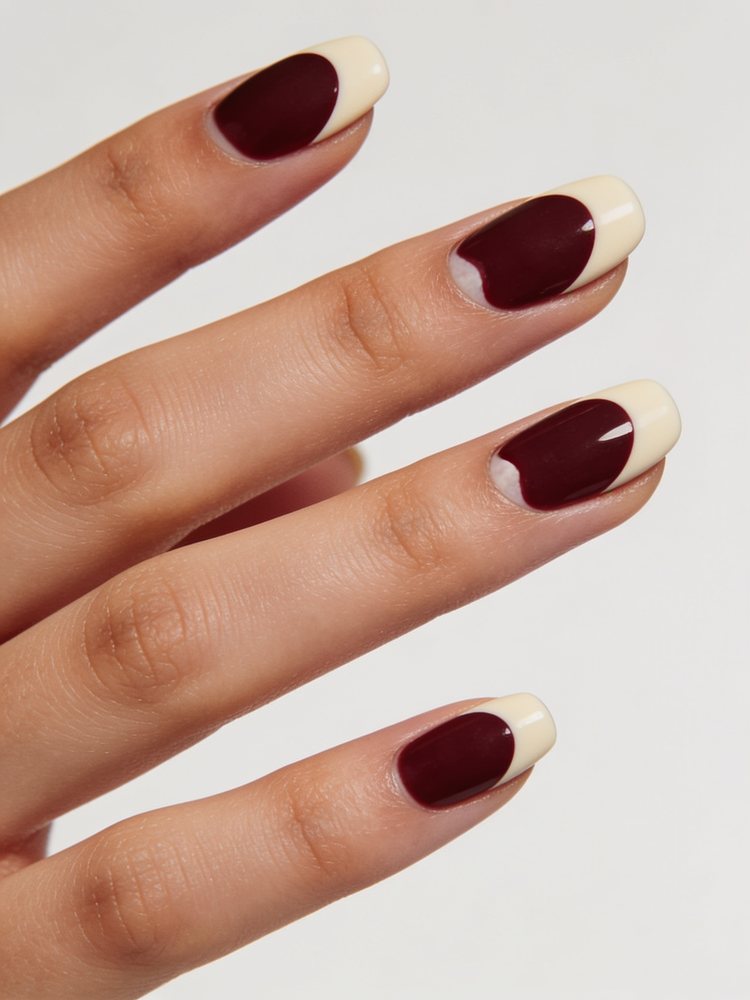
Two-tone half moon
The reverse French. A contrasting curve at the base of the nail instead of the tip, usually cream against a deeper shade. It grows out more gracefully than anything else on this list because the new growth sits inside the design rather than beside it.
It needs length at the cuticle end to work. On very short nails the moon eats the whole nail.

Aura nails in coral
A soft halo of colour airbrushed or sponged into the centre of each nail, fading out before it reaches the edges. Coral over a nude base is the version that suits the most skin tones.
The edges have to be genuinely soft. Any visible boundary and it stops being an aura and becomes a dot.
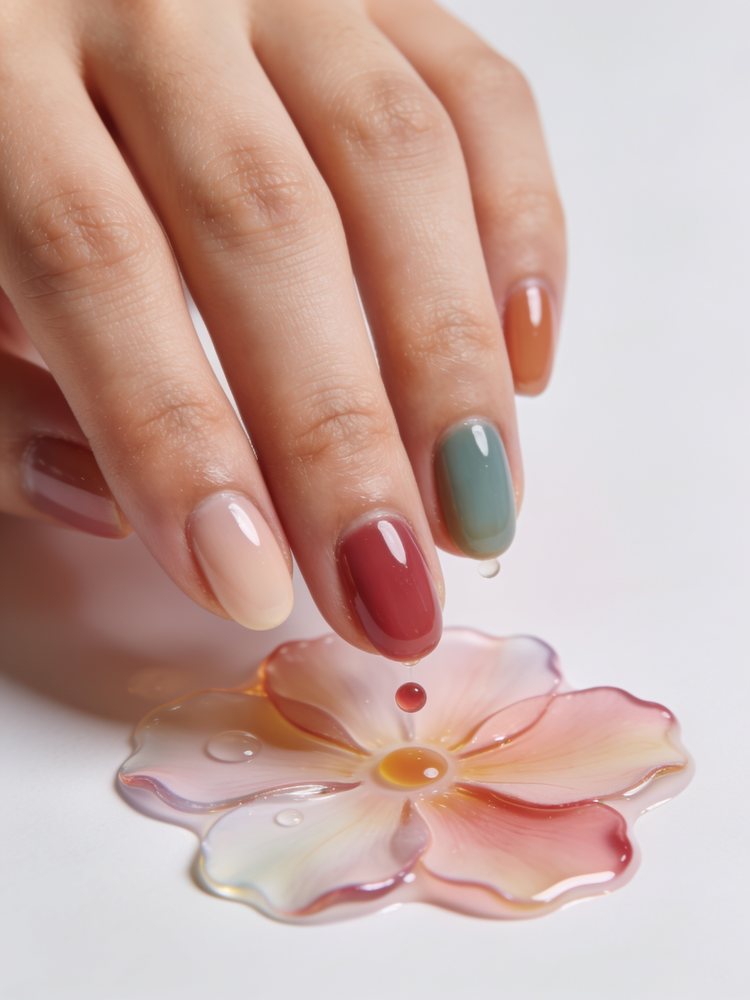
Blooming gel florals
Dots of colour dropped onto a wet blooming gel layer spread themselves into soft-edged petals on their own. You are not painting flowers, you are placing dots and letting the gel do the work.
Ask for it in one colour family. Multicoloured blooming gel bleeds into a muddy grey where the dots meet.
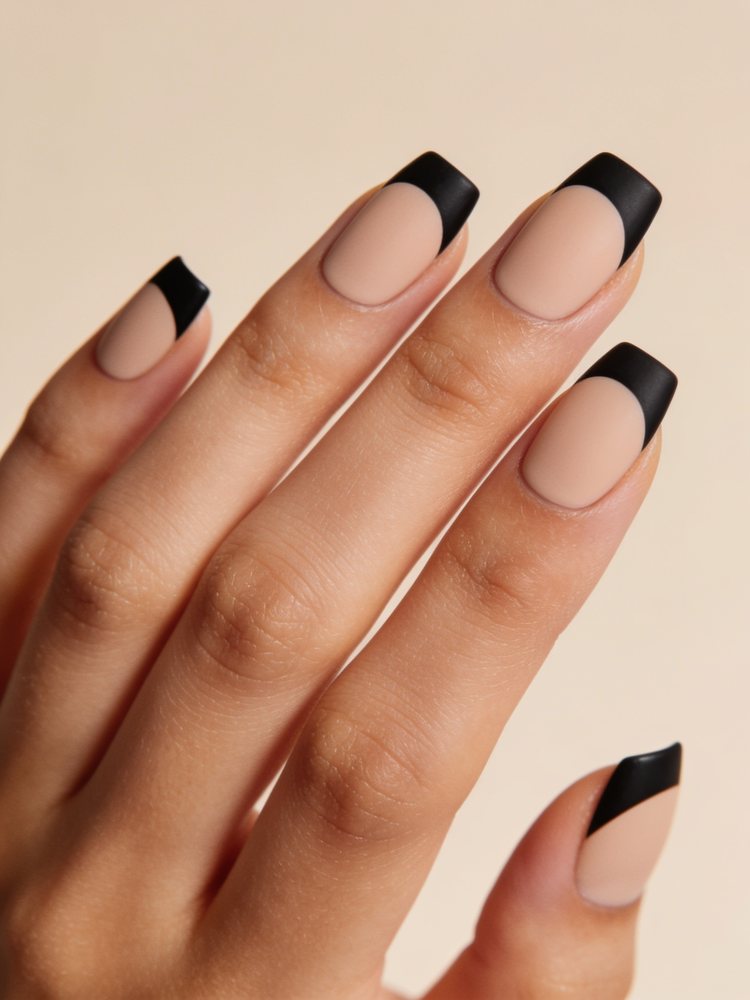
Black tips on nude
A French tip in matte black on a warm nude base. It is the most wearable of the graphic designs because the shape is familiar and only the colour is unexpected.
Matte topcoat over the whole nail rather than the tip alone. Half matte and half gloss looks like a mistake.
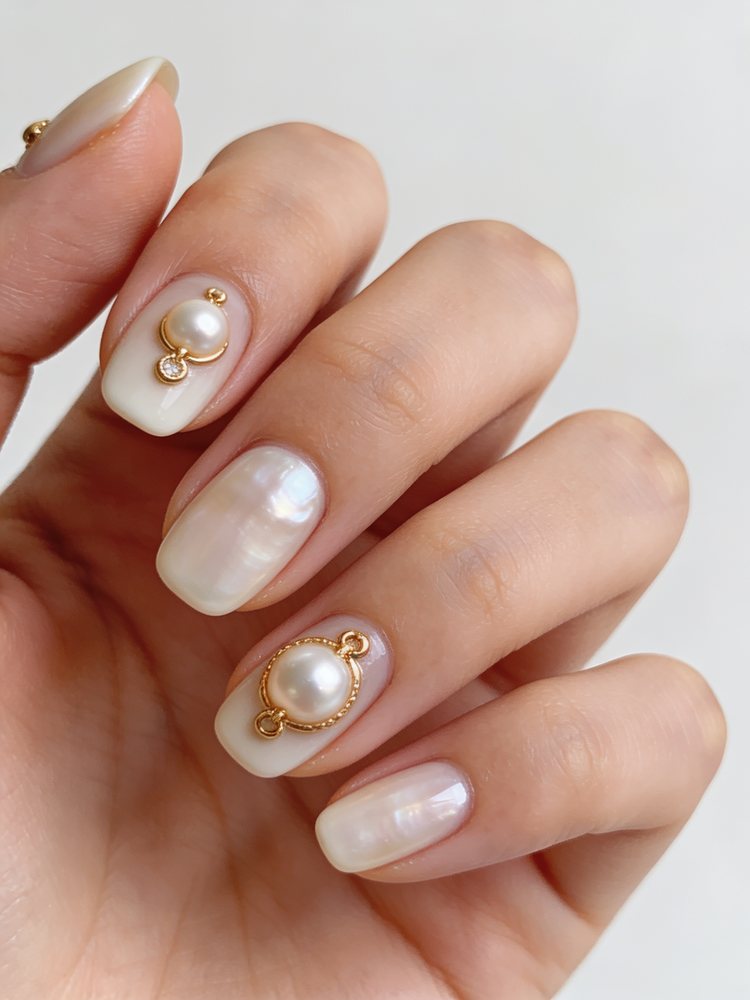
Pearl and gold charms
Two or three flat-backed pearls set into a gel bead near the cuticle of one or two nails. Flat-backed, not round. Round beads catch on hair and clothing and come off within days.
The charm has to be encapsulated under a thick topcoat around its edges or it will lift. If a tech places them on top and sends you out, expect to lose one by the weekend.

Milk bath marble
Thin grey and white veins pulled through a milky base with a striping brush, so it reads like stone rather than tie-dye. Two or three veins per nail. The instinct is always to add more, and more is what ruins it.
It works best on wider nail beds where the veining has room to run.

Jelly red
Three sheer coats of a translucent red so the nail keeps a glassy depth instead of going flat. It looks like sucking on a boiled sweet, which is exactly the appeal.
Sheer formulas show every ridge, so this one needs a proper buff first. On unprepped nails it looks streaky rather than jelly.

Negative space swirls
A single freehand swirl of colour across an otherwise bare nail. The bare part is the design. Filling it in defeats the whole idea.
It suits long nails because the swirl needs a run of nail to curve through. On short nails it compresses into a comma.
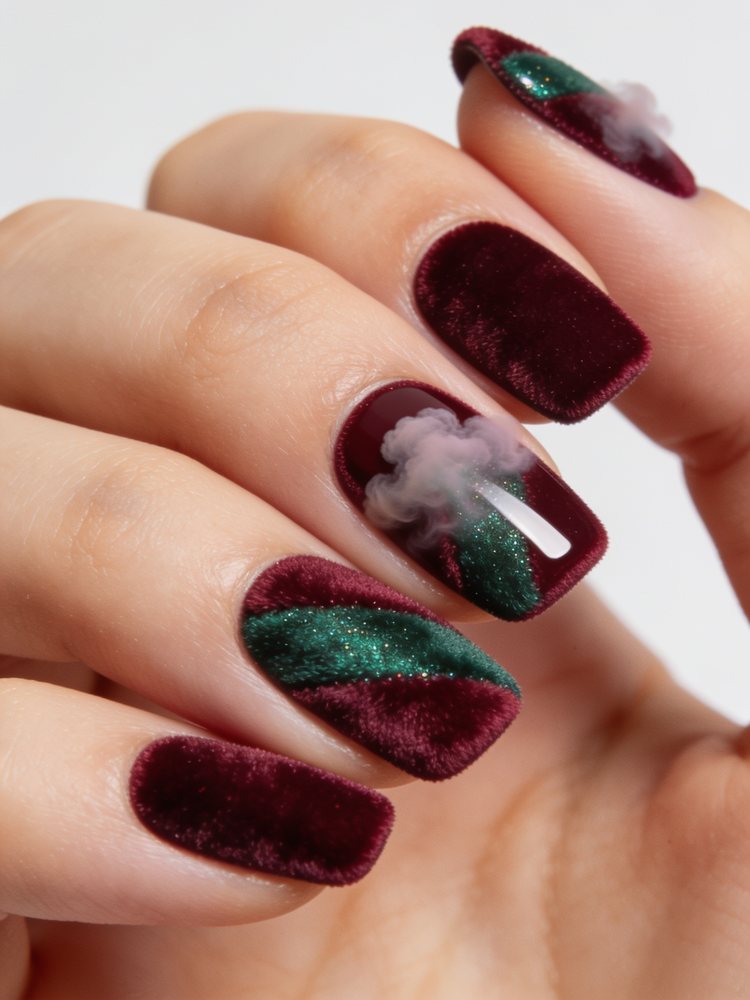
Velvet burgundy
Magnetic gel again, but with the magnet held flat over the whole nail so the shimmer gathers in a soft cloud rather than a line. Burgundy and forest green are the two shades where it genuinely looks like fabric.
This is the autumn and winter version of cat eye, and it photographs far better under warm light than cool.

Micro dots in white
Three or four tiny white dots scattered near the tip of a sheer pink nail, placed with a dotting tool or a hairpin. The smallest possible design that still counts as a design.
Uneven placement is what makes it look intentional. Perfectly spaced dots read as a polka dot pattern, which is a different look entirely.

Chocolate brown gloss
A deep, warm, almost espresso brown with a high gloss topcoat. It is the neutral that reads as a decision rather than a default, and it has quietly replaced grey as the sophisticated non-colour.
Warm browns suit the widest range of skin tones. Anything that pulls grey or purple gets ashy fast.

Lace French in white
A French tip with a scalloped or lace-edged smile line instead of a straight one, painted in fine white gel. It takes a steady hand and a properly thin brush, which is why it is worth paying for.
Keep it to two nails. Ten lace tips stop reading as delicate and start reading as busy.
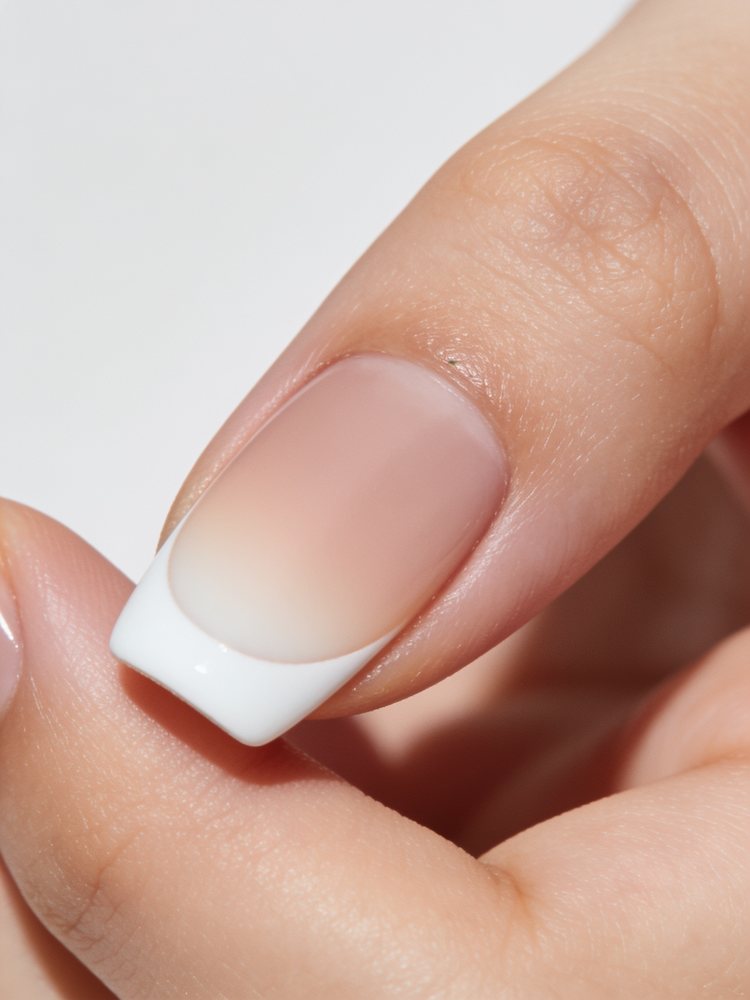
Ombre into the tip
Baby boomer ombre, where a nude base fades into a white tip with no visible line at all. Done properly it looks like a French that has been blurred with a thumb.
The fade has to happen over at least a third of the nail. A short gradient just looks like a badly painted French, which is the most common way this goes wrong.

Checkerboard accent
One nail in a small checkerboard, the rest in one of its two colours. Small squares. Large ones look like a novelty and photograph badly at any distance.
Black and white is the safe version. Pink and cream is the version that still looks good in a year.
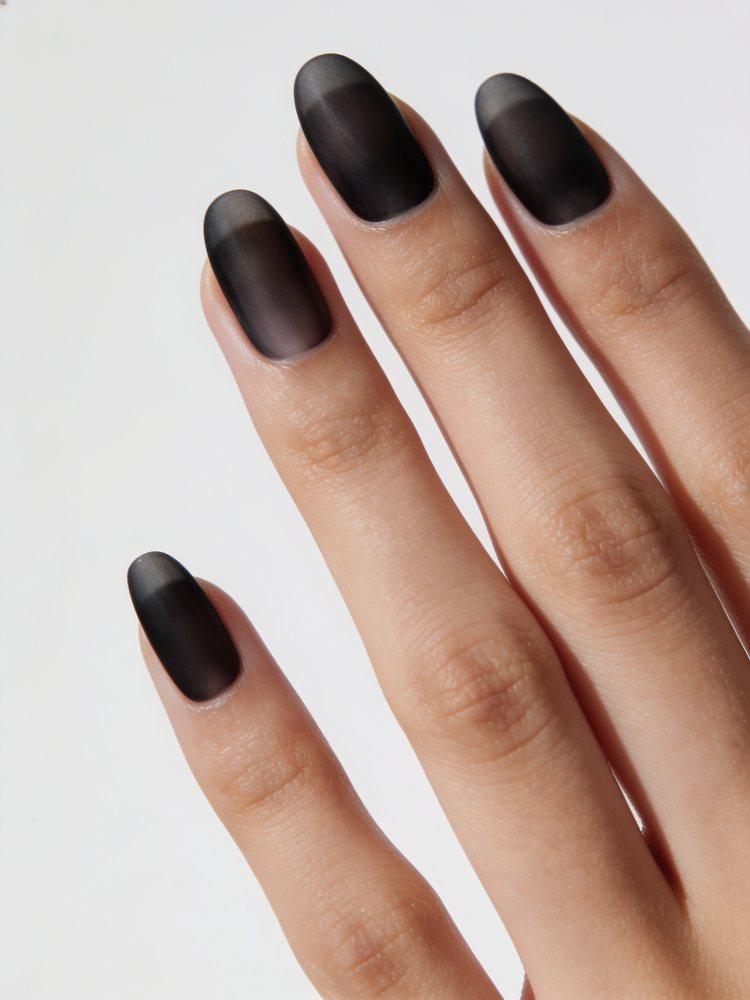
Sheer black wash
One coat of black over a bare nail, deliberately left sheer so it comes out as a smoky grey with the nail line visible underneath. Softer than full black and much easier to wear day to day.
One coat only. A second one takes it straight to opaque and you lose the whole effect.

Gold foil flecks
Torn scraps of gold leaf pressed into tacky gel and sealed under topcoat, concentrated near the cuticle and thinning out towards the tip. Irregular is correct here.
It needs two topcoat layers. Foil has a texture and one coat leaves you with a nail that catches on tights.
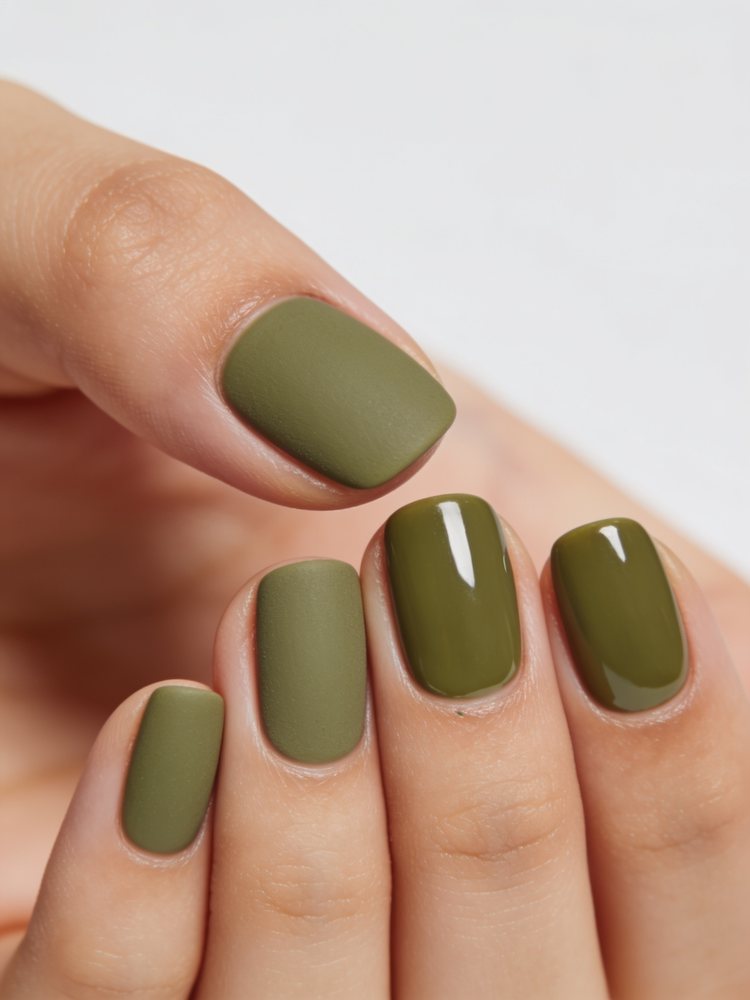
Matte olive
A muted olive green under a matte topcoat. The matte is what stops it looking military. Glossy olive is a completely different and much harder colour to wear.
Matte topcoats dull faster than gloss, so expect to refresh it after ten days rather than three weeks.
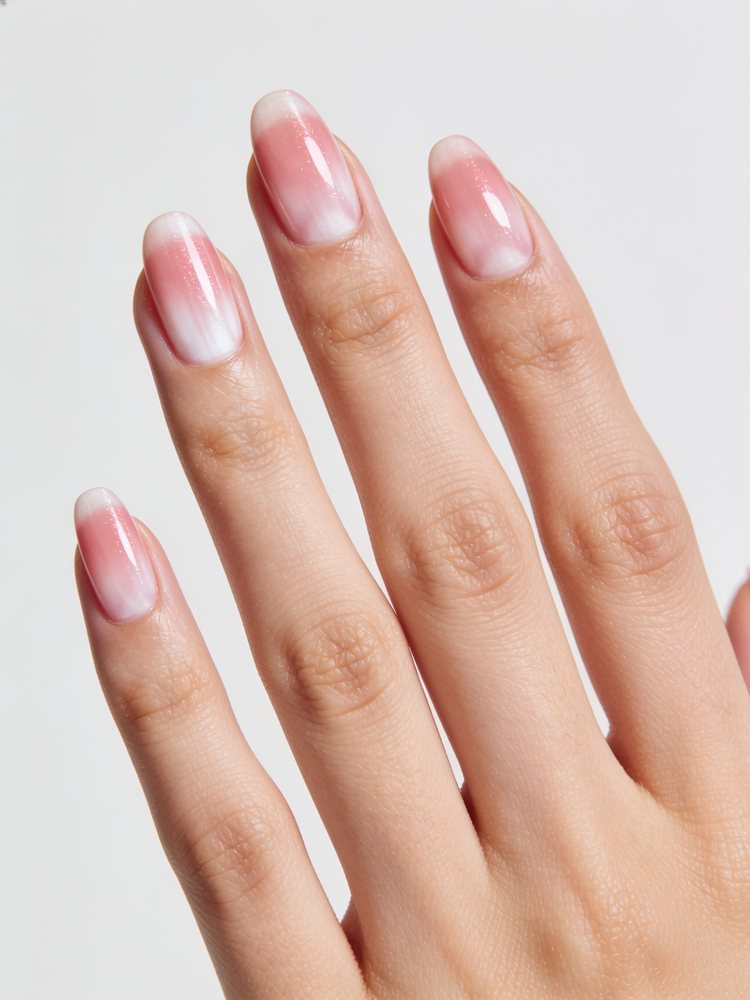
Strawberry milk
Sheer pink with a faint white cast, warmer and pinker than a milky white and much softer than a true pink. It is the colour that suits almost every hand, which is why it is the most requested shade on this list.
Three thin coats. Two leaves it patchy and four kills the translucency that makes it work.
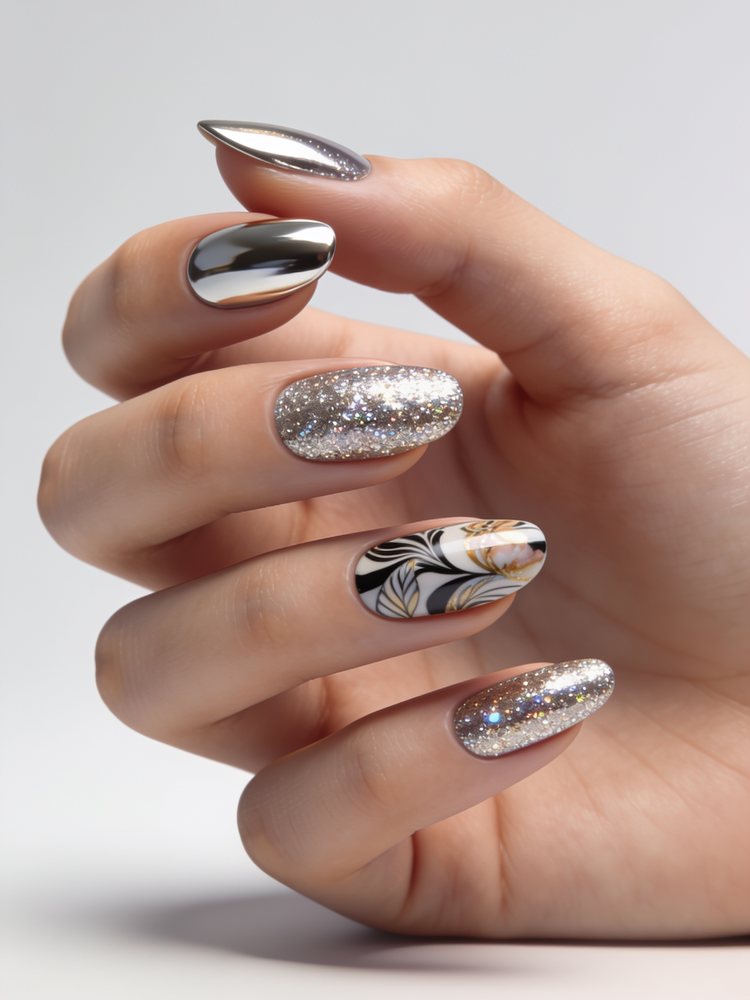
Single statement nail
Nine nails in one clean neutral and one nail doing something loud. Chrome, a full glitter, a print, anything. It is the cheapest way to get a design set because you pay for one nail of art rather than ten.
Put the loud one on your index finger rather than your ring finger if you want it to show in photos. Most people hold their hand with the index highest.
What to actually say at the appointment
Lead with length and shape, then finish, then the design. In that order, because each one limits the next. Saying “short almond, milky base, thin gold line on two nails” gets you a result. Saying “something like this” while holding up a photo of a set that is two centimetres longer than your natural nail does not.
If a look here needs more nail than you have, the shapes guide covers what each shape actually requires. If you want the same ideas grouped by the aesthetic they belong to instead of the technique behind them, that is the nail inspo guide.
Questions people actually ask
How long do these designs last?
In gel, two to three weeks before the growth line becomes obvious. In regular polish, four to six days on designs with any layering, because each layer adds a place for chips to start. Anything with charms or foil is the first to go.
Which designs work on very short nails?
Milky white with a micro-line, micro dots, jelly colours, sheer washes and strawberry milk. Anything with a repeating pattern or a deep French tip needs surface area you do not have on short nails.
Can I do any of these at home?
The single-colour and sheer ones, yes. Chrome, cat eye, velvet and blooming gel all need gel product and a lamp, and chrome in particular needs a no-wipe topcoat that most starter kits do not include.
How much do nail designs add to the price?
Most salons charge per nail for art, commonly three to ten dollars each depending on complexity, on top of the set. Two accent nails is the price point where designs stay reasonable.
Start with the sheer ones if you are choosing for the first time. They are the most forgiving of a grow-out, the cheapest to have redone, and they make the strongest case for the thing that actually decides whether a manicure looks good, which is the prep underneath rather than the design on top.