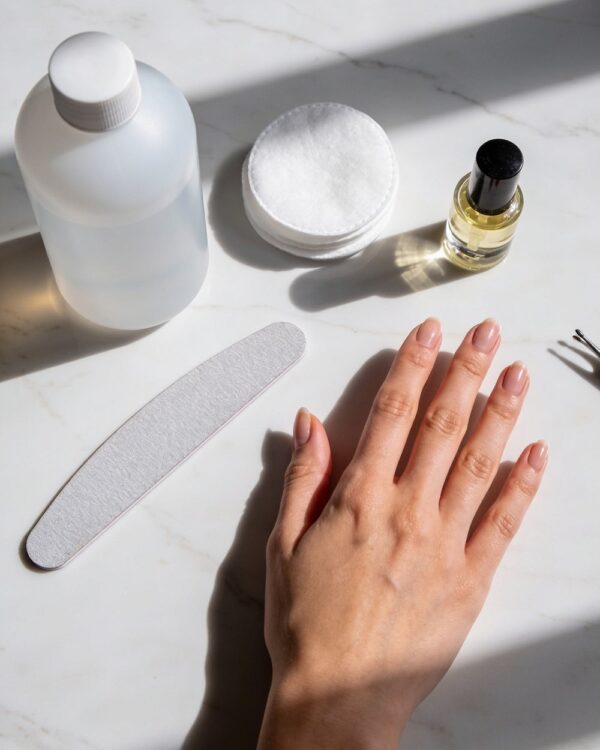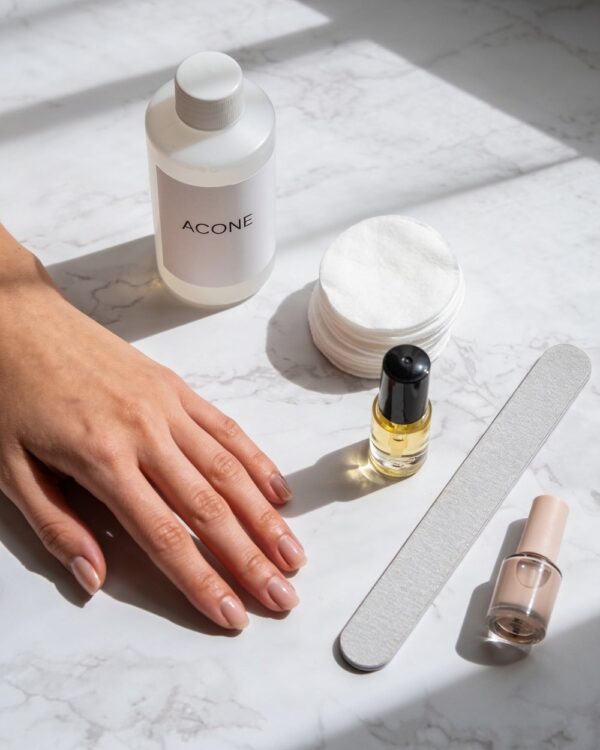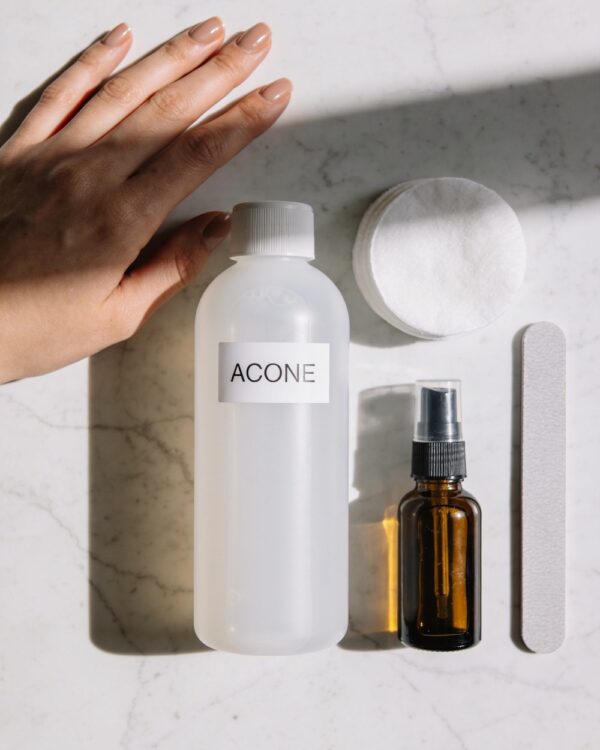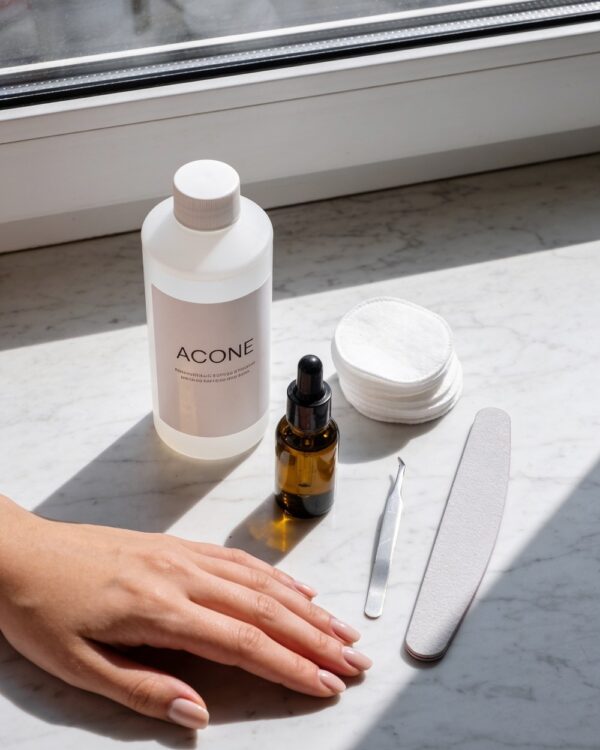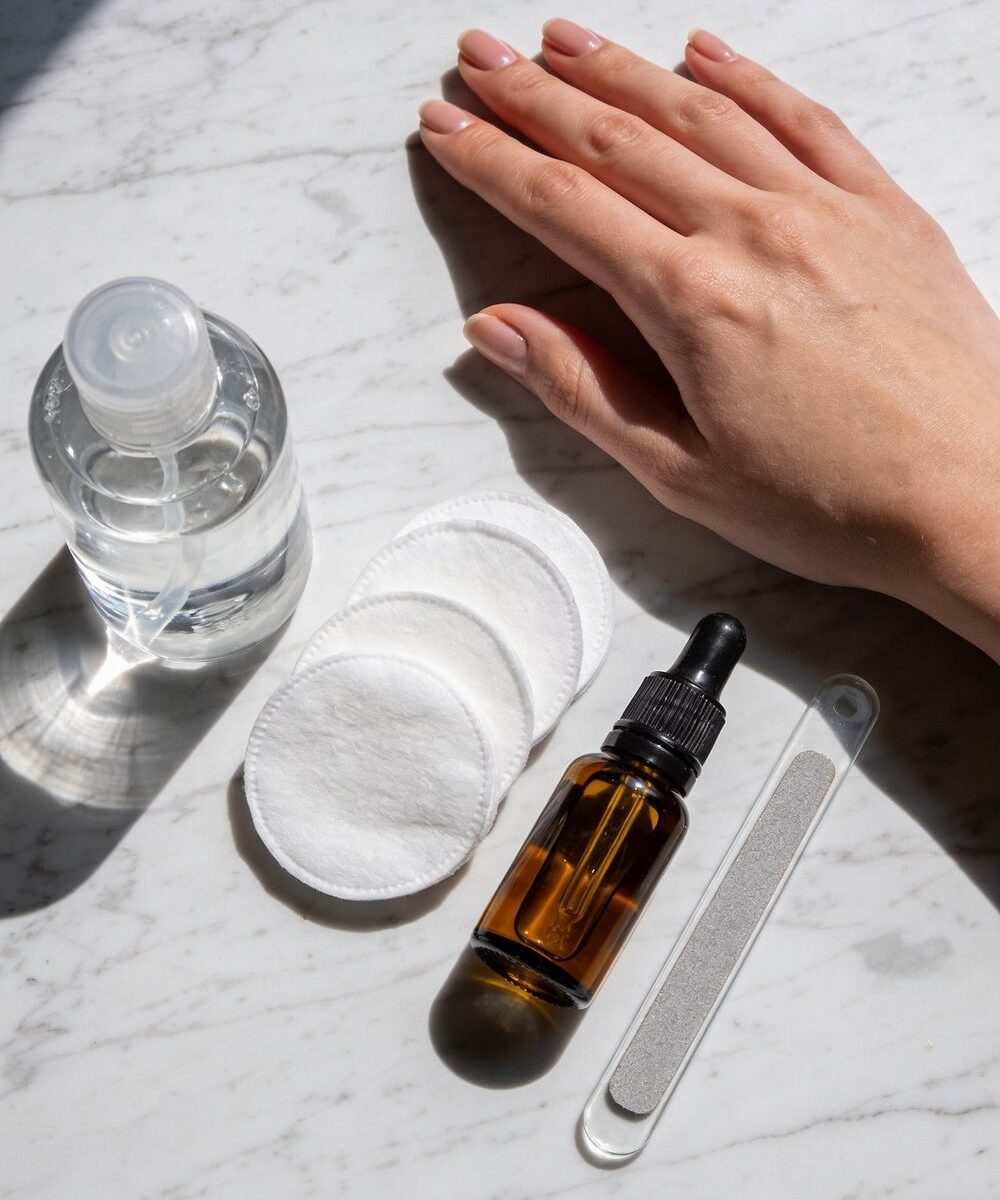
Acetone dissolves acrylic, but it cannot get through the sealed topcoat and it works slowly through thickness. Both facts explain the whole process.
The steps
- Clip the length down first. Less product means less soaking.
- File the bulk off with a coarse file until the surface is dull and thin. Stop before bare nail.
- Switch to a finer file for the last pass so you do not skim the natural nail.
- Oil the skin around each nail, then soak cotton in pure acetone and wrap each fingertip in foil.
- Fifteen to twenty minutes before checking. Rewrap rather than scraping harder.
- Scrape the softened product away with an orange stick. It should come off like wet paper.
- Repeat until it is gone. Two or three rounds is normal on a thick set.
Properly softened acrylic looks dull and gummy and gives under an orange stick with no pressure. If it is flaking off in hard chips, it needs more time.
Afterwards
Nails will feel thin and slightly tender for about a week. That is normal after any acetone soak. Oil the nail and the skin daily. If a nail hurts to press or has white papery patches, it has been over-filed and needs a month before another set.
The longer version with the full kit list is in how to remove acrylic nails. For a gentler alternative next time, builder gel soaks off in a fraction of the time.
Questions people actually ask
How do you get acrylic nails off fast?
Clip the length, file the bulk away, then soak in pure acetone under foil. Fast here means about forty minutes. There is no version that takes five.
Can you take acrylics off without acetone?
Not properly. The alternatives circulating online involve prying the set off, which is what causes the damage people blame on acrylic.
Why will my acrylic not come off?
Usually the topcoat was not filed away, so the acetone never reached the product. Or it is hard gel rather than acrylic, which does not soak off at all.