Cured gel is a sealed plastic layer. Acetone dissolves it, but only once the seal is broken. That single fact explains why home removal works when you file first and fails when you do not.
Peeled gel takes the top layers of the nail plate with it. The thin, bendy, sore nails people blame on gel manicures come from that, not from wearing the product.
If a nail feels tender or looks white and papery after a removal, it has been over-filed or peeled. Give it a month under oil before another set.
- Time25 to 35 min
- CostUnder $10
- DifficultyEasy
- Soak10 to 15 min
- AftercareOil daily, 1 week
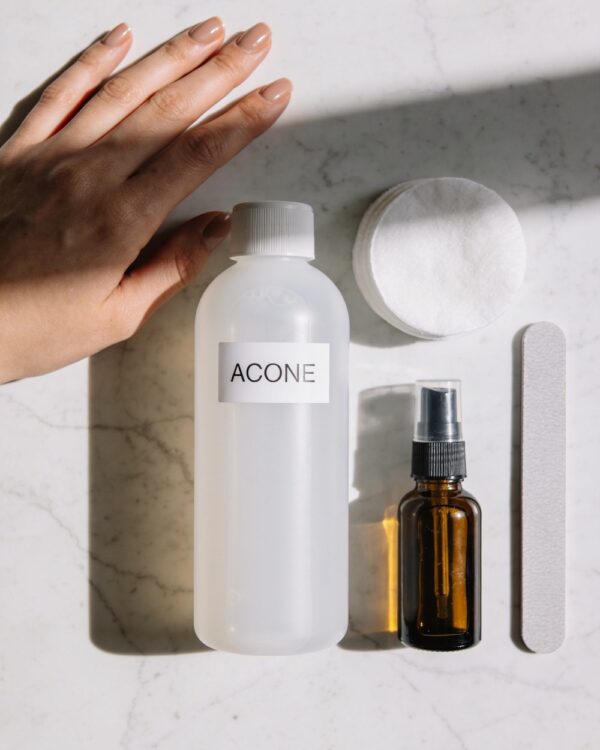
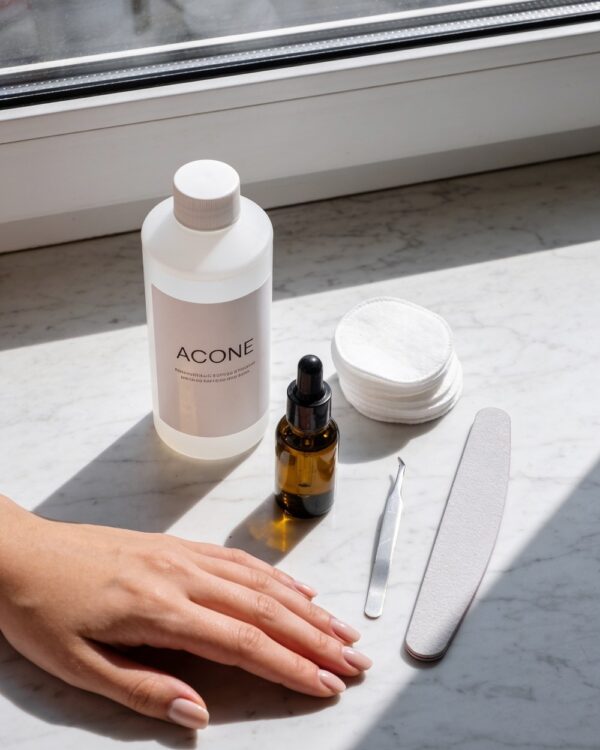
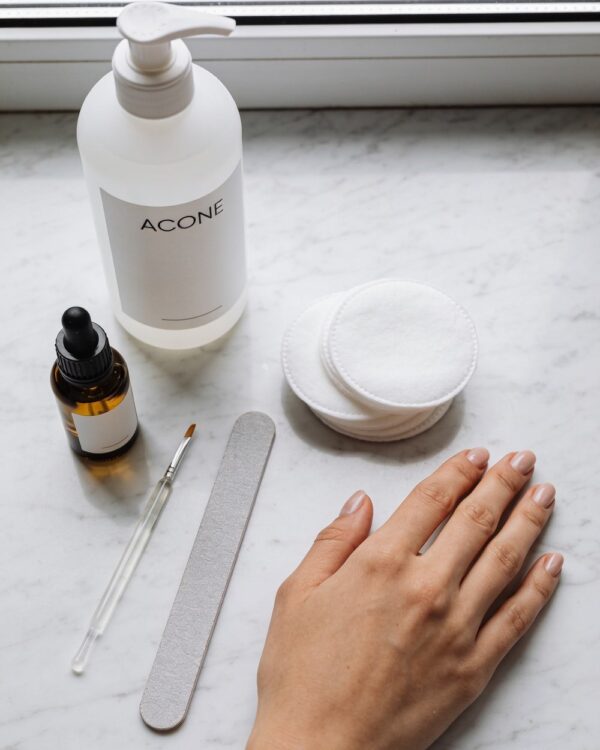
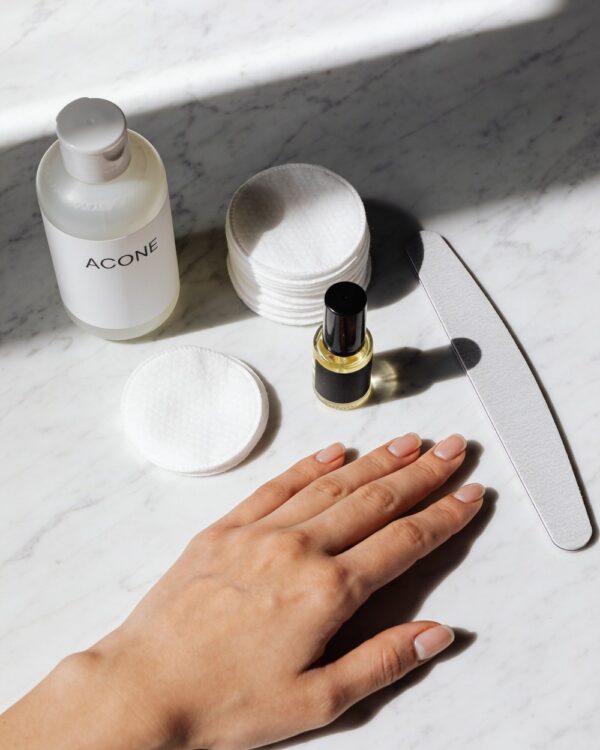
What you need
The method
- Buff the shine off every nail. You are removing the topcoat seal, not filing down to the nail. Stop the moment the surface goes matte.
- Push your cuticles back and put a smear of oil or petroleum jelly on the surrounding skin. Acetone dries skin hard.
- Soak a cotton piece in acetone, press it onto the nail, wrap the foil square tightly around the fingertip.
- Leave it a full ten to fifteen minutes. Opening early resets the process, because the surface reflashes as soon as air hits it.
- Unwrap one finger. The gel should look wrinkled and lifted. Push it off with the orange stick in one direction, gently.
- If it resists at all, rewrap and wait another five minutes. Do not scrape harder.
- Wash your hands, then oil the nail and the skin around it. Repeat daily for a week.
When it will not come off
The gel has barely softened
FixableWhy it happens
The topcoat was not fully buffed away, so the acetone never reached the colour underneath. A cured seal is genuinely waterproof and acetone-proof.
Fix
Rewrap and buff again first. You want the whole surface matte, with no shiny patches left near the cuticle or the sidewalls.
It softened and then hardened again
FixableWhy it happens
The wrap was opened to check. The surface reflashes within seconds of meeting air, and the clock restarts.
Fix
Rewrap and leave it a full ten minutes without looking. Check one finger at a time rather than unwrapping the whole hand.
Nothing is happening at all
Redo itWhy it happens
The remover is not pure acetone. Nourishing and acetone-free removers cannot dissolve a cured layer, whatever the front of the bottle says.
Fix
Check the ingredients for acetone. If it is not there, no amount of soaking will work.
It flakes off in hard chips
Redo itWhy it happens
This is usually hard gel or a builder gel rather than gel polish. Neither soaks off.
Fix
Stop and have it filed off by a technician who can tell where the product ends and your nail begins.
Do not peel. It is the single most damaging thing you can do to a nail plate, and the peeling that follows lasts longer than the manicure did.
Do not lever with a metal tool, do not soak a whole hand in a bowl, and do not heat the acetone. It is flammable.
For acrylic rather than gel, how to remove acrylic nails covers the differences. For what to put on afterwards, the gel nails guide covers builder gel, which leaves nails stronger than it found them.
Questions people actually ask
How do you remove gel nail polish at home?
File the shine off, wrap each nail in acetone-soaked cotton and foil, wait ten to fifteen minutes, then push the softened gel off with an orange stick. The filing step is the one people skip and the reason it fails.
Can you remove gel polish without acetone?
Not reliably. Acetone-free removers do not dissolve cured gel. The alternatives circulating online mostly amount to peeling with extra steps.
How long should you soak gel nails?
Ten to fifteen minutes for gel polish. Checking earlier resets it, because the surface hardens again as soon as air reaches it.
Why do my nails look thin after removing gel?
Either the gel was peeled rather than soaked, or the natural nail was over-filed during prep or removal. Both take real nail with them. Oil daily and give it a month.
Does gel polish removal hurt?
It should not. Pain during removal means a tool is going into the nail plate rather than under the gel. Stop and soak longer.